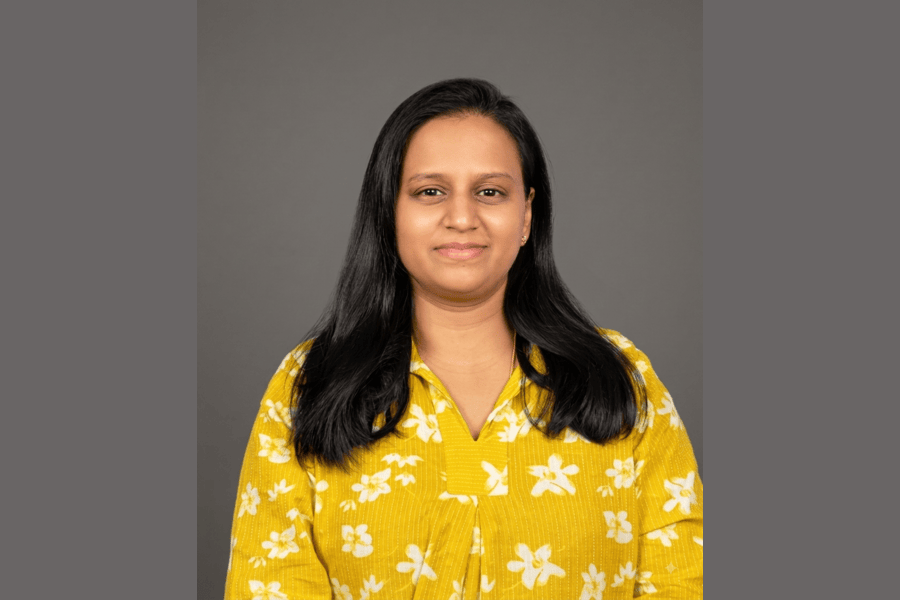
Built around a predominantly female workforce, Jack Meow reflects Anitha sri Maheswaran’s commitment to creating structured, full-time employment opportunities for women across India.
Across India, talent is widely distributed, but employment opportunity is not. Women in smaller towns and rural communities may have the skills and ambition to build meaningful careers, yet suitable full-time roles are often concentrated in major cities. Geography, mobility constraints, caregiving responsibilities and limited access to formal employers can leave capable women separated from the opportunities they are qualified to pursue. It is within this gap that Anitha sri Maheswaran has sought to build a different kind of workforce model.
That model is visible at Jack Meow, a job-application services company founded by Maheswaran. Company records show a workforce of 25 full-time employees, 24 of whom are women. The employees are not concentrated in the founder’s home town or in a single metropolitan office. They work from locations across India and are paid through Jack Meow’s regular payroll. Together, they form a distributed operating team that provides structured job-application services to customers pursuing opportunities in global employment markets.
A distributed workforce, not a local-office story
Maheswaran and Jack Meow have previously been associated with Bodinayakanur in Tamil Nadu’s Theni district. The company’s present employment footprint, however, is broader. Its workforce is spread across India. This distinction matters because the model is not simply about creating jobs in one small town; it is about making structured, full-time digital-service roles accessible beyond one physical hiring market.
Remote employment is often discussed as a matter of flexibility. For an operating business, it is also a management problem. Employees must work with consistent standards despite differences in location. Training, task ownership, quality review, escalation and performance management cannot depend on everyone being in the same room. Maheswaran’s leadership has therefore been tied to converting a founder-led service into a repeatable system that a distributed team can execute.
What the team actually delivers
Jack Meow supports job seekers through the administrative and document-intensive parts of a modern job search. The work includes identifying or reviewing suitable opportunities, aligning application materials with role requirements, submitting applications to employers and maintaining records of application activity. The company reports that it has served more than 1,000 customers.
Serving that volume of customers requires more than informal coordination. Application work is repetitive, but it is not identical. Employers use different career systems, ask different screening questions and apply different expectations to resumes and supporting information. International candidates may also need to distinguish between employers with relevant sponsorship histories and those unlikely to support their circumstances. A distributed workforce can handle this only when work is broken into defined processes and quality standards.
This is where Maheswaran’s role becomes more consequential than the founder title alone. Her contribution has been to organize the operating structure around the service: how work moves from job discovery to review, submission and tracking; how team members are assigned responsibility; and how consistency is maintained when customers and employees are in different locations.
Why the 96% figure matters – and what it does not prove
Government data show that India’s female labour-force participation rate increased from 23.3% in 2017-18 to 41.7% in 2023-24. That national indicator cannot be compared directly with the gender composition of a single private company: one measures participation across a population, while the other describes 25 jobs in one organization. Even so, Jack Meow’s workforce is a relevant company-level example of women occupying full-time roles in a technology-enabled service operation.
The more meaningful questions go beyond the percentage. Are the positions formal or informal? Are they on payroll? Do employees receive clear responsibilities and management support? Can the work develop transferable experience in client service, operations and digital employment systems? In this case, the company says all 24 women are full-time payroll employees working within a structured operating model.
It would be excessive to treat one small company as a solution to India’s wider gender-employment challenge. It is more useful to view the business as an operating case: a specialized service company can recruit nationally, build a predominantly female team and deliver internationally oriented work without requiring every employee to relocate to a metro office.
Employment as a path to women’s economic empowerment
Women’s economic empowerment is central to Maheswaran’s long-term vision. Her goal is to expand access to full-time employment for women in rural and underserved parts of India, where suitable local opportunities can be limited and relocation is not always practical. Through a distributed operating model, she aims to bring structured work, dependable income and opportunities for professional development to women who might otherwise remain outside the formal workforce. Jack Meow’s majority-women team is an early expression of that mission: creating sustained career opportunities that can support financial independence, skills development and long-term professional growth.
From service delivery to employment technology
Maheswaran has also extended this operational experience into Jacky Ba, a technology platform focused on job discovery, application support and employer sponsorship intelligence. The newer platform reflects lessons accumulated through service delivery: candidates do not struggle only with writing a resume. They struggle with fragmented job boards, repeated application forms, uncertain employer sponsorship signals and the cumulative administrative load of sustaining a job search.
The relationship between the two businesses is important to understanding her leadership. Jack Meow provides the operating environment in which large numbers of applications and customer needs are handled. Jacky Ba attempts to translate parts of that knowledge into software. The founder’s work therefore sits at the intersection of workforce management and employment technology, rather than fitting neatly into either a traditional consulting company or a software-only startup.
A leadership case measured through systems
Founder profiles often concentrate on origin stories, funding rounds or personal ambition. Maheswaran’s more distinctive contribution may be found in the systems beneath the story: a 25-person full-time payroll, a workforce distributed across India, a 96% share of women employees and service delivery to more than 1,000 customers.
Taken together, these figures describe a practical form of business leadership: creating formal employment, coordinating work across geography and applying operational experience to the development of new technology. Jack Meow’s workforce is more than a measure of company size; it reflects the enterprise Maheswaran has built and the management systems supporting its day-to-day operations.