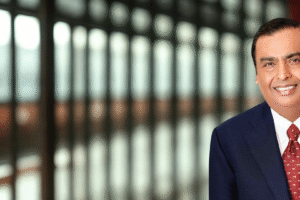
Adani Hindenburg Row: Supreme Court to hear the petitions for the extension for investigation
On May 12th, 2023, Friday, the Supreme Court will hear the petitions on the Adani-Hindenburg row. The Security Exchange Board…

Introduction The Indian stock market experienced a notable downturn on April 13, 2026, as global geopolitical tensions and domestic economic…



As investors look towards April 15, 2026, several stocks are drawing attention based on recent analyst reports and market developments
The Indian stock market experienced a notable downturn on April 13, 2026, as global geopolitical tensions and domestic economic factors weighed heavily on investor sentiment. Both the Nifty 50 and Sensex indices closed significantly lower, reflecting broad-based selling pressure across key sectors. This report provides a comprehensive overview of the market’s performance, analyzes the key drivers behind the recent volatility, highlights sector-specific trends, and identifies top stocks to watch for April 15, 2026, offering insights for investors navigating the current landscape.
April 13, 2026, saw the Indian benchmark indices, the Nifty 50 and Sensex, conclude the trading session in negative territory. The Sensex shed 702.68 points, closing at 76,847.57, a decline of 0.91%. Similarly, the Nifty 50 fell by 207.95 points, settling at 23,842.65, marking a 0.86% reduction. This downturn was not isolated, as the Bank Nifty also recorded a decrease of 307.70 points (-0.55%), closing at 55,605.05, and the Nifty Financial Services index dipped by 166.40 points (-0.63%) to 26,047.50 . The market breadth remained sharply negative, with only 3 stocks advancing against 27 declining in the Sensex, indicating widespread selling pressure.
The primary catalyst for the market’s subdued performance was the heightened geopolitical tensions, specifically the breakdown of US-Iran talks, which fostered a risk-off sentiment among global investors. This international development had a ripple effect on emerging markets, including India. Domestically, rising crude oil prices posed a significant concern, threatening to inflate import bills and potentially fuel inflation. Concurrently, a weaker rupee against the US dollar added to the economic headwinds, making imports more expensive and impacting corporate profitability for companies reliant on imported raw materials .
Furthermore, persistent Foreign Institutional Investor (FII) outflows continued to exert downward pressure on the market. FIIs have been net sellers, withdrawing capital from Indian equities, which often signals a cautious outlook on the part of international investors. This, coupled with profit booking by domestic investors after a period of gains, contributed to the overall negative sentiment and market correction .
The market correction on April 13 was not uniform across all sectors. The Auto sector emerged as a significant laggard, with major players like EICHERMOT and MARUTI experiencing declines of 5.04% and 4.62%, respectively. The Financials sector also faced considerable pressure, with BAJFINANCE dropping by 2.97%. The Information Technology (IT) sector contributed to the downturn, as TCS, INFY, and HCLTECH saw declines of 2.12%, 1.28%, and 1.56% respectively .
However, certain sectors demonstrated resilience amidst the broader market weakness. The Insurance sector, particularly HDFCLIFE, showed strength with a gain of 2.71%. Selective Banking stocks, such as ICICIBANK (+1.90%), and the Power sector, represented by NTPC (+1.58%), also managed to stay in positive territory, providing some limited support to the indices .
As investors look towards April 15, 2026, several stocks are drawing attention based on recent analyst reports and market developments .
1.Avenue Supermart (D-Mart): Emkay Global Financial Services has initiated coverage with a ‘Sell’ rating and a target price of Rs 3,700. Analysts express concerns that the stock’s current valuation (70x forward P/E) prices in a future business model that D-Mart has yet to fully achieve. The increasing competition from quick commerce players, which are now only marginally pricier than D-Mart, and the company’s limited penetration of India’s total retail addressable market (TAM) are key factors influencing this cautious outlook. The bear case target price is set at Rs 2,200 .
2.UPL: Morgan Stanley has resumed its coverage of UPL with an ‘Equal Weight’ rating and a target price of Rs 658. The brokerage views UPL as a play on the revival in global crop chemical volumes, noting its consistent solid volume growth over the past two years. While acknowledging near-term uncertainties due to supply chain disruptions and potential demand risks, analysts are constructive on the improving agchem cycle. UPL’s global footprint positions it well to leverage the repair cycle and deliver above-industry volume growth .
3.Acme Solar: HSBC has initiated coverage with a ‘Buy’ rating and a target price of Rs 350. Acme Solar is highlighted as one of India’s fastest-growing, vertically-integrated, independent power producers in the renewable energy sector. Its contracted capacity of approximately 6GW provides long-term earnings visibility, with firm & dispatchable renewable energy (FDRE) projects and battery energy storage systems (BESS) expected to enhance returns. HSBC forecasts an impressive EBITDA Compound Annual Growth Rate (CAGR) of 72% for FY26-28 .
4.Sumitomo Chemicals: ICICI Securities has initiated coverage with a ‘Buy’ rating and a target price of Rs 515. The company is seen as uniquely positioned with strong credentials and a reasonable valuation, offering material upside. Its symbiotic dominance, combining a global innovator parent with local market expertise, creates an unparalleled moat. Aggressive capital expenditure plans and new product launches are expected to support growth momentum, with Indian agricultural demand anticipated to remain robust for the next 12–18 months .
5.Eternal (Blinkit parent): Goldman Sachs maintains a ‘Buy’ rating with a target price of Rs 350. Analysts believe concerns regarding Blinkit’s Total Addressable Market (TAM) might be overstated from a value perspective. While industry monthly transaction user penetration could approach maturity levels, Goldman Sachs argues that Blinkit’s share gains against competitors like Swiggy are likely to continue. Despite elevated competition from new entrants, the brokerage believes there are sufficient levers to offset potential headwinds and support margin expansion .
6.Sanofi India: The company has recommended a final dividend of Rs 48 per share, making it an attractive option for dividend-seeking investors .
From a technical perspective, the Nifty 50’s RSI has slipped towards the 50 mark, indicating a loss of upward strength. Key support levels for the Nifty are identified at 23,396 and 23,120, while resistance levels are at 24,289 and 24,565. For the Sensex, immediate support lies at 75,410 and 74,521, with resistance at 78,285 and 79,174 . Investors should closely monitor these levels for potential reversals or further consolidation.
The Indian stock market is currently navigating a period of heightened volatility, influenced by global geopolitical events and domestic economic indicators. While the recent downturn has impacted several sectors, opportunities remain in resilient segments and specific stocks with strong fundamentals and growth prospects. Investors are advised to conduct thorough research and consider their risk appetite before making investment decisions, keeping a close watch on both macroeconomic developments and corporate earnings. The market’s ability to absorb external shocks and the continued growth trajectory of the Indian economy will be crucial in determining its path forward.
This Article is Created and Curated by Manus AI
Advertisement