The BJP’s Deputy CM and Home Minister emerges as frontrunner to lead Bihar’s first-ever BJP government, marking a historic power shift in India’s third-most populous state
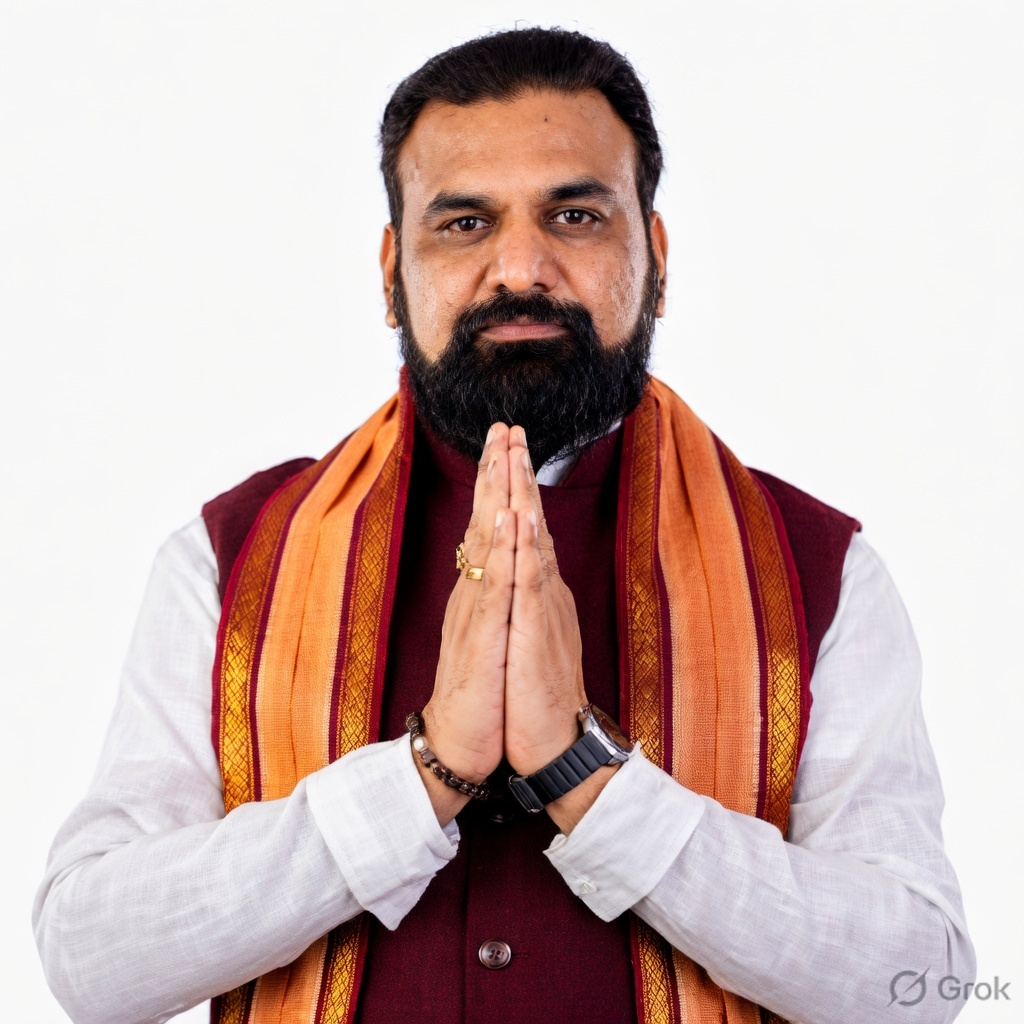
Patna, April 14, 2026 — Bihar is on the cusp of a landmark political transition today as Chief Minister Nitish Kumar formally tendered his resignation, paving the way for the Bharatiya Janata Party (BJP) to assume direct leadership of the state for the very first time. Deputy Chief Minister and Home Minister Samrat Chaudhary has emerged as the clear frontrunner to take oath as Bihar’s new Chief Minister, with the swearing-in ceremony expected on April 15 at Raj Bhavan in Patna.
The development brings to a close a remarkable chapter in Indian political history. Nitish Kumar, who served as Bihar’s chief minister across ten tenures and is widely regarded as the state’s longest-serving leader, is set to transition to the Rajya Sabha, where he was elected as a Member of Parliament on April 10, 2026.
A Historic Handover in Patna
On Tuesday morning, Nitish Kumar paid tribute at the statue of Dr. B.R. Ambedkar, chaired his final cabinet session, and later met Bihar Governor Syed Ata Hasnain at Raj Bhavan to submit his resignation. Shortly after, the BJP’s legislative party convened in Patna in the presence of Union Minister Shivraj Singh Chouhan, appointed as the central observer, to formally elect its legislative leader — a decision widely expected to confirm Chaudhary’s elevation.
Prime Minister Narendra Modi and Union Home Minister Amit Shah are both scheduled to be present in Patna by Tuesday evening for the oath-taking ceremony, underlining the national significance of this power transfer.
“The new government will be formed with Nitish Kumar’s consent. It will work under his guidance.”— Zama Khan, JD(U) minister, Minority Affairs
Who is Samrat Chaudhary?
Born on November 16, 1968, in Lakhanpur village of Munger district, Samrat Chaudhary is one of Bihar’s most seasoned political figures with a career spanning multiple parties and portfolios. A two-term Member of the Legislative Assembly (MLA) from the Parbatta constituency and a two-time Member of the Legislative Council, he brings nearly three decades of grassroots and legislative experience to the table.
Chaudhary belongs to the Kushwaha (Koeri) community — a significant OBC grouping in Bihar — and his rise is seen as a strategic move by the BJP to consolidate its support among backward communities, which account for a substantial share of Bihar’s electorate. Nearly 49% of respondents in a recent Dainik Bhaskar opinion poll favoured an OBC chief minister, a figure that reinforces the calculus behind Chaudhary’s candidacy.
A Political Journey Across Parties
Before joining the BJP approximately seven years ago, Chaudhary had stints with both the Rashtriya Janata Dal (RJD) and the Janata Dal (United). Critics within the party have pointed to this background as a limitation, and some sections of the Rashtriya Swayamsevak Sangh (RSS) are reported to have reservations about his limited long-term grounding in the Sangh Parivar ecosystem. However, party insiders note that Chaudhary’s candidacy is backed by Union Home Minister Amit Shah — a factor seen as decisive enough to override internal dissent.
After joining the BJP, Chaudhary rose swiftly through the ranks. He was first inducted into the legislative council, then became a minister in Nitish Kumar’s cabinet following the NDA’s 2020 assembly election victory. He held portfolios including Agriculture, Urban Development, Panchayati Raj, and later Finance, Health, and Industry. In March 2023, he was appointed President of the BJP’s Bihar unit, succeeding Sanjay Jaiswal — a move that drew pointed commentary from RJD leader Rabri Devi.
Most recently, he served as Deputy Chief Minister and Home Minister following the NDA’s landslide victory in the November 2025 Bihar assembly elections, in which he was also re-elected to the position alongside Deputy CM Vijay Kumar Sinha.
What This Means for Bihar Politics
If confirmed, Chaudhary’s elevation will mark the first time the BJP holds the chief ministership in Bihar since the formation of its alliance with JD(U). For nearly two decades, the NDA’s governing arrangement in the state had Nitish Kumar at the helm, with the BJP playing the role of a supporting partner. That equation now shifts decisively, with the BJP becoming the “senior partner” and taking direct ownership of governance in India’s third-most populous state.
Political analysts see this transition as part of the BJP’s broader strategy to deepen its roots in Bihar beyond its traditional upper-caste voter base. By fielding an OBC leader, the party aims to challenge the RJD’s historic hold over backward communities and position itself as a pan-social coalition ahead of future electoral cycles.
Chaudhary’s Vision for Bihar
On his official website, Chaudhary has articulated an ambitious development agenda for Bihar — one framed around PM Modi’s vision of ‘Virasat bhi Vikas bhi’ (heritage alongside development). His stated priorities include quality education and skill development for youth, modern infrastructure including roads and digital connectivity, support for farmers through irrigation and fair market access, and transforming Bihar into an industrial and startup hub that reverses the trend of outmigration.
“Instead of Biharis migrating for work, we aim to build an economy so vibrant that people from across India come to Bihar in search of jobs, growth, and prosperity,” reads a key plank on his platform — an aspiration that will now be tested as he steps from the deputy’s role into the chief executive’s seat.
JD(U)’s Role Going Forward
With Nitish Kumar transitioning to Parliament, the JD(U) is keen to signal that it remains an influential force. Kumar’s son Nishant Kumar, who joined the party just a month ago, has been touted by JD(U) leaders for “an important role” in the new dispensation — a move observers have characterised as a departure from Nitish Kumar’s longstanding anti-dynasty posture. JD(U) leaders have also clarified that Kumar will spend most of his time in Bihar, participating actively in governance despite operating from the national capital during Parliament sessions.
As Patna prepares for a new chapter, all eyes are on the BJP legislative party meeting — the outcome of which will officially draw the curtain on the Nitish Kumar era and usher in what promises to be a transformative, and closely watched, new phase in Bihar’s political journey.
Advertisement