

NEW DELHI: Is the time for state-owned Air India running out? The Maharaja is bleeding and its status in the intensive care unit certainly does not look very promising. Perhaps, Union Finance Minister Arun Jaitley, a powerful and authoritative voice of the NDA government and the most reliable Cabinet colleague of Prime Minister Narendra Modi, has let the cat out of the bag by strongly favouring disinvestment of the Air India.
Mr. Jaitley has been quoted as saying that the market share of Air India is just around 14 percent whereas the debt burden is a whopping Rs. 50,000 crore. Speaking at Dialogue@DD News programme, Mr. Jaitley said that Air India was flying at the cost of tax payers’money and that money could have been used in key sectors like education and health. “In this country, if 87 or 86 percent flying can be handled by the private sector… then they can also do 100 percent,” he said.
Recalling that he had rooted for disinvestment of Air India during the earlier NDA regime in 1999-2000, Mr. Jaitley said that he had argued at that time if the disinvestment was not done, nothing would be left to disinvest. Since then, the government has pumped in more money into the loss-making national flag carrier but returns are dismal.
The bailout package was given to Air India by the then Manmohan Singh government which was to the tune of Rs. 30,000 crores and spread over 10 years.
In 2015-16, Air India showed operational profit of Rs 105 crore mainly due to low fuel prices and some rise in its passenger numbers as after the 2007 merger with Indian Airlines, there was only single state-owned entity — Air India both domestically and internationally.
Civil Aviation Minister Ashok Gajapathi Raju last week said Air Indias books were “bad”, but added that the government wanted the carrier to survive.
A Parliamentary Committee on Transport, headed by CPI(M) leader Sitaram Yechury, had termed the Air India-Indian Airlines merger as a “hasty” one which had been done without appling any mind. The then Civil Aviation Minister and NCP leader Praful Patel had described the merger as “absolutely” perfect which would take care of growing civil aviation market. The merger had been vetted by an Empowered Group of Ministers (EGoM).
Another blow to Air India came when the Central Bureau of Investigation (CBI) registered three cases into alleged irregularities in the purchase of 111 aircraft worth Rs. 70,000 crores, leasing of planes and surrender of profit-making routes. The agency would also inquire into the Air India-Indian Airlines merger during the UPA regime which allegedly caused losses running into thousands of crores.
Civil aviation analysts have often blamed poor management skills, serving VIPs by the national carrier as well as social and national obligations in the times of natural calamities, participation in evacuation programmes as being some of the areas not served by the private airlines. After the merger, Indian Airlines, one of the most cherished Indian brands in the national and international skies, ceased to exist and the Maharaja’s glory seems to be fading with the passing of each year. It is time, the Modi government took a bold decision to let go of Air India into private hands so that a lean and mean entity can serve the country and the travelling public and in the process can sustain itself economically.
Let Go of Air India


Constructive Criticism Strengthens Democracy : Modi

New Delhi : Welcoming the diverse assessments of three years of his government, Prime Minister Narendra Modi on Sunday underlined the significance of constructive criticism in strengthening democracy and assured the people that mistakes and shortcomings would be rectified.
Delivering his first “Mann Ki Baat” after completion of three years in office on Friday, Modi also took on the critics of his monthly radio address, which he said enabled him to become a member of every family in India.
“Audit and assessment of the performance of the present government in the last three years is happening all over on newspapers, social media or TV for the last 15 days. There have been many surveys and several opinion polls. I see this entire process as a very healthy sign,” Modi said.
“Constructive criticism strengthens democracy, for an aware nation, an awakened nation, this churning is very important,” he said, referring to the surveys which highlight both praise and criticism of his government’s record so far.
He said the work done by his government was tested on every touchstone and analysed by every segment of society.
“This is a great process in democracy. I firmly believe that governments must be accountable in democracy and the public at large must be provided with report card of works done,” he said, expressing gratitude for the critical and important feedback.
“The mistakes and the shortcomings once highlighted can be rectified. Whether something is good, little less effective, or bad, whatever it is, one has to learn from it and move ahead in life, putting the learning from it into practice.”
“Some people take ‘Mann Ki Baat’ as a monologue and some criticise it from a political angle,” he said admitting that he never thought that programme launched two years ago would make him a member of every Indian family.
“Now I feel as if I’m conversing with my family while sitting at home,” said Modi, describing himself as “ordinary citizen” who, like all, is “influenced by good or bad things”.
He said the release of the book “Mann Ki Baat: A Social Revolution on Radio” by Presidnet Pranab Mukherjee on Friday, was an inspirational event for him.
The book is a compilation by Rajesh Jain of Modi’s monthly radio addresses. He also expressed his gratitude for UAE-based Indian artist Akbar Saheb who has done the illustrations in the book without taking money.
Pitching for World Yoga Day (June 21), Modi appealed to families to post pictures of their three generations performing the exercises together on ‘Narendra Modi App’ or ‘MyGov’, to give a new dimension to event which, he said, has attracted global attention in very short span of time.
“Much like it connects body, mind, heart and soul, yoga is now connecting the world. When disruptive forces are tearing the world apart, yoga has come as greet gift form India, uniting the world,” he said.
Modi also promised daily postings about yoga on Twitter till the eve of the Yoga Day and urged the people to contribute towards promoting the “movement on preventive health care”.
Focusing on the upcoming World Environment Day, he announced launch of a “massive movement” for waste collection across 4,000 cities of the country from June 5, under which separate bins — green for liquid waste and blue for dry waste — will be installed in these cities to develop a culture of segregating the two waste types.
“We must not treat garbage as waste, it is wealth, a resource,” he said, stressing the importance of waste management.
Modi also greeted the nation on beginning of the holy month of Ramadan, when Muslims keep a dawn-to-dusk fast.
Ramadan, the ninth month in the Islamic calendar, ends with Eid ul-Fitr, and depending on the lunar calendar that Muslims follow it lasts either 29 or 30 days, with sighting of the new moon as the indicator.
Defence Preparedness Should Be Optimal: Jaitley

Citing the the security threat India faced in the region, Defence Minister Arun Jaitley on Sunday called for optimal defence preparedness to safeguard the country.
“Our defence preparedness should always be at optimal level to safeguard the country, which is geographically located in a region that is not free from trouble,” said Jaitley as he unveiled the India’s first Aeronautical Test Range (ATR) for testing drones and other weapons in Karnataka’s Chitradurga district.
Noting that India had a hostile neighbour perpetuating a security threat for nearly seven decades, he called upon for greater indigenisation of defence equipment to ensure that preparedness remained at the highest level.
Admitting that India continued to spend more on importing arms, he wondered why the best minds produced here should not make the country self-reliant in defence equipment.
“A large part of the defence budget allocation is spent on procuring arms from outside than making them in the country where the best minds dominate the technology elsewhere in the world,” he said.
“As the ATR and allied facilities help in many areas of national security, the government has been in favour of a policy for creating optimal facilities within the country,” he reiterated.
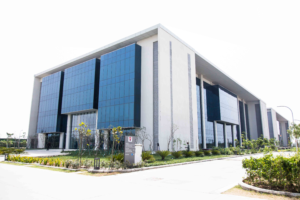
The Rs 1,300 crore, 4,090 acre dedicated ATR facility will also be used to test and evaluate aeronautical systems as well as air-to-ground weapons and other equipment.
It also has 2.2 km runway along with taxiways in conformity with the International Civil Aviation Organisation standard.
“The ATR houses the air traffic display system with remote control of radar operations, an Air Traffic Control radio frequency voice communication system and a range operational communication system,” said a DRDO official at the event.
When fully operational in the near future, the range will be used for testing and evaluating projects of the Defence Research and Development Organisation and its units such as the Centre for Air Borne Systems, the Gas Turbine Research Establishment, the Defence Avionics Research Establishment and the Centre for Military Airworthiness & Certification.
Curfew, Restrictions Continue In Kashmir

Srinagar : Curfew and restrictions continued in Srinagar and other places in the Kashmir Valley on Monday as authorities said “these were necessary to maintain law and order”.
“Curfew will continue in seven police station areas of Khanyar, Rainawari, Nowhatta, M.R. Gunj, Safa Kadal, Kralkhud and Maisuma”, Farooq Ahmad Lone, District Magistrate Srinagar said.
Syed Abid Rashid, District Magistrate, Anantnag also imposed restrictions in Anantnag town to maintain calm.
Similar preventive restrictions have been imposed in Shopian, Kulgam, Pulwama, Badgam, Ganderbal, Bandipora, Kupwara and Baramulla districts.
The Kashmir Valley has been on the edge since Saturday when Hizbul commander, Sabzar Bhat was killed in a gunfight with the security forces in Saimoh village of Pulwama district along with his associate, Faizan Ahmad.
Both belonged to Rathsuna village of Tral tehsil where they were buried in the village martyrs graveyard as hundreds attended their burial.
Authorities had imposed curfew and restrictions on Sunday to prevent violence in the aftermath of Hizbul commander’s death.
Separatists have asked people to observe a protest shutdown on Monday and appealed them to March to Tral town on Tuesday.
Senior separatist leaders including Syed Ali Geelani and Mirwaiz Umer Farooq have been placed under house arrest while JKLF chief, Muhammad Yasin Malik was arrested and shifted to the central jail on Sunday.
All educational institutions have been shut by the authorities in addition to postponement of exams scheduled on Monday by the university.
Train services also remained suspended on Monday for the second consecutive day.
Police said except for six stone pelting incidents on Sunday those were handled with maximum restraint by the security forces, the valley remained peaceful.
High tension and uneasy calm has started affecting the tourist inflow into the Kashmir Valley.
Many hoteliers and others directly associated with the tourism industry are expressing fears of losing their livelihood if things do not return to normal quickly.
Kashmir had a devastating tourist season last year in the aftermath of the then Hizbul commander, Burhan Wani’s killing on July 8.
The unrest that followed Wani’s killing lasted nearly six months during which 94 civilians were killed and hundreds other injured.
PM Modi Arrives in Berlin on His Four-Nation Visit

BERLIN: Prime Minister Narendra Modi arrived at his first stop here of his four nation Europe visit after leaving New Delhi on Monday morning..
Prime Minister Modi, on his second visit to Germany, will hold extensive talks with German Chancellor Angela Merkel at her official Meseberg Country Retreat where the two leaders would discuss the entire gamut of key issues, including trade and commerce, investment and counter-terrorism.
Both Mr. Modi and Chancellor Merkel will interact with top business leaders of both the countries to further strengthen trade and investment ties. The Fourth India-Germany Intergovernmental Consultations to boost bi-lateral ties is likely to top the agenda.
In a pre-departure statement on Facebook, Mr. Modi laid out the grounds for these consultations. ÂIndia and Germany are large democracies, major economies and important players in regional and global affairs. Their strategic partnership is based on democratic values and commitment to an open, inclusive and rules-based global order. Germany is a valuable partner in our development initiatives and German competencies fit well the vision for India’s transformation.Â
Germany is India’s leading partner in trade, technology and investment. This visit is expected to open a new chapter in India’s bilateral cooperation with Germany and further deepen the Strategic Partnership.
The two nations will also chart out a future roadmap of cooperation with focus on trade and investment, security and counter-terrorism, innovation and science and technology, skill development, urban infrastructure, railways and civil aviation, clean energy, development cooperation, health and alternative medicine.
Currently, there are 1600 German companies active in India, and nearly 600 joint ventures with Indian companies. In manufacturing, Germany can play an important role in PM’s initiative Make in India and Skill India.
India and Germany share common concerns on some international issues like the expansion of UN Security Council and terrorism.
In a series of messages on social media platform before embarking on the four-nation visit, the Prime Minister hoped that this visit will open a new chapter in bilateral relations with Germany and further deepen strategic partnership.
Mr Modi said, India will seek active participation of Spanish industry in various Indian projects including infrastructure, smart cities, digital economy, renewable energy, defence and tourism. Mr. Modi also expressed his commitment to strengthening and advancing India’s multi faceted partnership with France which is India’s 9th largest investment partner.
The Prime Minister further said, he is looking forward to visit St.Petersburg in this special year as India and Russia celebrate the 70th anniversary of diplomatic relations.
Indian Ambassador to Germany Muktha Dutta Tomar has said that Germany is a valued partner for India and Prime MinisterÂs visit will reiterate the strength and the valued relationship of both the countries further. In an interview to All India Radio, the Ambassador said that the Intergovernmental consultation will provide a road-map of Indo-German collaboration in trade, investment, science and technology, skill development, security and counter terrorism co-operation.
She said that Germany was among the top ten countries investing in India. India has lent support to 74 small and medium enterprises planning to invest 650 million Euros in the country.
From Germany, Mr. Modi will head to Spain, Russia and then France.
Sukma once again, LWE is single biggest threat to India’s internal security

As many as 26 valiant Central Reserve Police Force (CRPF) personnel were mercilessly killed by well-armed Naxalites in one of the deadliest attack in Sukma district in Chhattisgarh on April 24.
More than 300 Maoists armed with lethal weapons attacked CRPF contingent of 99 personnel of 74th Battalion. These CRPF men were safeguarding the construction of a road which connects Burkapal and Jagargunda towns. The insurgents planned the attack meticulously, selected the place of attack and collected the relevant intelligence through villagers; few out of them might be innocent while others must be supplying crucial intelligence about security forces regularly to insurgents. The extremists also looted weapons and equipment of the slain CRPF men.
Left Wing Extremism (LWE) is the most potent threat to IndiaÂs internal security and in past Maoists made several fatal assaults on Central Armed Police Forces (CAPF). Just a month back on March 11, LWE cadres killed 12 CRPF Jawans in Sukma while in 2016 Naxalites killed more than 20 CAPF personnel.
These successful assaults on security forces besides demoralizing the CAPF also raise the status of LWE among the local masses. It hampers the investment climate and enhances the animosity between the local populace and security forces.
Unfortunately, the government lacks a comprehensive policy and most of the time it is a knee-jerk reaction while LWE should be dealt as a major problem faced by the nation. Central government should make a comprehensive policy after consulting state governments facing LWE threat, leaders of various political parties, NGOs working in the area but not those sponsored by LWE and once the policy is formulated it must be implemented in letter and spirit.
LWE affected areas are underdeveloped and there is widespread exploitation of common people by corrupt government servants, political leaders and businessmen. Maoists took advantage of this nexus and now they do not allow the development of the area. The extremists obstruct construction of roads, opening of educational institutions, hospitals, supply of electricity etc. In fact the masses of this area are completely deprived of the progress of the country.
Government should launch skill development programmes, vocational colleges should be established, small scale industries should be created and employment generation schemes should be sponsored by government.
Government agencies as well as NGOs should also propagate about the developmental projects conducted by them so that locals understand that government is working for their benefits while Maoists are thwarting developmental projects. The press should also project developmental work done by government as well as good work done by security agencies.
Nonetheless only developmental plans would not suffice as LWE cadres would not allow the development of the area hence security forces must be strengthened. The writ of government must prevail hence CAPF should be given latest arms & ammunition, helicopters, drones, mine protected vehicles, armoured personnel carrier (APC) and better communication system. There should be more road and rail links and additional mobile towers should be constructed.
CAPF as well as police forces of the states needs training not only in weapons handling but also in jungle warfare, fighting with terrorists etc. Indian Army possess the requisite expertise in it therefore CAPF as well as state police personnel should be trained in these special courses. The CAPF and police training institutes should take army personnel in their training institute on deputation. There is no use involving army in Naxal operations as it would be detrimental to the country.
CAPF must involve local police in operations as the latter have better idea of terrain, geography and people of the area.
Left Wing extremists collect huge money by extortion from mining mafia, and various companies operating in their areas. The security forces must stop the source of their finances. Naxalites cannot function without constant supply of money.
The rehabilitation programmes of surrendered Naxalites must be implemented properly so that the surrendered Maoists do not go back to terrorism.
The Security forces posted in Naxal affected areas must follow Standard Operating Procedures (SOPs) religiously as violation of SOP may be disastrous for the forces.
CAPF should incessantly continue search operations in Naxal areas as it will keep Maoists under pressure as well as security forces may unearth some arms caches. The support agents of Maoists would also be caught.
The Maoists operate in deep forests where it will be difficult for CAPF to locate them hence it will be good if CAPF get air support in operations. Indian Air Force will be immensely helpful in operations.
Collection and passing of actionable intelligence to CAPF is another difficult area. Maoists collect much better intelligence than security agencies operating in Naxal areas. CRPF has started an intelligence training centre and officers of different intelligence organisations are imparting training and it is expected that some good result would emerge. Collection of intelligence should be done through agents (Humint) as well as through technical gadgets.
De-radicalization programmes should also be launched and efforts should be made to develop patriotism and nationalism in the local population. The NGOs which are financed by Maoists and always demonstrate in favour of LWE and make wild allegations against security forces should be dealt sternly so that the moral of security forces remain high.
Naxalite problem cannot be curbed early as it is not only a law and order problem and Maoists are Indian citizens who were exploited by different organisations hence they should be dealt cautiously and sincere efforts should be made so that lower cadre joins the mainstream. However, the hardcore Naxalites will remain toughies to be cracked or imprisoned.
(Jai Kumar Verma is a Delhi-based security analyst and a former senior officer of R&AW. Views expressed are personal.)
When Patton did not die immediately, the general was murdered by the agents of NKVD

As the most audacious General during World War II, George S Patton’s death in a car accident has raised questions if it was an assassination. There were attempts on his life and the General hardly took notice of them. But the US Army remains unbudging that its inquiry held Patton’s death was due to injuries suffered in an accident when a army truck hit his Caddilac limousine. However, some searching questions about the manner in which the accident occured remains unanwered.
There was no formal inquest, no attempt to speak to Patton in the hospital about his version of events, and no inquiry was conducted after his death. Seeking more information about the death of his friend, Gen Geoffrey Keyes, commander of the seventh Army immediately launched a probe of his own into the accident. But Keyes report too went missing. The only report that remained in circulation was a curious document that was allegedly written in 1952 and signed by PFC Horace Woodring, Gen Patton’s driver.
When asked about it in after 27 years in 1979, Woodring swore that he had never made any statements or signed his name to any such report. He believed the paperwork was completely fabricated.
Attempts by the authors of the book “Killing Patton” — Bill O’Reilly and Martin Dugard — to find the official accident report were unsuccessful. If it does exist it is well hidden. The cover up was complete. In 1979, Office of Strategic Studies Jedburgh Douglas Bazata made the astounding assertion that he was part of a hit team that lay in wait for Patton’s limousine. He claimed after the crash he fired a low velocity projectile into the back of Patton’s neck to snap it.
When Patton did not die immediately, the general was murdered by the agents of NKVD, the Russian security in charge of political assassinations and espionage, by using an odorless poison. Bazata also swore that Wild Bill Donovan of the OSS paid him $ 10,000 Dollars plus another $ 800 in expenses for his role in Patton’s death. But many believe Bazata’s story is far fetched. No projectiles were ever found, and surely Woodring, Patton’s driver, and Gen Hap Gay who was accompanying Patton would have seen an assassination team.
The authors believe the death of Gen Patton should be reexamined by American military investigations. Although the trail is ice cold, technological advances could solve some of the puzzles. There is no doubt that Patton died a hero, and history certainly honours that to this day. But the tough old general did not go out on his own terms, and there are many unanswered questions surrounding his death. These questions deserve to be addressed. He had some premotion about his impending death. A few weeks before leaving his daughters in Washington, Patton said something that disturbed them greatly. “Well, I guess this is goodbye. I won’t be seeing you again.” His daughters protested “It’s crazy”. Constantly wanting to attack the “krauts” as the Allied forces called the Fuhrer’s Nazis, the only competition he had came from the British commander Gen Bernard Law Montgomery for whom the overall allied commander Gen Dwight Eisenhower had a soft corner. Montgomery silenced the Nazi desert fox Gen Erwin Rommel and secured a major breakthrough.
It was on September 28, 1945 when Patton had 85 days to live that he is summoned with prejudice to meet his boss Eisenhower or ‘Ike’ as he was widely known. Because of foul Autumn rains, Patton had driven seven-and-a-half hours to reach Ike’s massive industrial office complex that now serves as his headquarters.
During the journey, Patton was thinking of the words to speak to save his career once again. The meeting between Patton and Ike borders on volcanic. Ike is “nasty and showoffish” Patoon thinks. Given his propensity to shoot off his mouth before the media, Patton has made a mess of things yet again going on record as stating that being a member of the Nazi party is no different from being a member of the Republican or Democratic party.
“To get things done in Bavaria after the complete disorganisation and disruption of four years of war we had to compromise with the devil a little. We had no alternative but to turn to the people who knew what to do and how to do it,” he told a small gathering of the press in his office, defending his use of former Nazi officials in the rebuilding of Germany.
But the truth is Patton no longer has a career worth saving. He is restless and bored. His behaviour borders on depressive some days, with the best remedy being a hunting expedition or time on horseback. Patton desperately misses the war. He also believes that the Russians are America’s new enemy, and should be treated as such.
This was also the view of Britain war time Prime Minister Winston Churchill. Patton stands alone. Indeed, American troops are either going home or being sent to the Pacific to fight the Japanese, leaving fewer and fewer GIs to fight the “Mongols” as Patton calls the Russians.
Even more disturbing to Patton is that all his peers are going home to bigger and better jobs. While Patton spends his days reluctantly getting rid of the Nazi presence in Bavaria, Ike will soon be the Army chief of Staff, Gen Omar Bradley is already in Washington, heading the new Veterans Administration, and of course Gen Courtney Hodges is of to fight in the Pacific.
It seems there is no place for Patton in a peacetime army. “Your greatest fault,” Eisenhower tells Patton “is your audacity”. The words are meant to sting but both men know that Patton considers audacity his greatest asset. He has no choice as he walks out of Eisenhowver’s office. Later on he tells an aide over dinner that he’d like to resign from the Army so that he can go home and say “what I have to say.” But powerful people do not want this to happen. Patton knows too much — and saying what he knows would be a disaster. He must be silenced.
At 6 AM on December 9, 1945 Patton who has barely a dozen days to live has awakened. Official Army orders are directing Patton to return home where he has arranged to take 30 days leave and celebrate Christmas with his family. After that he plans to leave the military. On this particular day Patton decides to go pheasant hunting outside Manheim but enroute visits the Roman fort near Sallburg.
He starts at 9 AM and at 11.45 AM a military truck crashes head on with Patton’s Cadillac. At 12.43 PM Patton arrives at the US Army 130th Station Hospital. In the right backseat Patton is thrown forward his head slamming violently into the steel partition between Woodring’s driver’s compartment and the backseat. His nose breaks. He feels a sharp pain at the back of his neck.
After checking on his staff, Patton says in a weak voice “I believe I am paralysed.” Military Police Lt Peter K Babalas is on the scene and opens the back door and finds himself staring at George Patton being supported in an upright seated position. He was having trouble breathing. He asked that his arms and shoulders be rubbed hard. His face is growing pale and his feet are extremely cold.
“I don’t want a damned thing,” he tells the attending Doctor. Allied authorities are given the top secret information that one of America’s great heroes is incapacitated. Doctors believed Patton will survive his injuries and should be able to travel soon. They were proved wrong.
PM inaugurates India’s longest bridge in Assam

NEW DELHI: Prime Minister Narendra Modi on Friday inaugurated India’s longest bridge – the 9.15 km long Dhola-Sadiya bridge, over the River Brahmaputra, in Assam.
This was his first engagement on the third anniversary of his swearing-in as the Prime Minister.
The bridge will enhance connectivity and greatly reduce travel time between Assam and Arunachal Pradesh by nearly four hours. After unveiling a plaque to mark the inauguration, the Prime Minister travelled, and walked on the bridge for a few minutes.
Later, addressing a public meeting at Dhola, the Prime Minister said that the inauguration of the bridge marks the end of a long wait for the people of this area. He said the Union Government has decided to name the Dhola-Sadiya bridge after the great musician, lyricist and poet, Bhupen Hazarika who hailed from Assam. The Prime Minister said infrastructure is extremely important for development, and the effort of the Union Government is to fulfil the dreams and wishes of the people. He said this bridge enhances connectivity between Assam and Arunachal Pradesh, and opens the door for economic development, on a big scale.
He said the eastern and north-eastern parts of the country have the greatest potential for economic development, and this bridge is just one element of the Union Government’s vision in this regard.
The Prime Minister said the bridge will bring about a positive change in the lives of the common people. He said the Union Government is placing great emphasis on the development of waterways as well.
The Prime Minister said enhanced connectivity between the North-East and other parts of the country is a priority for the Union Government, and work has been greatly speeded up in this regard. He said that good connectivity in the North-East will also link the region with the economy of South-East Asia. The Prime Minister also spoke of the immense tourism potential of the North-East.
Government Will Not Go Back On Its Promise On Black Money: Modi

Marking the third anniversary of his government, Prime Minister Narendra Modi on Friday vowed not to go back on the government’s fight against black money and said he was ready to pay any price for that campaign.
“The first decision of our government was against black money… All those who have black money and benami property, their children drive most expensive motorbikes in the world… If that money has been earned through corruption, we will get it out and return it to the people,” Modi said on Friday.
“I know we will have to pay the price for this, I am ready to pay any price, but I will not go back on my promise to the people,” Modi said, adding that the people of India wanted honesty.
Speaking at Guwahati, the Prime Minister said that there was a time when people talked only about ‘Kala Dhan’ (black money) but under the Bharatiya Janata Party (BJP) government, people are talking about ‘Jan Dhan’ the government programme for opening zero balance accounts for the poor.
The Prime Minister added that soon people will talk about Digi Dhan or digital money.
Attacking opposition parties over the issue of demonetisation, Modi said opposition leaders tried hard to fuel anger among the common people, but it did not work as people supported the government.
“It was a tough decision and politicians at that time said a lot to fuel anger among people… Despite the efforts, people were not misled and they had faith in the government and the Pradhan Sevak (Prime Servant),” Modi said.
The Prime Minister also said that he was in Assam to mark three years of his government, while the previous governments were focused only on Delhi.
“Earlier there was a tradition that Delhi was most important on such occasions,” Modi said.
“For us, every corner of India is Delhi, that is our culture,” he said.
Modi said that in the course of on a single day, in the form of the bridge over river Brahmaputra and an Agricultural Research Institute in Goghmukh, Assam got projects worth Rs 3,500 crore.
He also said the government is working towards doubling farmers’ income by 2022, and for that project Rs 6,000 crore will be provided. He said that Foreign Direct Investment would be invited for setting up food processing units, so that farmers can earn more through value addition to their produce.
The Prime Minister was in Assam to inaugurate the strategically crucial and India’s longest 9.15-km river bridge connecting Assam and Arunachal Pradesh near the China border on the third anniversary of the BJP government.
(With Inputs from IANS)
Former Punjab Police Chief K.P.S. Gill Dies At 82

New Delhi Former Punjab top cop K.P.S. Gill, who is credited with having played a big role in eliminating terrorism from Punjab, died here in a private hospital. He was 82.
Gill, a former Director General of Punjab Police, was suffering from end-stage kidney failure and significant ischemic heart disease.
“He had been recovering from peritonitis but died of sudden cardiac arrest due to cardiac arrhythmia”, said a statement from Sir Gangaram Hospital where he was undergoing treatment. He died at 2.55 p.m.
He was admitted to the hospital on May 18.
Gill, who was known as ‘supercop’, was DGP of Punjab Police between 1988 and 1990 and came back to the post again in 1991 and held it till retirement in 1995.
The ‘Supercop’ who pacified Punjab and his controversial career
Hailed by many as a “Supercop” who ruthlessly stamped out terrorism from Punjab in the 1990s, K.P.S. Gill had an equal number of detractors who slammed his “high-handedness” and alleged human rights violations in his campaign against Khalistani militancy.
The stern-looking, impressively-moustachioed Gill, who was brought to the state from the northeast in 1984 after “Operation Blue Star”, was no stranger to controversy — ranging from the incompetence charge levied against him by one of his predecessors to the infamous incident involving woman bureaucrat Rupen Deol Bajaj in 1988.
Even after his retirement, he figured in the headlines for both the right and wrong reasons. Eagerly sought as security advisor by various states, and even neighbouring countries like Sri Lanka, facing militancy, he remained critical of prevailing security policies — or lack thereof.
His stewardship of the Indian Hockey Association also came under a cloud after the national team failed to qualify for the Olympics for the first time in 2008. Adding to the indignity, he was denied permission to attend the 2012 London Olympics after a successful canvassing by a Britain-based human rights group.
But it was his police career that defines Kanwar Pal Singh Gill.
Born in Ludhiana in 1935, Gill did his masters in English from Shimla’s St Edmunds. Joining the Indian Police Service in 1958 and being posted to the Assam-Meghalaya cadre, he spent the next quarter century in the northeast. But there also he got embroiled in controversy to the extent that, in 2003, then Assam Chief Minister Tarun Gogoi declined a proposal to make him the state Governor.
Gill, who headed the Assam Police when the anti-foreigners agitation was at its height, seemed to have put off many people there with his brusque style. He was also charged with beating a prisoner to death but was exonerated in the case by the Supreme Court.
It was Punjab that made his name. Deputed to the state in the wake of the situation spiralling out of control after Operation Blue Star, which he confessed had also hurt him, Gill did not get on very well with the new police chief Kirpal Dhillon.
Breaking his silence on his subordinate in his book “Identity and Survival: Sikh Militancy in India 1978-1993”, Dhillon, who was brought in from Madhya Pradesh but eased out most unceremoniously after an year in the post, accused both his successors Julio Ribeiro and Gill of “strategies that tended to promote a culture of illegitimate, brutal and possibly venal policing among their subordinates”.
Dhillon, in his 2013 autobiography “Time Present and Time Past”, went further, blaming Gill’s decisions and “perceived incompetence” for Sant Longowal’s assassination soon after the signing of the August 1985 Punjab Accord with Prime Minister Rajiv Gandhi. It was this event that lay behind Dhillon’s removal.
After coming to prominence with “Operation Black Thunder” in 1987 when armed Khalistani militants, who again ensconced themselves in the Golden Temple, were made to surrender without any damage to the structure, Gill became Punjab Police chief in 1988 — when the situation was at its nadir with thousands attending the rituals of killed militants.
However, he only hit his peak in his second tenure in the post that began in 1991, when the new Congress government, headed by Beant Singh, gave Gill a free hand and he, in turn, unleashed his subordinates.
Bounties were placed on militants, kidnappings reportedly curbed by identifying those responsible and picking up their relatives, and under “Operation Night Dominance” the entire police force brought out at night to challenge the terrorists with innovations like armoured tractors to chase them across crop fields.
Inevitably, there were extra-judicial killings, innocents got caught in the crossfire, a few human rights activists went missing in suspicious circumstances and his comments and actions — offering to help the Uttar Pradesh Police clean up the Terai of Sikh militants and the killing of suspected terrorists in Kolkata — riled many.
But by 1993 and 1994, there was more peace in Punjab than had been seen in the previous two decades. There was a last high-profile sacrifice before the militancy was wiped out — that of Beant Singh, blown up by a human bomb in the Secretariat at Chandigarh in September 1995, shortly before Gill’s retirement.
After his retirement, Gill set up his institute on security matters and was consulted by various states, including Narendra Modi’s Gujarat in the wake of the 2002 riots, and Maoist-affected Chhattisgarh in 2008, but he never made the same spark.