Logo

Logo

Russian President Putin praises India at Eastern Economic Forum

Arsh Verma |

After the successful conclusion of the 18th G20 Summit in New Delhi, the global focus shifted towards another grand event of the East. The 8th Eastern Economic Forum was started on 10th September in Vladivostok, Russia. Union Minister Sarbananda Sonwal was representing India at the economic summit and addressed the stakeholders on the Eastern Maritime Corridor, which operationalises from Chennai to Vladivostok, as an alternative trade route. The minister held several strategic bilateral talks on economics and political issues with his Russian counterparts Alexey Chekunkov and Vitaly Saveliev. Russian President Vladimir Putin also spoke to the attendees on the final day of the summit, 13 September.  


The Russian President skipped two major global events in the last 20 days, the BRICS Summit in South Africa and the G20 Summit in India due to the arrest warrant issued by the International Criminal Court for war crimes in Ukraine. Foreign Minister Sergey Viktorovich Lavrov represents Russia in both events. 


Speaking at the 8th Eastern Economic Forum in Vladivostok, the Russian President praised the efforts of Indian Prime Minister Narendra Modi for enhancing the global economy. He also said that PM Modi is doing the right things for India to promote the open market in the country. 


In addition he said, “Everyone knows, we did not have domestic cars in the past, but now we do. True, they look more modest than the Mercedes or Audi cars we bought and drove in the 1990s, but that’s not a problem. I think we should follow the example of many of our partners, especially India. They focus on manufacturing and servicing vehicles made in India. I think PM Modi is doing the right thing to promote Make in India. He is right.” 


However, he did not make any comment on the offer of North Korean President Kim Jong Un, who offers support to help the Russians in the ongoing conflict with Ukraine.  Delegations from China, Laos, Mongolia and ASEAN countries are also participating in the economic forum.

Beware of bats, the Nipah virus is back

Arsh Verma |

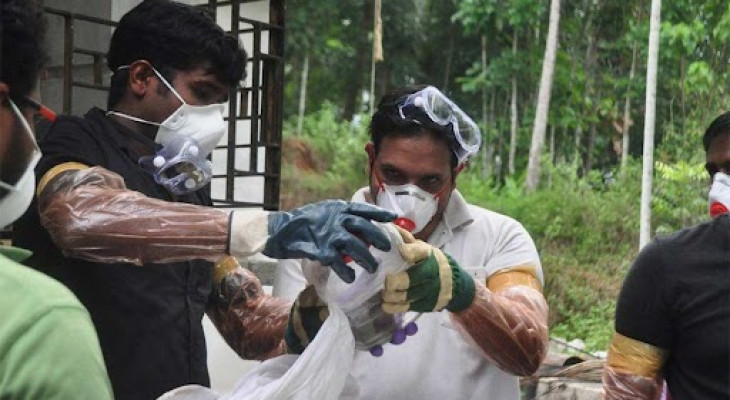
A health advisory warning has been issued in Kerala’s Kozhikode district regarding a suspected Nipah virus outbreak. Health Minister of Kerala Veena George held a high-level meeting on September 11, where she advised the citizens to take precautionary measures. The matter spread when two unnatural fever deaths were reported in Kozhikode on August 30, Four relatives (including one adult and three children) who were in contact with one of the victims were admitted to a hospital for treatment. Another apparent death from the Nipah virus occurred on September 11. In May 2018, 17 people died due to the Nipah virus in Changaroth village of Kozhikode district near Perambra and in 2021, a 12-year-old boy also died of a virus. 


The Chief Minister of Kerala P. Vijayan requested everyone to follow the action plan issued by the medical advisory committee. It’s my appeal to the people of states that do not panic or not believe in fake news, the government must ensure the safety and security of its citizens. He also added the state is observing the situation very closely.


Nipah is a deadly virus with a mortality rate of over 50 per cent. Nipah virus is a zoonotic virus which jumps from animals to humans who are in touch with them. It is a viral infection that mainly affects the body of animals such as bats, pigs, dogs, and horses. Symptoms of this virus are; fever, swelling of the brain, headache, breathing issues, cough and sore throat, vomiting, diarrhoea, severe pain, and muscle weakness. 


Nipah can spread to humans through close contact with infected animals or through secretions containing the virus in fruit trees, fruits, date palm sap, sap or rushes. It can spread from person to person through close contact at home or in the hospital. It can be spread by handling the corpses of Nipah patients.  


This virus is also known to spread through droplets in closed and confined environments. This happened with the 2018 outbreak in Kerala. The infection spread from the index patient to others in a small x-ray corridor in the hospital. It cannot spread in open, well-ventilated spaces.

Master the art of cooking 5 budget friendly meals

Preyensha Srivastava |

Creating budget-friendly meals has improved over time thanks to a combination of factors. Increased access to information through the internet has allowed for the sharing of cost-effective recipes and cooking tips. Additionally, awareness of the importance of budget-conscious eating has grown, leading to innovations in affordable ingredients and cooking techniques.


Why are budget-friendly meals helpful?


Budget-friendly meals are helpful for various reasons. Firstly, it encourages financial stability by the reduction of grocery expenses, allowing individuals and families to allocate funds to other essential needs. Moreover, budget-friendly meals often emphasize healthier, homemade options, which can lead to improved overall well-being and reduced healthcare costs. Moreover, this shift towards budget-conscious cooking is environmentally responsible, as it encourages the use of local, and less wasteful ingredients.


How to start preparing meals on a budget? 


  1. Design a menu and decide the meals you want to have for each course so that you are able to make a grocery list. With a meal plan, one tends to spend less on fast foods or convenience meals. 
  2. While buying groceries check for sales, coupons, etcetera so that you get good buys. However, do not buy unnecessary items or else they will go to waste.  
  3. Plant-based meals offer great protein options at a reasonable price, thus, try incorporating them into your menu. 
  4. Start incorporating ingredients like rice, pasta or barley into your recipes as they are inexpensive and still can be used in a plethora of different ways. 
  5. Avoid recipes that require special ingredients so that you do not go overboard. If by any chance you have to get that ingredient then see how it can be helpful to you in future as well. 
  6. Smartly use leftover ingredients so that you neither waste anything nor do you get bored because of repeating meals. 


Easy meals on a budget:  5 budget friendly meals


1. Egg Bhurji 


Honestly, it is very hard to go wrong with egg bhurji, moreover, the recipe is also very easy to make.

Ingredients: Eggs, onions, tomatoes, green chillies, turmeric powder, red chilli powder, salt, oil, fresh coriander

Recipe: In a pan, sauté onions until translucent. Add tomatoes and chillies. Once softened, add spices and beaten eggs. Scramble and cook until done. Garnish with fresh coriander, for that beautiful presentation and aromatic smell.


2. Vegetable Pulao 


It is one of the easiest yet wholesome meals. 

Ingredients: Basmati rice, mixed vegetables (carrots, beans, peas, etc.), whole spices (bay leaves, cinnamon, cloves), onions, ginger-garlic paste, green chillies, salt, oil or ghee

Recipe: Sauté whole spices and onions in oil or ghee. Add the ginger-garlic paste, vegetables, and rice. Add water, salt, and cook until the rice is done.


3. Vegetable Stir-Fry


A dish that can be combined with a bunch of things and can always be customised. 

Ingredients: Your favourite vegetables, soya sauce and ginger

Recipe: Stir-fry your favourite vegetables like bell peppers, broccoli, and carrots in a pan with soy sauce and ginger. Cook until the vegetables are soft, approx 10-15 mins depending on each type. At last serve, it with cooked rice or noodles. 


4. Spaghetti Carbonara 


Who does not love a good spaghetti? 

Ingredients: Spaghetti, eggs, grated cheese, bacon, spices

Recipe: Cook spaghetti.  Then mix eggs, grated cheese, and cooked bacon. Toss cooked spaghetti in the mixture and lastly serve it with season with black pepper.


5. Lemon Garlic Baked Chicken


Baked chicken with that lemony taste is all one needs!

Ingredients: Chicken drumsticks or thighs, olive oil, lemon juice, minced garlic, salt, and pepper

Recipe: Marinate chicken in a mix of olive oil, lemon juice, garlic, salt, and pepper for at least 30 minutes. Bake at 375°F (190°C) for 25-30 minutes or until chicken is cooked through. Enjoy it. 


Always remember, that each of these are basic recipes, thus, you can always add or subtract ingredients based on what you have on hand and your personal preferences. 


Conclusion


The world of budget-friendly culinary endeavours provides a canvas rich with possibilities, from taste to nutrition. As individuals become more informed and responsible consumers, the importance of creating meals that are both cost-effective and nourishing becomes evident. The provided recipes, alongside the tips, are a testament to the fact that quality meals do not always have to come with a hefty price tag. By being mindful of our choices, we can achieve culinary delights that nourish our bodies, do not strain our wallets, and are environmentally conscientious. Whether you are a seasoned cook or a kitchen novice, there is always room to explore, innovate, and delight in the realm of budget-friendly meals.

Ayodhya Sage puts a bounty of Rs.10 Crore on Udhayanidhi Stalin’s head

Arsh Verma |


For a second week, the demands for the execution and criticism against the DMK Minister were on the rise, because he remarked on eradicating Sanatan Dharma. K Annamalai the BJP Leader in Tamil Nadu bashed the people who believed that they would become heroes by spreading hate against any religion. Also, Ayodhya visionary Paramhans Acharya has declared a ₹10 crore bounty for Udhayanidhi’s head.


The BJP leader said, “Some people are unworthy, they think that demeaning someone’s religion can make them idols. People want overnight stardom, they came into politics as they belong to a bloodline related to politics.” The Politician told the local media, “Anyone who puts a bounty on someone’s head is a fake preacher.” pointing towards Paramhans Acharya. The leader did not disclose the name of the sage, the claim has since provoked a sharp comeback from the opponent leaders. Replying to the claim of the Ayodhya sage the Congress MP Karti Chidambaram.“Why does not your bulldozer government capture this imposter?” referring to the Yogi government in UP.  The Ayodhya seer, in the meantime, seems to have increased the severity of his threat by advising Stalin to “read the history of Sanatan Dharma” before criticizing it. 


“He should apologize for everything he has said that is contrary to our Sanatan Dharma; else, he would be punished, regardless of whether he is the chief minister’s son. If his head is not beheaded, I will raise the reward, and if necessary, I will execute him myself, Paramhans Acharya had promised last week. Earlier last month, the DMK leader caused controversy when he suggested that Sanatan Dharma should be destroyed. Additionally, he compared ‘Sanatan Dharma’ to diseases like dengue fever and malaria, stirring up debate across the country.

Saragarhi: The story of 21 Sikh soldiers who became immortal

Arsh Verma |

12 September 1897, on this day 126 years ago, 21 valiant Sikh soldiers of 36th Sikh Regt led by Havildar Ishavar Singh repelled a ferocious attack by thousands of Orakzai tribesmen. Today in 1897 at Saragarhi, Havildar Ishavar Singh led 20 Sikh soldiers in a last stand rarely witnessed in the annals of military history. 21 soldiers of the Sikh Regiment fought against 10,000 Afghan tribesmen. They had the option of withdrawing from the post, they were offered money and safe passage, but they refused. Havildar Ishavar Singh and his men willingly choose death before dishonour, for the ashes of their fathers, for the honour of the regiment, and for the pride of being soldiers. The 21 Sikh soldiers at Saragarhi became immortal and walked with the gods.  


Saragarhi was a small village in the border region of Kohat, located in the Samana Hills in present-day Pakistan. On 20 April 1894, the 36th Sikhs of the British Indian Army were formed under the command of Colonel J. Cook, consisting entirely of Jat Sikhs. In August 1897, five companies of the 36th Sikhs under Lieutenant Colonel John Haughton were sent to the north-west frontier of British India (now Khyber Pakhtunkhwa) and were stationed at Samana Hills, Kurag, Sangar, Sahtop Dhar, and Saragarhi.


The Day of Forgotten Battle

It was a sunny morning on 12th September, when Sepoy Gurmukh Singh reported that around thousands of armed men were marching towards the fort. Immediately, he informed his commander at Fort Havildar Ishavar Singh and Colonel Haughton for help. However, the British official denied sending immediate reinforcements to protect the fort and asked the soldiers to back out from the post. Then the 21 fearless soldiers of the Sikh regiment remember the teachings of their religious guru and decide to fight for the motherland. 


Around 10:00 a.m., the 21 courageous men of the 36th Sikh regiment started to retaliate against the attack of Martini-Henry rifles with their old weapons. Sepoy Bhagwan Singh was the first who attained martyrdom and Sepoy Lal Singh was the first who was highly wounded. After a long hurdle, the Afghans broke a portion of the wall and successfully entered the fort. The leaders of the enemy forces reportedly made promises to the soldiers to entice them to surrender, but they refused and some of the fiercest hand-to-hand battles occurred.


The last surviving defender was Sepoy Gurmukh Singh, who reported the battle to Haughton. His last message was to ask permission to take the gun. After receiving permission, he packed the tape recorder and kept the door closed. He reportedly killed 40 Afghans and the Pashtuns were forced to light a fire to kill him. Singh is said to have repeatedly shouted the Sikh battle cry, as he died. “Jo Bole So Nihal, Sat Sri Akal!” means (Blessed forever is he who says that God is the ultimate truth!).

Aftermath

The battle was not as easy as the Afghans had thought. They were thinking that they would defeat these 21 soldiers within an hour and move forward to capture Fort Gulistan, but that did not happen. The war lasted almost the whole day which broke the confidence of the Pashtuns. The enemies also praised the bravery of Sikh soldiers, “They died fighting like demons.” 


The 21 Sikh non-commissioned soldiers who died in the Battle of Saragarhi were from the Majha district of Punjab and were posthumously awarded the Indian Order of Merit, the highest award an Indian soldier could receive at the time. The equivalent award for bravery was the Victoria Cross. The award is equivalent to today’s Param Vir Chakra, which is conferred by the President of India.


India-Middle East-Europe Grand Economic Corridor

Arsh Verma |

The recently concluded G20 Summit proved to be a positive dialogue for the members present there, they made important economic and political strategies to enhance the growth of their respective nations. To fulfil the motto “one planet, one family, one future” of this conference the State Heads of India, Saudi Arabia, UAE, France, Germany, Italy, EU, and the USA signed a MoU on the India-Middle East-Europe economic corridor. It is a planned economic corridor that aims to boost financial development by fostering connectivity and economic integration between Asia, the Arabian Gulf, and Europe. Indian Prime Minister Narendra Modi announced this grand economic corridor from the stage of the historical 18th summit of G20.  


The project seems to be the biggest win from the G20 Summit for India and the involved members, as they are cautiously utilising every possible opportunity to counter the growing influence of China in the global economy.  The icing on the cake is that Italy, which is a member of the China Belt and Road Initiative, is hinting to walk out from the initiative. The placement of Italy in the plan was a crucial step by the leaders because it helped in joining the maritime and road belts. 


PROJECT


This rail and shipping corridor is part of PGII. PGII is a collaborative project of the G7 countries to provide monetary aid for infrastructure projects in developing countries. This project is also known as a green and digital bridge across continents and civilizations. This aims to boost trade between India, the Middle East and Europe. It creates a modern spice route that connects regions that account for about a third of the world’s economy. The economic route has a rail connection as well as an electrical cable, a hydrogen tube and a high-speed data cable. The proposed project would link rail and port facilities in the Middle East, including the United Arab Emirates, Saudi Arabia, Jordan and Israel. The corridor will boost trade between India and Europe by up to 40 per cent.

IMPORTANCE for INDIA

India has been concerned about China’s connectivity projects in the region under the decade-old Belt and Road Initiative. For India, the refusal of Pakistan to leave the overland access in the country is also frustrating. India’s attempt to create a reliable link through Iran with Eurasian countries did not yield much result. Tehran is more open to Bharat, but its confrontation with the West has overshadowed the commercial benefits of Iran’s corridors to Eurasia. Finally, India found a formula to connect with both the Arabian Gulf and Europe.

COUNTERING CHINA


The proposal comes at a time when Saudi Arabia and the United Arab Emirates, both longtime US allies, have strengthened their ties with China. Middle Eastern countries are trying to strengthen relations with the rapidly growing economies of the far East. Beijing has also recently strengthened ties with the Middle East, helping broker a deal between Saudi Arabia and Iran earlier this year. At the BRICS summit in 2023, oil-rich Gulf states announced their intention to join the group, where China plays a leading role. The plan is likely to be an ambitious attempt by Washington to counter China’s Belt and Road Initiative, which aims to connect more of the world with the country’s economy. Recently, China’s BRI has faced some problems due to rising loan defaults and slowing investment. 


Foreign Relations experts believe that this plan holds the collective importance of old silk and spice routes together. Every leader is aware of the global opportunities as well as the challenges they face. If India wants to win the next two decades, then this export-driven manufacturing and trade route is the important thing for Bharat.

Nurturing Wellbeing in a Hectic World: The Power of Self-Care

Preyensha Srivastava |

In a world characterised by constant hustle and bustling schedules, it is easy to get caught up in the whirlwind of modern life. From juggling career requirements to maintaining social connections to completing the daily chores, the demands on our time and energy seem endless. In the midst of this chaos, the concept of self-care shines as a beacon of hope and rejuvenation. This article delves into the importance of self-care in today’s world, offering insights and strategies for embracing this vital practice.


What is self-care and what are its benefits? 


Self-care is often misunderstood as a selfish indulgence. However, it is totally the opposite of that. It rather involves taking deliberate steps to nurture your physical, emotional, and mental well-being. It is about preserving your energy and maintaining balance, preventing burnout, and ensuring you are at your best to face life’s challenges. That is because challenges are always going to come but with the right care one will be strong enough to face them. 


The Benefits of Self-Care


  • Improved Physical Health: Prioritising self-care can lead to better physical health. Regular exercise, a balanced diet, and adequate rest are all integral components of self-care that contribute to a healthier you.


  • Enhanced Mental and Emotional Wellbeing: Self-care activities like journaling, therapy, or spending quality time with loved ones can significantly improve your mental and emotional state. These practices help in managing stress and cultivating emotional resilience.


  • Increased Productivity and Focus: Taking time for self-care recharges your mental batteries, making you more focused and productive. It’s a paradox: By slowing down and taking breaks, you can accomplish more.


  • Better Relationships and Social Life: When you’re well-nurtured, you’re better equipped to build and maintain meaningful relationships. Self-care allows you to be present and engaged in your social interactions.


Common Challenges to Self-Care


Despite its numerous benefits, self-care often faces roadblocks. A busy schedule can make self-care seem like a luxury you cannot afford. However, it is crucial to prioritise it for your overall well-being. Often, many people feel guilty for taking time for themselves, due to societal expectations that emphasise constant productivity. Learning to let go of this guilt is essential. It is understandable that balancing work, family, and self-care can be challenging, yet it is vital to shift priorities and communicate your needs to those around you.


Strategies for Effective Self-Care


Every problem has a solution, thus, here are a few strategies for effective self-care. 


  • Identifying Your Needs: Recognizing your physical, emotional, and mental needs is the first step in self-care. Pay attention to signs of burnout and stress.


  • Creating a Self-Care Routine: Build a personalised self-care plan that includes activities you enjoy. Incorporate self-care into your daily life, making it a habit.


  • Setting Boundaries: Learning to say ‘no’ when necessary and communicating your boundaries to others is crucial for safeguarding your self-care routine.


  •  Mindfulness and Meditation: Explore mindfulness techniques and embrace meditation for stress reduction and increased self-awareness.


Self-Care for a Hectic Lifestyle


Discover simple self-care activities that fit into your busy schedule. Incorporate short self-care breaks into your workday to stay energised. Moreover, learn self-care strategies that can be used while travelling and commuting. Explore tools and apps that can help you relax on the go.


In conclusion, self-care is not a luxury; it is a necessity in our hectic world. It offers a path to improved physical health, enhanced mental and emotional well-being, increased productivity, and better relationships. Prioritising self-care can be challenging, but it is a journey well worth embarking on. In a world that never stops, remember to pause, breathe, and nurture your well-being.


For further exploration of self-care, books like  ‘The Self-Care Revolution’ by Suzy Reading, apps like ‘Headspace’ for meditation, and websites like ‘Psychology Today’ for insightful articles on self-care practices are recommended. These resources can be valuable companions on your self-care journey.

Karnataka transport union calls for strike, ‘Bengaluru bandh’

Arsh Verma |


Karnataka State Private Vehicles Owners Association has called for a Bengaluru bandh on September 11. Auto, Taxi, Cab and private buses will not run on streets on Monday. The strike was in protest of the Shakti scheme which offers free travel facilities to women on non-premium government buses. Private transporters have been saying that they are being seriously affected by this scheme and are demanding compensation from the State govt. All the 32 transport unions have decided to join the strike and are making some demands from the government. The protest comes after the Congress government did not take any measures on the demands of the association. Results claim that the association has lost around 40% of its revenue since the implementation of the Shakti scheme. 


The State Transport Minister Ramalinga Reddy said that Citizens do not need to worry, the government is ready to tackle the trouble created by private taxi, bus, and auto unions. The Karnataka Transport Department made all the arrangements for its people. The department also issued a traffic advisory for the people and requested to avoid the KG road, Sheshadri road, roads around Freedom Park and Majestic bus stand, and GT road. 


Private drivers have alleged that the Shakti scheme has adversely affected them and the State government has not met their 28 demands despite repeated discussions. Transport unions had earlier held talks with State Transport Minister Ramalinga Reddy on July 24, just three days before the protest was initially planned for July 27. At that time, Reddy assured them that 28 of their 30 demands would be met by the end of August 28. However, Reddy said that he would take the matter before the Chief Minister and discuss the issues with him. When there was no response from the government, the unions decided to go on a one-day strike on September 11. 


Some opposition leaders and political analysts said that Congress is not only increasing the debt of state transport but also killing the business of many middle and lower-class people. “Karnataka government should address the issues of private transporters,” says BJP leader and spokesperson S Prakash.


Arrest of Chandrababu Naidu; mass protest in Andhra Pradesh 

Arsh Verma |

Former Andhra Pradesh Chief Minister and Telugu Desam Party leader N Chandrababu Naidu was sentenced to 14 days in jail following his arrest on Saturday, 9 September. The former CM was arrested in the Andhra Pradesh Skill Development Scheme fraud case. Naidu’s investigation centres on a scheme in which government funds meant for a skills development project were allegedly diverted to various shell companies through fraudulent invoices that did not match the delivery of services. A special court in Vijayawada, which hears cases investigated by the Anti-Corruption Bureau (ACB), ordered custody of the CM to ACB after hearing competing claims from the state’s Criminal Investigation Department (CID) and Chandrababu Naidu. Naidu is placed at the Rajahmundry Central Prison with facilities such as home-cooked meals, separate rooms and security.


Challenging the arrest warrant filed against him by the CID, Naidu claimed in the Vijayawada court that he was wrongly accused in the case. He also claimed that it was a clear violation of Section 17A of the Prevention of Corruption Act. Section 17A deals with the need for preliminary sanctions to investigate the actions of a public servant in the performance of his official duties. Naidu’s statement argued that since he is the Chief Minister, the State Governor would be the punishing authority in his case.


Several TDP (Telugu Desam Party) leaders held a protest in Andhra Pradesh on Monday protesting the arrest of its leader and former chief minister N Chandrababu Naidu in a corruption case. Amidst the protests, several TDP leaders were arrested or placed under house arrest. The party had earlier made calls across the state to protest the arrest of N Chandrababu Naidu. 


In Sri Sathya Sai district, police placed former Minister Paritala Sunitha under house arrest in Venkatapuram village. However, she escaped from police custody and staged a demonstration in Ramagiri in solidarity with N Chandrababu Naidu. Party MLC Kancharla Srikanth took to the road in Chittoor district as a sign of protest. As part of the protest, several Andhra Pradesh State Road Transport Corporation (APSRTC) buses were stopped at depots since morning. 


A special group of TDP leaders met the honourable Governor of Andhra Pradesh S Abdul Naseer to complain about the false arrest of their leader. They claimed that not a single line in the report proved that the former CM was responsible for any crime, it was a planned conspiracy by the government with the help of its machinery to defame Chandrababu Naidu


Empowered Journey: Aisshwarya Deshmukkh, Mrs. Asia Pacific 2023

Devendra Khati |

Aisshwarya Deshmukkh, a proud native of Bangalore, Karnataka, clinched the coveted title of Mrs. Asia Pacific 2023 at the esteemed Mrs. India She is India 2023 Pageant. This remarkable victory has bestowed upon her the honor of representing India at the forthcoming Mrs. Universe pageant in Manila, Philippines.


Aisshwarya’s triumph resonated with a message of persistence and unwavering resolve. She expressed, “This accolade fills me with immense pride and reinforces my dedication to embodying the essence of a courageous and compassionate woman. I perceive myself not only as an individual achiever, but also as a voice for women, encouraging them to assert themselves and stand tall.”


The eighth edition of Mrs. India She is India 2023, presented in association with Zulfeyn, culminated in a spectacular display of beauty and talent at The Umrao in New Delhi, spanning from August 27 to 30. This moment marked the pinnacle of an extraordinary journey defined by empowerment and personal growth.


The crowned winners not only exuded beauty, but also demonstrated a resolute commitment to combating domestic violence, showcasing their unwavering dedication to effecting positive change in society. The judging panel for Mrs. India She is India 2023 contributed a wealth of diverse expertise and perspectives to the evaluation process.


Aisshwarya is propelled by a mission to empower the women of her generation. She envisions a future India where women not only attain equality, but also thrive in an environment of empowerment, support, nurturing, and respect. Her journey stands as a testament to the belief that women can adeptly navigate multiple roles while pursuing their aspirations. As an entrepreneur, Aisshwarya demonstrates her business acumen, and as a homemaker, she fosters a warm and nurturing atmosphere for her family.


Aisshwarya’s aspiration is both simple and profound: to serve as a living testament to the boundless potential of Indian women. Through her journey to the Mrs. Asia Pacific title, she aims to dismantle stereotypes and challenge preconceived notions about women’s roles. She steadfastly believes that Indian women possess the fortitude, determination, and skills to manifest any dream they set their minds to. What they require is not just personal determination, but also a support system that wholeheartedly believes in their capabilities – a belief that Aisshwarya fervently upholds.