Logo

Logo

Bollywood Actor Sharib Hashmi in Aneek Chaudhuri’s upcoming Hindi film on AI

Staff |

The shooting of the Hindi Film ‘The Zebras’ is all set to start soon. The movie revolves around the topic of Artificial Intelligence and its aftermath in the world of Fashion. The movie is a Hindi feature-length film that will be made under Aneek Chaudhuri’s direction. It will produced by Akhil Murali and Ashik Murali under Yulin Productions, Kerala. The film stars Bollywood actor Sharib Hashmi (The Family Man, Tarla, Filmistaan, Vikram Vedha), Bengali star Priyanka Sarkar and Usha Banerjee.


Aneek Chaudhuri, the film’s director is a filmmaker hailing from Bengal. He has been involved with films that were selected and screened at international film festivals of repute. Besides, the script of his recent film ‘Jharokh’ has been selected by the OSCARS for inclusion in its library.


Sharib Hashmi was last seen in Tarla (on Zee5), Afwaah (on Netflix), and Shiv Shastri Balboa. The director Aneek says, “It is a dream come true moment being able to direct such a good actor like Sharib. Sharib Bhai has been extremely supportive throughout the process and it is always a treat working with him. Really looking forward to it.”


Priyanka Sarkar was last seen in Abar Bibaho Obhijaan and Manobjomin. On Priyanka, Aneek says, “She is one of those rare actors from Bengal (currently) who exhibits both, the eagerness to break down and a landscape of emotions. She always was my first choice for this kind of a role, where she is portraying a model’s character.”


Aneek has earlier worked with Usha. On their third film together, he adds, “She has been a good support; and the one I go up to for my films. Usha has always been subtle and this time, she has been involved with the film since we began this journey.”


The director adds, “I am extremely thankful to Yulin Productions and Akhil-Ashik for coming forward in this endeavour; besides, I am grateful to Praveen Menon ji (eminent production controller from Kerala) who had introduced me to them. The producers are extremely supportive and are involved in the creative process right from the beginning.”


Yulin Productions was last involved with the production of the Malayalam film ‘Digital Village’. The Zebras is their foray into Bollywood films. The project is scheduled to go on floors soon.

Top 10 Most Expensive Indian Movies

Preyensha Srivastava |

The Indian film industry is known for its grand, and glamorous films. It is one of the biggest film industries in the world that, with its grandeur, raises the budget of the films. High-budget films also attract large masses of crowds generating a ton of money. From RRR to Jawan, Thugs of Hindostan, and Adipurush, here are the most expensive films ever produced in India. 


Here is the list of Top 10 Most Expensive Indian Movies


1. Adipurush 


A movie based on Hindu mythology starring Prabhas and Kriti Senon was supposed to be a super hit. The movie was full of VFX and special effects and this was the main selling point of the film. The movie was made on a budget of Rs. 600 Crore.  However, the film faced a lot of backlash and hate from the audience.


2. RRR


The most hyped, Rs 600 crore banger, RRR is one of the best films ever produced. The movie was directed by SS Rajamouli and starred Junior NTR and Ram Charan. It was nominated for the Oscars and the movie won it for its song Natu Natu.


3. 2.0 


The movie featured two of the mega stars of the Indian film industry Rajnikanth and Akshay Kumar. The movie is a sequel to a sci-fi movie Robot. It was made on a budget of Rs.575 crore and released in 2018. The movie tries to give a good message to society. The story starts when mobile phones start to flee out of the hands of the residents of Chennai, Doctor Vaseegaran and his android assistant, Nila, are called to the recovery; together, they face the esoteric powers of Pakshi Rajan.


4. Ponniyin Selvan-1


PS-1 or Ponniyin Selvan is the most expensive movie ever made in India. It was directed by Mani Ratnam and was released in 2022. The grand shooting of the drama cost around Rs. 500 Crores. The movie stars Aishwarya Rai Bachchan, Vikram, Jayam Ravi, Karthi, Trisha,  Jayaram, Aishwarya Lekshmi, and others in crucial roles. The story of the film is based on a Tamil novel.

5. Pushpa: The Rise


Director Sukumar directed a masterpiece named Pushpa The Rise,  an action thriller. The film was made on a budget of Rs. 400 crores, making it an expensive movie. Allu Arjun and Rashmika Mandanna play important roles in the film. The film revolves around a  worker named Pushpa who makes rivals as he advances in the world of red sandalwood smuggling. However, brutality erupts when the police try to bring down his unlawful business.


6. Saaho


When a South Indian superstar features in a film, then it being a high-budget one is quite obvious. The movie Saaho is yet another action thriller, with Bahubali’s hero Prabhas and Shraddha Kapoor as the protagonists of the film. The film was made on a budget of 350 crores. The plot of the film is about a secret cop who goes on a task to capture a gang of thieves.


7. Thugs of Hindostan


The Multi-Starrer high-budget most anticipated film, Thugs of Hindostan was released in 2018. The expectations from the film were very high because it had Aamir Khan, Amitabh Bachan, and Katrin Kaif as the leads. Made on a budget of Rs.310 crore the story of the film revolves around Firangi, a thug, who is appointed by the East India Company, who advises him to penetrate their enemy, Azaad, and his group of thieves. Firangi is torn between saving and betraying the thieves.


8. Jawan


The 2023 action-packed thriller starring Shah Rukh Khan is one of the most expensive films made in Bollywood. The film, produced by Gauri Khan under the Red Chillies Studios, is estimated to have a budget of 300 crores as per reports. The film was released on September 7 in theatres in Hindi, Tamil, and Telugu languages. 


9. Radhe Shyaam 


Yet another Prabhas movie is on the list. Prabhas and Pooja Hegde starrer Radhe Shyaam was a romantic drama based in the 1960s. The anticipated budget for the movie was Rs 300 Crore.


10. Samrat Prithviraj 


A 300-crore historical movie, placed in the 12th Century, is a magnificent narration of the heroics of Samrat Prithviraj Chauhan, one of India’s most prominent emperors. He is known for his courage and sacrifices for the country and his undying love story with Princess Sanyogita. Samrat Prithviraj Chauhan also fought against the powerful Mohammed Ghori of Ghazni, humiliating his vicious plans of ruling India. The movie had Akshay Kumar, Sanjay Dutt, and Ashutosh Rana as the lead.


The Bottom Line

The production of some of the most expensive films ever made is a testament to the Indian film industry’s incredible growth and transformation over the years. These cinematic extravaganzas have enthralled viewers both domestically and abroad while pushing the limits of storyline and visual effects. These top 10 most expensive Indian films demonstrate the industry’s ambition and capacity to produce grand spectacles that have a long-lasting effect on the film industry, even though production costs are still rising. It is fascinating to think about what the future holds for Indian cinema, where the pursuit of cinematic perfection knows no bounds as technology develops and innovative minds continue to invent.

Top 10 Emerging Technologies to look out in 2024

Preyensha Srivastava |

Scientists have been working for years on the development of technologies that would prove to be beneficial for humankind. Discoveries have been made, and inventions and innovations have been made for developing tech that would make the lives of people easier. Here are the top 10 emerging technologies that have the potential to change the course of mankind.


Here is the list of the top 10 Emerging Technologies to look out for in 2024 


 1. Flexible Batteries


From rollable computer screens to ‘smart’ clothes, the future of electronics seems to be increasingly elastic. The instantaneous development of wearable gadgets, flexible hardware, and bendable screens demands energy sources that correspond to the agility of these systems. Traditional rigid batteries may soon be outdated as slim, elastic batteries – made of light materials that can be effortlessly twisted, bent, or lengthened– capture the market. Several types of flexible batteries are presently available. These batteries are rechargeable and include lithium-ion or zinc-carbon systems positioned on conductive polymer current receivers. 


In some circumstances, additives improve conductivity and flexibility. The electrodes of new batteries can be covered with – or even printed onto – flexible substrates, including carbon-based substances like graphene, carbon fibers, or fabric. Flexible batteries have uses in a growing number of fields, including wearable medical instruments and biomedical detectors, flexible screens, and smartwatches. Health-related applications powered by these batteries could transfer data wirelessly to healthcare providers, enabling distant patient monitoring. Also, flexible batteries that can be incorporated into the cloth of jackets, shirts, or other clothing will be needed to power emerging textile-based electronics with abilities ranging from built-in heating systems to health monitoring. 


 2. Generative Artificial intelligence


Generative artificial intelligence (AI) is an assertive type of AI that can make new and authentic content by understanding patterns in data, and utilizing complicated algorithms and ways of understanding inspired by the human brain. While generative AI is still presently concentrated on creating text, computer programming, images, and audio, this technology could be used for a range of purposes, including drug design, architecture, and engineering. 


For example, at the time of this writing, initial work has been published on developing candidate drug molecules targeting certain circumstances, and on producing pictures of fictional structures or on developing interior design. NASA engineers are now working towards AI systems that can make lightweight spaceflight instruments, achieving a 10-fold reduction in development time while simultaneously enhancing structural performance. Generative AI technologies may even affect the food industry and the structure of everyday things, from furnishings to machines. In scientific analysis, generative models could enable breakthroughs by improving practical design, determining connections between data elements, and creating new theories.


 3. Sustainable Aviation Fuels (SAF)


Aviation accounts for 2-3% of world carbon dioxide emissions yearly, While the usage of electric vehicles for land transportation is rapidly rising, the aviation sector has floundered with decarbonization because energy-viscous fuels are needed for long-distance flights. Sustainable aviation fuel (SAF)is a solution that does not require large-scale changes to current aviation infrastructure and equipment, produced from biological (e.g. biomass) and non-biological (e.g. CO2) resources. Integrated with other decarbonization approaches, including system-wide operational efficiencies, new technologies, and carbon balances, SAF should move the airline industry towards reaching net-zero carbon emissions in the coming decades.


In the present day, SAF meets less than 1% of world jet fuel needs, but this must rise to 13-15% by 2040 to position the aviation industry on the path to net zero by 2050. Such an expansion will require the building up of 300-400 new SAF plants, and airline manufacturers and fuel companies are operating around the clock to enable this level of scale. Fortunately, the extraction of SAF from biogenic raw materials using renewable energy is steadily rising. According to the International Air Transport Association, SAF production will reach at least 300 million (optimistically 450 million) liters in 2022, almost triple that produced in 2021. An increasing number of airlines have been dedicated to operating on SAF, a trend that will be increased through global actions such as the World Economic Forum’s Clean Skies for Tomorrow initiative15 and the First Movers Coalition.


Read More: 7 easiest programming languages to learn in the year 2024


 4. Designer phages 


The community of microorganisms that survive or exist in a particular habitat is called a microbiome. The microbiomes of humans, animals, and plants play a vital function in the health of these creatures. Some recent advancements allow scientists to manipulate microbiomes for the benefit of humans and also help increase agricultural efficiency. The main tool for manipulating microbiomes is phages. Phages are some selective kind of viruses that infect a particular type of bacterium and inject them with modified genetic information. This genetic information forces the bacterium to carry out specific types of functions. With bioengineered phages, researchers can change a bacterium’s operations, forcing it to create a healing molecule or to become vulnerable to a specific medication, for instance. As phages normally only contaminate one type of bacteria, particular bacterial types within the complex microbiome can be targeted.


Scientists generally use these phages to target various disease-causing bacteria. Diseases like hemolytic uremic syndrome (HUS) can be treated using the technology. HUS is an uncommon but severe disease that infects the kidneys and blood-clotting functions, induced by a certain type of E. coli. Researchers arranged the genetic material of an E. coli-infecting phage to encode congenital “scissors” that can chop up the E. coli genes that lead to HUS.


 5. Metaverse for Mental Health


Bad Mental Health is one of the most common issues faced by the generation as stated by the Surgeon General of the US. Overuse of social media has been a major cause of mental health problems but can also improve well-being when operated responsibly. Screen time spent making associations in shared virtual spaces like LinkedIn or any other platform might help fight the increasing mental health crisis rather than contributing to it. 


Virtual shared platforms are digital environments where somebody can communicate with other individuals professionally and socially. The future of these spaces is generally known as the metaverse, which may include virtual shared spaces improved with augmented or virtual reality (AR/VR). Just as multiple shared virtual media presently exist, there will likely be multiple metaverses, varying in purpose and level of immersiveness. 

 6. Wearable Plant Sensors 


By 2050, the world’s total agricultural produce needs to be increased by 70% to feed the population. Food security will become a major problem over time. Technological inventions in agriculture will be an essential effort toward fulfilling this escalation and enhancing the world’s food security. 


Traditionally, crops have been surveyed via soil testing and visual assessments, both of which are costly and time-consuming. Recent technical advances have enhanced the ease of crop monitoring, helping farmers to survey crop conditions on a bigger scale. 


The next level in crop monitoring is even higher quality: the monitoring of separate plants. Wearable plant detectors promise to enhance plant health and improve farming productivity. These sensors are small, non-invasive gadgets that can be connected to crop plants for constant monitoring of temperature, humidity, water, and nutrient levels. Data from plant sensors can optimize returns, reduce moisture, fertilizer, and chemical use, and notice early signs of disease.


 7. Spatial Omics 


The human body is composed of approximately 37.2 trillion cells. So it becomes very difficult to identify a particular set of cells. This is where spatial omics may provide researchers with an answer. By integrating refined imaging procedures with the particularity and resolution of DNA sequencing, this arising method helps in the mapping of the what, where, and when of biological techniques at the cellular level. 


Starting with a target organ(such as a mouse brain), scientists cut tissue into sections only one cell wide. Creative techniques are then used to picture the areas of specific biomolecules in each slice. Spatial omics allow previously unobservable cell architecture and biological occurrences to be viewed with remarkable detail.


 8. Flexible Neural Electronics 


In recent years, brain-machine interfaces (BMIs) have achieved visibility, leading to collective creativity regarding the strength and potential of one day handling machines with thoughts. BMIs let electrical signals the brain produces be caught by detector hardware. Algorithms then interpret these electrical alerts into instructions that a computer can comprehend and implement. 


BMI-like systems are already utilized to treat patients with epilepsy, and in neuroprosthetics – prosthetic limbs operate on electrodes to interact with the nervous system.


Investigators have recently developed brain interfacing circuits on biocompatible fabrics that are soft and pliant. Flexible circuits can conform to the brain, reducing scarring and sensor displacement, and they can be consolidated with enough detectors to facilitate millions of brain cells at once, considerably outperforming the scale and timeframe of hard probes. When used in neuroscience studies, flexible BMIs could deepen knowledge of neurological disorders such as dementia and autism. 


 9. Sustainable Computing 


About 1% of global electrical produce is consumed by databases, which enable email, Google searches, the metaverse, AI, and various other aspects of an increasingly data-based society, and this amount will only rise with the growing need for data services. 


While there is no particular “green data” remedy, it is anticipated that the coming decade will boast significant steps toward net-zero-energy data centers as new technologies are connected and integrated into creative ways – rapidly making the dream of net-zero-energy data centers an attainable reality.


This technology can be used to manage heat-management problems, Liquid cooling techniques are being created that use water or dielectric coolant to disperse heat and excess heat is being reused for applications including space heating, water heating, and industrial procedures. 


AI is being used to study and optimize power use in real-time, maximizing efficiency without compromising performance. 


 10AI-facilitated healthcare 


The weaknesses of healthcare systems all over the globe became clear during the early days of the COVID-19 pandemic when the tolerable workloads of many hospitals were rapidly exceeded. In return, government-based and educational teams have been created to incorporate AI and machine learning (ML) into the health sector – both to predict upcoming pandemics and to help in effectively addressing them (AI4PEP). 


These emergent measures to improve the effectiveness of nationwide and worldwide healthcare systems in the face of significant health crises, and to democratize access to care, are in their starting stages but will rapidly rise by combining quality data into the AI and ML models. 


AI-based technologies could also help to tackle a related shortcoming– the long holds many patients experience when trying to obtain medical care through the healthcare system. Surprisingly, holds often originate not from a lack of capacity but due to inconsistent access to – and resultant not complete utilization of – existing facilities. When used to a curated data set of current medical facilities, AI, ML, and data analytics, processes dramatically improve patient access to treatments. 


 Conclusion 


Advancements in these technologies, development in new fields of science, and discoveries have always led to the growth of humankind. The use of technologies should be responsible, in a way that it does not cause any kind of calamities or disasters or any harm to Earth. People should keep in mind that they share the planet with other organisms as well and they have to use the resources accordingly.


G20 2023: New Delhi is ready to host the historical summit

Preyensha Srivastava |

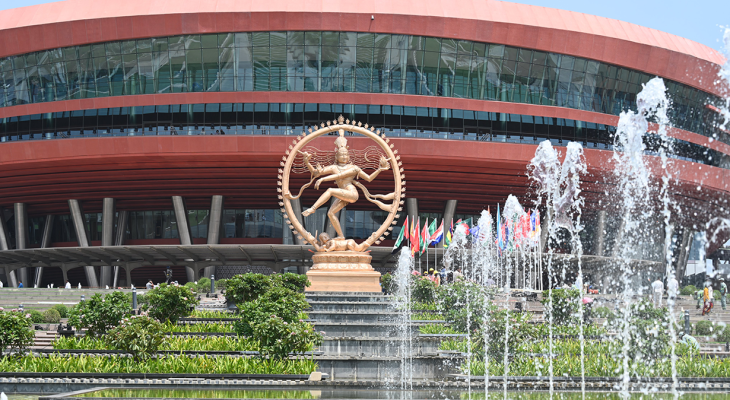
India is ready to host the historic 18th summit of G-20 nations in New Delhi from September 9-10. The powerful leaders from around the world will arrive in New Delhi on Friday, 8th September. The summit is going to take place in the Bharat Mandapam International Exhibition-Convention Centre (IECC) at Pragati Maidan, New Delhi. This is going to be the first G20 summit to be held in India as well as in South Asia. The summit will be chaired by the Prime Minister of India, Narendra Modi. The National Capital Territory of Delhi is on high alert and section 144 of the Indian Section Penal Code has been Imposed until the summit is over. Even schools, colleges, and offices are closed in the capital. 


The Delhi Traffic Police advises that people keep the following things in mind when coming out to Delhi;


  • Airport, Trains, metro services, interstate buses, city buses and taxi services will operate as usual, however some services will be affected and restricted.


  • Metro services are available to commuters at all metro stations except the Supreme Court station.


  • City buses will operate on the ring road and road network after the ring road to the Delhi border. These buses are allowed to leave from Delhi. However, the intercity bus service is not available in the New Delhi area. 


  • TSRs and taxis will not be allowed to enter or drive in the New Delhi area on September 9 from 5:00 am to 11:59 pm 10 September. 


  • The Delhi Traffic Police and local authorities are regularly providing information on traffic management, diversions and alternative routes through various communication channels such as social media to make the whole process easy for civilians.


G20, India has set six goals for the G20 dialogue by 2023:

  • Green development, climate finance and Life,
  • Accelerated inclusive and sustainable economic growth, 
  • Accelerating the achievement of sustainable development goals, 
  • Technological change and digital public infrastructure,
  • Multilateral institutions of the 21st century, and
  • Women-led development. 


Officials say the African Union may join the G20 and give it voting rights. The G20 countries support this proposal but the decision is pending. This is one of the main agenda items at the G20 summit in Delhi. In an interview on 26 August 2023, Prime Minister Narendra Modi expressed optimism about the developing agenda of the G20 under the chairmanship of India, which is moving towards a people-centred approach to development aligned with the challenges of the Global South.


Along with the G20 members, leaders from the different countries including Bangladesh, Comoros, Egypt, Mauritius, Netherlands, Oman, Singapore, Spain, and United Arab Emirates. Apart from these, there are some International organisations also have been invited to attend the summit in New Delhi such as the Asian Development Bank, Coalition for Disaster Resilient Infrastructure, Financial Stability Board, International Monetary Fund, International Labour Organisation, International Solar Organisation, Organisations for Economic Cooperation and Development, United Nations, World Bank, World Health Organisation, and World Trade Organisation.

IPL 2024: Mitchell Starc is all set to comeback

Arsh Verma |

Fierce Australian fast bowler Mitchell Starc is all set to make his IPL comeback after nine years. Starc is a left-arm fast bowler who last played in the biggest T20 league in 2015. In a media interview on Thursday, he confirmed his return to IPL 2024 ahead of the T20 World Cup to be held in the US. “I am surely heading back in (next) year,” Starc said. “It is a fantastic way to prepare for the T20 World Cup. So a good opportunity to see if anyone’s curious about the IPL, then lead into the T20 World Cup.” Starc added.


IPL teams will be curious to pick Starc in the auction as he gets a natural angle and has immense accuracy and control over the white ball. Starc has previously played 27 matches representing the Virat Kohli-led Royal Challengers Bangalore in the IPL. In the 34 matches he played, he represented the same team in the 2014 and 2015 seasons. The Australian was ruled out of the 2016 season due to injury and did not give his name for the auction in the 2017 season. In 2018, Starc was selected by the Kolkata Knight Riders team but he withdrew from that season as well.


The major reason why Starch did not contest in the later seasons of the league was his desire to stay fully available for the national side and represent Australia in the longest format of the game. “To choose to avoid some things to prolong playing for Australia, I have tried to be wise about that,” Starc said in another interview.“Yeah, the money and fame are nice, but I would love to play 100 Tests. Whether I will be able to do it or not, I don’t know, but that would be a nice target to accomplish. Hopefully, I can get there,” he added.


Starc has reassured his desire to play tests and reach the milestone of playing 100 tests. He has currently played in whites on 82 occasions taking 333 wickets at an average of 27.6 and 48.8 strike rate. As of Australia’s upcoming test fixtures, the ace bowler can reach his target by the 2025-26 Ashes home season.

Unlocking Success Through Mentorship: Entrepreneur and Visionary Sunil Tulsiani’s Journey of Guided Triumph

Arsh Verma |

In the ever-evolving landscape of entrepreneurship and business, one undeniable truth remains the invaluable role of mentorship. Sunil Tulsiani, an iconic figure in the realms of real estate and entrepreneurship, reflects upon the transformative power of mentorship in shaping his journey from a police officer to a global real estate entrepreneur. In an exclusive interview, Tulsiani sheds light on how mentorship played a pivotal role in his life and the lessons he imparts to aspiring achievers.


Embracing the Wisdom of Mentors: A Warrior’s Path to Success


Tulsiani brings in the ancient times to cite that the importance of mentors for aspirational people remains the same through the ages. The ancient warriors had no single course at their disposal to teach them the art of war, so they seeked out mentors supremely skilled and successful in the field to learn from them, and that is how they, themselves, became great as well. Like any other industry, success in the real estate business comes following exactly the same method.


While elaborating, Tulsiani humbly emphasizes the significant influence of the remarkable mentors in his own trajectory towards success in entrepreneurship, including luminaries like Robert Allen, Kevin Harrington, Brian Tracy, and Jack Canfield. According to him, he learnt as much from their proven expertise and success in the field as from their mistakes and failures, and no one can ever learn all this inside a classroom.


According to him, “The best way to become very successful is to hire a mentor. There’s no book, there’s no video, there’s no YouTube, there’s not even events that could do what a mentor can do – who has what you want to have, and that person can literally change your life.


Networking events: The bedrock of mentor-mentee relationships


Tulsiani’s reverence for mentorship germinated during his tenure as a police officer—a reverence that transcended into the business world. As he transitioned, he realized that mentorship was not just a concept, but a tangible asset that could shape his destiny. However, when he started in the real estate business, which was a completely uncharted territory for him, it was difficult to find the right mentors to teach him what he needed to learn.


Tulsiani says his initiation into the world of mentors unfolded through real estate networking events which were the hub where attendee influencers, industry experts, and even many from the audience were potential mentors in the field. In these bustling events, he found people from all levels of expertise in real estate who presented him with extremely valuable insights that fueled his journey.


The Art of Gaining a Mentor: A Strategy of Collaboration


Even after finding the mentors, it wasn’t so easy to get them to teach Tulsiani the much-needed insights, more so since it wasn’t so common for experts at the time to offer fully guided courses. So, he had to get creative.


Tulsiani divulged a strategic approach to gaining mentors, a strategy he dubs as a “lose-win” situation. He offered his collaboration, whether through money or skills, to the potential mentors in exchange for lessons from them. He shadowed them everywhere and followed them closely while they dealt with properties under them, and this is how he learnt at the initial stage.


However, Tulsiani underscores that mentorship is a two-way commitment, it goes beyond casual exchanges. It’s a partnership that requires investment, be it in time or finances. He ardently advocates paying for mentorship, as it increases the level of commitment from the learner and therefore, the likelihood of implementing mentor guidance effectively.


Speaking from his own experience, Tulsiani insists,

Initially, I hesitated at $10,000 to $20,000 mentorship fees for some of the top-level experts – seemed crazy. Yet, I grasped their worth when I realized like university tuition, it’s an investment in expertise and connections. So, I hustled – selling items, side projects – raising funds akin to educational expenses. When I secured the money, I approached mentors, saying, “Here’s the fee; I’m ready to learn from you.” It transformed my journey. Remember, if mentorship seems pricey, see it as investing in yourself – like you would for higher education. It’s about growth and future success.


Sunil Tulsiani’s odyssey is a living testament to the catalytic influence of mentorship. Just as he reshaped real estate landscapes with his visionary initiatives, he redefines the trajectories of aspiring achievers. Through Tulsiani’s story, we learn that mentors are not just sources of knowledge; they are the catalysts for accelerated growth, shaping careers, and propelling individuals toward unparalleled success.

Janmashtami 2023: Importance, Observance, and Significance

Preyensha Srivastava |

India is a land of festivals! As a diverse country, it contains many customs and traditions which vary from person to person. It is the festivals of India that keep the citizens united and integrated even with its diversity. The festivals are vibrant and cheerful, reflecting the rich culture and heritage of the country. According to the Hindu calendar, almost every month a festival is celebrated. The year starts with the grand celebration of Navratri and Ram Navami of Chaitra maas and ends with the festival of colours Holi Phalgun maas. Here each festival has its unique customs and traditions, where people come together to celebrate. One such festival is Janmashtami or Krishna Ashtami, the celebration of Lord Krishna’s birth. 


Janmashtami’s Importance

Janmashtami is a festival in which the Sanatanis celebrate the birth of their beloved Keshav. The festival is celebrated on the Ashtami of Bhadra Maas. It is one of the major festivals in India and is honoured collectively at the mass level. Whereas, across the globe, the festival is celebrated by the followers of ISKCON (International Society for Krishna Consciousness) and Vaishnavism. Lord Krishna is the eighth avatar of Lord Vishnu (one of the principal deities of Hinduism, the preserver). In many Puranas and ancient Indian texts, Krishna is identified as the supreme God and the source of all avatars. Lord Krishna has many nicknames for devotees like Gopala, Hari, Keshav, Madhav, Murari, Mohan and the list goes on. 


Observation

The festival of Janmashtami includes a bunch of rituals around the festival’s celebration like reading and recitation of religious texts, dance and re-enactments of Krishna’s life according to the Bhagavata Purana, devotional singing until midnight (Krishna’s birth), and fasting (upavasa). Additionally, Dahi Handi is one of the most popular games played across the streets of India. On the occasion of this festival, a majestic celebration with good decoration and tableaux is organised in the temples. Mathura, the heart of Brij-bhoomi and the birthplace of Krishan along with Vrindavan where he grew up are the two places where the day is celebrated at a grand level. 


Significance 

Information about Krishna’s life can be found in the Mahabharata, the Puranas and the Bhagavata Purana. Krishna is the eighth child of Devaki (mother) and Vasudeva (father). Krishna was born in a prison in Mathura. However, his parents were forced to be imprisoned by his maternal uncle Kamsa. That is because, during Devaki’s wedding, Kamsa was warned by a heavenly voice that her eighth son would be the cause of his death. Thus, in an attempt to defy that prophecy, Kamsa captured Devaki and her husband and eventually killed her first seven infants right after birth.


Upon his birth, the guards in charge of guarding Devaki’s cell fell asleep and the cell doors miraculously opened. These events enabled Vasudeva to send Krishna across the Yamuna River to his foster parents Yashoda (mother) and Nanda (father). During Krishna’s childhood and young adulthood, Balarama, Krishna’s half-brother, was his “constant companion.” Balarama joined Krishna in the grand events celebrated in Brij, Vrindavan, Dravarka, and Mathura, such as stealing butter, chasing calves, playing in the stables, and participating in matches. 


The festival is also known by its other names Gokulashtami, Shree Jayanti, Saatam Aatham, Krishnashtami, Ashtami Rohini, Krishna Jayanthi, Shuvo Janmashtami at different places. In a ritual purification called abhisheka, idols are also washed in auspicious milk. In temples at midnight, the priests open the curtains to reveal the freshly dressed Krishna deity in the artistically decorated sanctum. As part of Janmashtami decorations, people decorate flutes, and clean homes and temples.

The Shibuya Incident Arc: The Most Devastating Arc in Jujutsu Kaisen

Arsh Verma |

The Shibuya Incident arc is the most devastating arc in Jujutsu Kaisen. It is a major turning point in the story, and it has lasting consequences for the characters and the world of Jujutsu. The arc begins with the release of Mahito, a cursed spirit who is bent on destroying humanity. Mahito teams up with Geto, a former Jujutsu sorcerer who has turned traitor, and they launch a coordinated attack on Jujutsu High and the city of Shibuya.


The attack is a success, and Mahito and Geto are able to kill hundreds of sorcerers and civilians. They also manage to seal Satoru Gojo, the strongest Jujutsu sorcerer, in a prison realm. The Shibuya Incident arc is a dark and bloody arc, and it features some of the most brutal battles in the series. However, it is also an arc that is full of hope and determination. The Jujutsu sorcerers who survive the attack are determined to rebuild and protect the world from Mahito and Geto.


The Shibuya Incident arc has had a profound impact on the Jujutsu Kaisen universe. It has changed the landscape of the world, and it has forced the Jujutsu sorcerers to adapt and become stronger. The arc has also raised the stakes for the series, and it has made it clear that the battle against curses is far from over.


Also Read: What to Look Forward to in Jujutsu Kaisen Season 2


The Shibuya Incident arc is a must-read for any fan of Jujutsu Kaisen. It is an epic and unforgettable arc that will leave you breathless.

Here are some of the major events that take place in the Shibuya Incident Arc:

  1. Mahito and Geto release a horde of cursed spirits into Shibuya.
  2. The Jujutsu sorcerers are caught off guard and are quickly overwhelmed.
  3. Satoru Gojo is sealed in a prison realm by Kenjaku.
  4. Yuji Itadori is forced to fight Mahito alone.
  5. Megumi Fushiguro is critically injured.
  6. Nobara Kugisaki is presumed dead.
  7. The Jujutsu sorcerers suffer heavy losses, but they eventually manage to defeat Mahito and Geto.

The Shibuya Incident arc features a large cast of characters, but some of the most important ones include:

  1. Satoru Gojo: The strongest Jujutsu sorcerer, Gojo is sealed in a prison realm by Kenjaku.
  2. Yuji Itadori: A high school student who is possessed by the cursed spirit Sukuna, Itadori is forced to fight Mahito alone.
  3. Megumi Fushiguro: A Jujutsu sorcerer who is skilled in the art of binding, Fushiguro is critically injured in the battle against Mahito.
  4. Nobara Kugisaki: A Jujutsu sorcerer who is skilled in the use of cursed tools, Kugisaki is presumed dead in the battle against Mahito.
  5. Mahito: A cursed spirit who is able to manipulate the soul, Mahito is the main antagonist of the arc.
  6. Geto: A former Jujutsu sorcerer who has turned traitor, Geto is Mahito’s ally.


The arc also raises some important questions about the future of the Jujutsu world. Will the Jujutsu sorcerers be able to rebuild after the devastating losses they have suffered? Will they be able to defeat Mahito and Geto once and for all? The Shibuya Incident arc is a major turning point in the Jujutsu Kaisen story. It is an arc that is full of action, suspense, and emotion. It is an arc that will stay with you long after you have finished reading it.


Joe Jonas and Sophie Turner to get a divorce?

Preyensha Srivastava |

The Hollywood industry is yet again buzzing with another divorce news. On Tuesday, Joe Jonas announced parting ways with his wife Sophie Turner after four years of wedding and two kids. The 34-year-old musician filed to end his wedding with the 27-year-old Game of Thrones actress in Florida’s Miami-Dade County Court. The divorce doc says “The marriage between the partners is irretrievably broken.” 


How did the couple meet? 


In Interviews, the Jonas-Turner couple shared their love story. The couple had many mutual friends before marriage, and they also followed each other on Instagram. They first interacted when Joe messaged Turner via Instagram DM in 2016. The rumours of them dating also surfaced in December of the same year. Jonas and Sophie announced their engagement in October 2017 exactly a year after they met in person. On May 1, 2019, after the Billboard Music Awards, Turner and Jonas married in a secret ceremony at a Las Vegas marriage chapel.


What’s next after Joe Jonas and Sophie Turner’s divorce?


Joe and Sophie were together for four years, also they became parents to a daughter, Willa, in 2020, and then last year, they had their second child whose name they have not shared. According to the divorce documents, Jonas is looking forward to joint custody of the children. The two had a prenuptial contract that Jonas wishes would be implemented, according to the filing. Agents of Jonas and Turner did not directly reply to requests for remarks. 


How did the Fans react?


Fans are left disheartened as the reports of divorce of the couple surfaced. Many fans expressed their sadness on social media platforms like Twitter. One user posted, “Joe & Sophie are getting a divorce like what is going on with 2023.” on Twitter. Another fan tweeted, “Joe Jonas wrote “hesitate” for Sophie Turner what do you mean they may now be getting separated.” Someone also shared, “ Jonas and Turner getting divorced?? Real love doesn’t exist anymore. Only Ryan and Blake are my last hope now. TBH.”

SL Vs AFG: Counting Error forces Afghanistan out of Asia Cup

Preyensha Srivastava |

Defending champions, Sri Lanka won a nail-biting encounter against Afghanistan, keeping their hopes alive in the Asia Cup. Playing their last match of the group stage, it was a do-or-die match for both teams. Afghanistan, who faced defeat against Bangladesh in their last match were desperate for a victory if they had to enter the Super 4s. According to calculations they had to chase the target in less than 39 overs if they had to surpass Sri Lanka’s NRR.


Winning the toss, Sri Lanka decided to bat first and got to a decent start. They were sitting comfortably at the score of 63/1 after the first powerplay. Two more wickets fell in quick succession, with Gulbadin Naib dismissing Samarawickrama and Karunaratne. Kusal Mendis’ anchor innings of 92 runs helped Sri Lanka set a target of 292 runs. The Afghan bowlers did a good job with Rashid and Mujeeb dismissing three Lankan batsmen, and Gulbadin Naib taking four wickets. According to Afghanistan head coach, Jonathan Trott, the team had to chase the target in 37.1 overs to qualify for the Super 4s.


The second innings of the match started with disappointment for the Afghan fans, as a brilliant spell from Kasun Rajitha and Matheesha Pathirana dismissed the top three batsmen with just 50 runs on the board. From 50/3 in 8.1 overs to 234/5 in 31 overs, Rahmat Shah, Hashmatullah Shahidi, and Mohammad Nabi brought the batting side back into the game. With 58 runs in 36 balls and five wickets in hand to qualify, Sri Lanka was losing grip on the game.


 As the match progressed, the pressure on both teams increased, as the next 3 wickets fell for 40 runs. In this nail-biting encounter, Rashid Khan’s 27 runs off 16 balls almost helped his team qualify. The contest went down the wire, with Afghanistan at 289/8 in 37 overs. The batting team had one more ball left three runs to get for qualification. Dhanajaya with the ball in hand and Mujeeb on strike, the bowler bowled a loosener, Mujeeb slogging it, making a decent contact but the ball did not have the elevation that was needed. Samarawickrama takes an easy catch at long-on. 


The Afghans still had a chance to qualify because of a simple calculation and communication error from the head coach, the batsmen were unaware of the possibility. If the batters had been able to score 295 off 37.4 overs, they would have surpassed Sri Lanka in terms of NRR. Although they batted to 37.4 overs, they were bowled out for 289 and lost the match. An under-pressure Sri Lankan team snatched victory from the jaws of Afghanistan.