Logo

Logo

Home Minister Amit Shah Says, ” India Would Finish Terrorism By Building A Strong NIA”

The India Saga Saga |

The National Investigation  Agency (Amendment) Bill, 2019 was passed by Lok Sabha today, after a detailed discussion and a spirited defense by Union Minister for Home Affairs Amit Shah.

While replying to the debate on the Bill to give powers to NIA to investigate the terror crimes relating to Indians and Indian interests abroad, today in Lok Sabha, the Home Minister backed a strong NIA to strengthen the legal framework against terrorism. He said that conviction has been achieved in 90% of the cases decided so far, which is one of the finest records in the world. Shah hailed the NIA for its achievements and said that India would finish terrorism by building a strong NIA.

Allaying opposition’s apprehensions on misuse of agencies the Home Minister quoted the Prime Minister and said that this Government is governed by Rule of Law and all investigative agencies follow the procedure established by law. He reassured the House that the agency would not be misused in any way by the Government.

Minister said that the POTA should not have been removed in the first place, as it led to a rise in acts of terror. This has been corroborated by Indian security agencies as well, he added. Home Minister also questioned why the perpetrators of the Samjhauta Express blast were allowed to walk free even when American agencies found their involvement in the act of terror.

Reiterating ‘Zero Tolerance’ policy of the Government against terrorism, Amit Shah said “Terrorism is Terrorism, it’s neither RIGHT nor LEFT. Perpetrators of terrorist acts need to be punished and will get punished.” All political parties, members of Parliament and the Government must come together to fight terror without pointing fingers at each other, otherwise, it would boost the morale of the terrorists.

Mr. Shah said, “We care for the widows of our martyred soldiers, we care for their sacrifices. Thus, it is important to strengthen NIA to investigate terror-related crimes and bring justice to these widows.”

The Home Minister said that by designating special courts, the cases would be expedited and transfers or delay in appointments of judges would not delay them.

While taking part in the debate on the bill, Minister of State for Home Affairs G. Kishan Reddy reinforced Government’s federal outlook and said that state police teams and other agencies would work in coordination with NIA in terror-related matters. There would be no encroachment by the Centre on the activities of the State machinery, he added.

Mr. Reddy said that the multi-agency center would be strengthened and sharing of information between the Centre and states on terrorism-related matters would be smoothened. There would be no discrimination among the agencies.

The Minister further added that terrorism has no religion, no caste, no gender. It is against humanity. The Government will take all stakeholders along with itself in fighting terrorism, following a ‘Zero Tolerance Policy’.

  • The National Investigation Agency (Amendment) Bill, 2019 was introduced in Lok Sabha by the Minister for Home Affairs, Mr. Amit Shah, on July 8, 2019. The Bill amends the National Investigation Agency (NIA) Act, 2008.  The Act provides for a national-level agency to investigate and prosecute offences listed in a schedule (scheduled offences).  Further, the Act allows for creation of Special Courts for the trial of scheduled offences.
     
  • Scheduled offences: The schedule to the Act specifies a list of offences which are to be investigated and prosecuted by the NIA.  These include offences under Acts such as the Atomic Energy Act, 1962, and the Unlawful Activities Prevention Act, 1967.  The Bill seeks to allow the NIA to investigate the following offences, in addition: (i) human trafficking, (ii) offences related to counterfeit currency or bank notes, (iii) manufacture or sale of prohibited arms, (iv) cyber-terrorism, and (v) offences under the Explosive Substances Act, 1908.       
     
  • Jurisdiction of the NIA: The Act provides for the creation of the NIA to investigate and prosecute offences specified in the schedule.  The officers of the NIA have the same powers as other police officers in relation to investigation of such offences, across India.  The Bill states that in addition, officers of the NIA will have the power to investigate scheduled offences committed outside India, subject to international treaties and domestic laws of other countries.  The central government may direct the NIA to investigate such cases, as if the offence has been committed in India.  The Special Court in New Delhi will have jurisdiction over these cases. 
     
  • Special Courts: The Act allows the central government to constitute Special Courts for the trial of scheduled offences.  The Bill amends this to state that the central government may designate Sessions Courts as Special Courts for the trial of scheduled offences.  The central government is required to consult the Chief Justice of the High Court under which the Sessions Court is functioning, before designating it as a Special Court.  When more than one Special Court has been designated for any area, the senior-most judge will distribute cases among the courts.  Further, state governments may also designate Sessions Courts as Special Courts for the trial of scheduled offences.     

World Hunger Is Still Not Going Down After Three Years and Obesity Is Still Growing – UN Report

The India Saga Saga |

An estimated 820 million people did not have enough to eat in 2018, up from 811 million in the previous year, which is the third year of increase in a row. This underscores the immense challenge of achieving the Sustainable Development Goal of Zero Hunger by 2030, says a new edition of the annual The State of Food Security and Nutrition in the World report released today.

The pace of progress in halving the number of children who are stunted and in reducing the number of babies born with low birth weight is too slow, which also puts the SDG 2 nutrition targets further out of reach, according to the report.

At the same time, adding to these challenges, overweight and obesity continue to increase in all regions, particularly among school-age children and adults.

The chances of being food insecure are higher for women than men in every continent, with the largest gap in Latin America.

“Our actions to tackle these troubling trends will have to be bolder, not only in scale but also in terms of multi sectoral collaboration,” the heads of the United Nations’ Food and Agriculture Organization (FAO), the International Fund for Agricultural Development (IFAD), the UN Children’s Fund (UNICEF), the World Food Programme (WFP) and the World Health Organization (WHO) urged in their joint foreword to the report.

Hunger is increasing in many countries where economic growth is lagging, particularly in middle-income countries and those that rely heavily on international primary commodity trade. The annual UN report also found that income inequality is rising in many of the countries where hunger is on the rise, making it even more difficult for the poor, vulnerable or marginalized to cope with economic slowdowns and downturns.

“We must foster pro-poor and inclusive structural transformation focusing on people and placing communities at the centre to reduce economic vulnerabilities and set ourselves on track to ending hunger, food insecurity and all forms of malnutrition,” the UN leaders said.

Slow progress in Africa and Asia

The situation is most alarming in Africa, as the region has the highest rates of hunger in the world and which are continuing too slowly but steadily rise in almost all subregions. In Eastern Africa in particular, close to a third of the population (30.8 percent) is undernourished. In addition to climate and conflict, economic slowdowns and downturns are driving the rise. Since 2011, almost half the countries where rising hunger occurred due to economic slowdowns or stagnation were in Africa.

The largest number of undernourished people (more than 500 million) live in Asia, mostly in southern Asian countries. Together, Africa and Asia bear the greatest share of all forms of malnutrition, accounting for more than nine out of ten of all stunted children and over nine out of ten of all wasted children worldwide. In southern Asia and sub-Saharan Africa, one child in three is stunted.

In addition to the challenges of stunting and wasting, Asia and Africa are also home to nearly three-quarters of all overweight children worldwide, largely driven by consumption of unhealthy diets.

Going beyond hunger

This year’s report introduces a new indicator for measuring food insecurity at different levels of severity and monitoring progress towards SDG 2: the prevalence of moderate or severe food insecurity. This indicator is based on data obtained directly from people in surveys about their access to food in the last 12 months, using the Food Insecurity Experience Scale (FIES). People experiencing moderate food insecurity face uncertainties about their ability to obtain food and have had to reduce the quality and/or quantity of food they eat to get by.

The report estimates that over 2 billion people, mostly in low- and middle-income countries, do not have regular access to safe, nutritious and sufficient food. But irregular access is also a challenge for high-income countries, including 8 percent of the population in Northern America and Europe. This calls for a profound transformation of food systems to provide sustainably-produced healthy diets for a growing world population.

Key facts and figures

  • Number of hungry people in the world in 2018: 821.6 million (or 1 in 9 people)
    • in Asia: 513.9 million
    • in Africa: 256.1million
    • in Latin America and the Caribbean: 42.5 million
  • Number of moderately or severely food insecure: 2 billion (26.4%)
  • Babies born with low birth weight: 20.5 million (one in seven)
  • Children under 5 affected by stunting (low height-for-age): 148.9 million (21.9%)
  • Children under 5 affected by wasting (low weight-for-height): 49.5 million (7.3%)
  • Children under 5 who are overweight (high weight-for-height): 40 million (5.9%)
  • School-age children and adolescents who are overweight: 338 million
  • Adults who are obese: 672 million (13% or 1 in 8 adults)

1 in 10 Children Missed Out On Life-Saving Vaccines, According To New Data from WHO & UNICEF

The India Saga Saga |

20 million children worldwide – more than 1 in 10 – missed out on life-saving vaccines such as measles, diphtheria, and tetanus in 2018, according to new data from WHO and UNICEF.

Globally, since 2010, vaccination coverage with three doses of diphtheria, tetanus and pertussis (DTP3) and one dose of the measles vaccine has stalled at around 86 percent. While high, this is not sufficient. 95 percent coverage is needed – globally, across countries, and communities – to protect against outbreaks of vaccine-preventable diseases.

“Vaccines are one of our most important tools for preventing outbreaks and keeping the world safe,” said Dr Tedros Adhanom Ghebreyesus, Director-General of the World Health Organization. Â“While most children today are being vaccinated, far too many are left behind. Unacceptably, it’s often those who are most at risk– the poorest, the most marginalized, those touched by conflict or forced from their homes – who are persistently missed.”

Most unvaccinated children live in the poorest countries, and are disproportionately in fragile or conflict-affected states. Almost half are in just 16 countries – Afghanistan, the Central African Republic, Chad, Democratic Republic of the Congo (DRC), Ethiopia, Haiti, Iraq, Mali, Niger, Nigeria, Pakistan, Somalia, South Sudan, Sudan, Syria and Yemen.

If these children do get sick, they are at risk of the severest health consequences, and least likely to access lifesaving treatment and care.

Measles outbreaks reveal entrenched gaps in coverage, often over many years. 

Stark disparities in vaccine access persist across and within countries of all income levels. This has resulted in devastating measles outbreaks in many parts of the world – including countries that have high overall vaccination rates.

In 2018, almost 350,000 measles cases were reported globally, more than doubling from 2017.

“Measles is a real time indicator of where we have more work to do to fight preventable diseases,” said Henrietta Fore, UNICEF’s Executive Director. “Because measles is so contagious, an outbreak points to communities that are missing out on vaccines due to access, costs or, in some places, complacency. We have to exhaust every effort to immunize every child.” 

Ukraine leads a varied list of countries with the highest reported incidence rate of measles in 2018. While the country has now managed to vaccinate over 90 percent of its infants, coverage had been low for several years, leaving a large number of older children and adults at risk.

Several other countries with high incidence and high coverage have significant groups of people who have missed the measles vaccine in the past. This shows how low coverage over time or discrete communities of unvaccinated people can spark deadly outbreaks.

Human papillomavirus (HPV) vaccine coverage data available for the first time

For the first time, there is also data on the coverage of human papillomavirus (HPV) vaccine, which protects girls against cervical cancer later in life. As of 2018, 90 countries – home to 1 in 3 girls worldwide – had introduced the HPV vaccine into their national programmes. Just 13 of these are lower-income countries. This leaves those most at risk of the devastating impacts of cervical cancer still least likely to have access to the vaccine.

Together with partners like Gavi, the Vaccine Alliance, WHO and UNICEF are supporting countries to strengthen their immunization systems and outbreak response, including by vaccinating all children with routine immunization, conducting emergency campaigns, and training and equipping health workers as an essential part of quality primary healthcare.

Picture Time in Jashpur

The India Saga Saga |

Life never ceases to surprise! 

A trip to the stunningly beautiful Jashpur district in the northern part of Chhattisgarh looked promising because the region is blessed with natural beauty and abundant rain during monsoons. 

One was particularly looking forward because it was an opportunity to take a break from the scorching heat of Delhi. 

Jashpur certainly did not disappoint. The three-hour drive from Ambikapur to Jashpur was a treat to eyes. Lush green field, rocky hills, and rain. It was pure bliss. 

But what turned out to be the best part of the short official trip was Picture Time. Next, to the hotel, our team was staying, was a huge makeshift structure with `Picture Time’ written on it. Curiosity took us there. 

We met Nitin, in charge of Picture Time, who told us it was a collapsible theatre meant for regions where there are no cinema halls. The Chinese-made structure was transported to Jashpur some four months ago and put up at an open space after taking due permission from the authorities. 

It will be there until December when it moves to some other place. 

The fully air-conditioned theatre can accommodate 100 plus people at a time. The screen is big and clear and the sound system comparable to any movie theatre in a big city. There are comfortable chairs and the ticket only Rs 80 per head. 

The portable theatre is owned by a Delhi-based entrepreneur who has named it Picture Time. The crew and entire theatre travel to far off places to provide entertainment. The paraphernalia comprises the structure, ACs, toilets, screen, music system and power back up. 

The structure is fire resistant and, thus, very safe. There is enough space in the van for the staff. The economic model is also interesting. Other than charging audience for watching the movies, the tent or the theatre is also rented out to private companies for advertising and there are many multinational companies who often hire the theatre to showcase their products.

Indeed a wonderful idea to provide entertainment to the lakhs of people for whom facilities and infrastructure do not come as an entitlement. 

Arafath Sheikh ‘India’s Youngest Karting Sensation’

The India Saga Saga |

They say it’s never too late or too early to start chasing your dreams. Here is another story of a young prodigy who has become famous just at the age of seven. Arafath Sheikh ‘India’s youngest karting sensation’ hailing from Pune, Maharashtra started Karting at the age four. Ah ha! Probably the age where we wouldn’t even know properly what the word ‘Karting’ means. Karting is driving and racing miniature automobiles called karts, or GoKarts. This motorsport originated in the United States and is currently very popular in Europe. It is an upcoming sport in India where the fitness of mind and body is very important. 

Enthralling example of Arafath Sheikh who started chasing his dreams at an early age. He is currently pursuing Class II at The Bishop School Camp, Pune. He made his racing debut at the age of 6 with international lame X30 United Arab Emirates (‘UAE’) championship with P2 position. Karting in UAE is growing up quickly. The UAE is blessed with few world-class tracks and several race teams have their gulf headquarters here. Most circuits will accept drivers as young as 5-years-old, special “Bambino” karts do exist for this Championship. Bambino Championship is for competitors aged 5 to 8 years old. After securing P2 position, there was no looking back for him.

He is currently participating in lame X30 JK Tyre FMSCI National Karting Championship consisting of 5 rounds under cadet category and is currently overall P4 out of 9 competitors with approximately 5 years elder to him. The  JK Tyre National Racing Championship is where every Indian racing driver earns their stripes before progressing into the international arena. This Championship is organized by Meco Motor Sports (‘MMS’). MMS is India’s No. 1 motorsports management enterprise started by Indian racing legend, Akbar Ebrahim. His son Armaan Ebrahim started his career in karting and became Formula LGB Champion in 2004. He was the best racer of his era and has been an inspiration for many of the racers in India. MMS  is where aspirants are trained to learn the ropes of karting and racing to fulfill their dream of becoming professional racers one day. Meco Academy prides itself on having trained virtually every Indian racer that has gone on to participate in international circuits over the last 15 years.

Arafath Sheikh is gaining experience under the guidance of MMS on the Praga Karts. Praga is a well-known Kart Chassis brand. It has its headquarters and production is located in Salizzole, northern Italy having a well-distributed channel in India. Arafath will be participating in lame X30 UAE championship 2019-20  in Bambino class which is starting from September 2019 he is training for Dubai -O-Plate 2020 a popular karting series around the globe. He is the youngest Indian to participate in Karting abroad.

He is already leaving a mark on the world at a young age. The fearless Arafath has blown the mind with his ingenuity and relentless driving and will probably be the most inspiring ones among the young adults and teenagers.

Fitness Trainer Ajay Singh’s Goal Is To Help People Live A Healthy Lifestyle

The India Saga Saga |

A good work out is only useful when you follow expert one who knows your body. There is a difference between ordinary and best trainer, and that is the reason why good trainer earns good bucks by giving training to celebrities and sports stars.

If we look back to Indian trainer list, you will find very few names in that list who are known for their fitness programs and have trained athletes or big celebrities. Well in that list of few comes Ajay Singh, a Pro fitness trainer who is known for his fitness training and even yoga workouts. He has trained many top celebrities, polo players, Olympic athletes in recent time. He himself is a celebrity with his super fitness training programs.

Ajay Singh workout programs make it easy for his clients, Celebrities are accustomed to hard work, so motivation isn’t usually a challenge for Ajay Singh. He has found his way of doing work out comfortable for his clients. He knows how to keep workouts interesting for his clients. 

Ajay Singh is an extremely focussed and passionate fitness trainer, and he has that desired to share his experience and knowledge with his athletes and celebs clients. He is not keen on desk jobs or sitting alone in a small room “Pushing Pencils”.

Ajay Singh’s goal is to help people live a healthy lifestyle, as he has made his own lifestyle as a career, he wants to teach people about the body and its capabilities, He enjoys and loves his work of making people healthy and fit in their life.

What makes him different then others in the market is his knowledge of human anatomy and the concept of adequate exercise, he also knows correct nutrition needed and fundamental principles of training.

He designs his fitness programs beautifully according to the client. He feels techniques changes according to the physique of the client. His tailored designs never fail, and he always achieves his goal of giving a perfectly healthy body to his clients, which are safe and effective.

Ajay’s primary focus is to help clients reach their health and fitness goals through appropriate cardiovascular exercise and flexible body and also resistance exercise. His programs help his clients achieve overall fitness and perfect physique and also motivate them to continue training and make them as routine for a healthy life.

Ajay Singh always maintains dedication and maintain personal integrity, client confidentiality and professional standards for best practice. His training gives you self improvement, awareness, strong mental capacity.

He has become the first choice for the celebs, Olympic and sports-related people. His Gym centers in the Jaipur are getting a massive response due to his training programs which are working well for most of his clients. Looking at his skills, we might see him giving Personal training to athletes or any sports team shortly at the National or International level.

Namrata Gaikwad Making Splashes Into Bollywood

The India Saga Saga |

Namrata Gaikwad is an Indian Actress known for her work in South and Marathi Films. She started her Acting career in a 2011 blockbuster called “Swarajya Marathi Paul Padate Pudhe”…She came into a Spotlight when she was portrayed as “Sayali” in the Marathi film called “Vanshvel”(2013) which is Directed by a National Award winning Director Rajeev Patil.

The actress has been a part of some remarkable Marathi films like  Vijay Aso, LANGAR Ek Paash, CampusKatta, Mazi Tapasya, Zari, and Bedhadak. Even in the South industry, Namrata Gaikwad is winning it big. She is shooting for a Malayalam film titled “Ayal Jivichiripundu” in which she will be seen alongside Vijay Babu.

Along with working in films, the actress has also acted in a Marathi show called “Mangalsutra”, “Prem He” on channel Z Yuva. The actress has also been a part of Marathi plays like Dnyanoba Majha and Sanyasta Jwalamukhi.

Namrata has also done Malayalam ad film with actor Prithviraj Sukumaran. 

Apart from acting, also she is a trained dancer having a stronghold in classical, folk and western dance form in which she has done several stage shows.

About exploring different film industries, Namrata Gaikwad feels proud of being an actress. She wishes to continue such great work and doesn’t want to leave any opportunity to give her best on screen. 

Natasha Luthra An Investment Banker Who turned to Fashion & Beauty Content Creator

The India Saga Saga |

Natasha Luthra’s journey has been as beautifully meandering as her imagination. She began with an MBA in finance and decided to pursue a career in the same and worked at India’s top rating agency. But passion tugged at her heartstrings, and soon Natasha found herself in the midst of the fashion industry. In the initial days, Natasha shared her views on different fashion trends on her blog and social media and within no time she received an ultimate response online.

Soon, Natasha had to make a tough choice of quitting her stable job to pursue her passion. It was a big risk, but what’s life without taking one?

Within no time, her fashion updates on how to experiment and make people aware about latest fashion trends made her popular and stood her blog out of the crowd! The success of a blogger is hinged on their ability to have a direct connection with the following they have amassed over the years. Her popularity and great work also led to her collaboration with several big brands like Jade, Payal Singhal, Loreal, Coach, Moet and Chandon, Loccitane.

She believes in quality over quantity and chooses the brands that she collaborates with very wisely. The brand must resonate with her personality before she endorses them on her social media. The audience is smart and they follow a particular blogger for a reason.

She posts splendid pictures of her life from travel to shoots, from food to vacations and much more. 

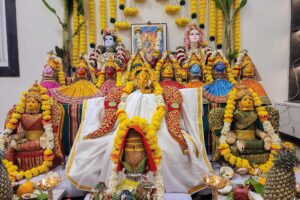
Guru Purnima To Be Celebrated On 16th July; India To Witness Chandra Grahan On 17th July

The India Saga Saga |

This year, Guru Purnima falls on July 16. It is believed that Lord Buddha gave his first sermon on this day. After five weeks of achieving enlightenment under the Bodhi tree, Buddha went from Bodhgaya to Sarnath, Uttar Pradesh where he gave the sermon on the full moon day. The followers of Buddha thus, celebrate this day to worship him.

Guru Purnima is also known as Vyasa Purnima and it marks the birth anniversary of Veda Vyasa.

The Tithi will begin at 01:48 am on Tuesday, July 16, and will end at 3:07 am on 17th July. Coincidentally, Partial Lunar Eclipse is also taking place on 17 July in India. 

In India, the Partial Eclipse will begin at 1:31 a.m and the maximum eclipse will occur at 3 a.m. Chandra Grahan will end at 04:29 a.m. The total duration of the eclipse is 5 hours, 34 minutes. The duration of the partial eclipse is 2 hours, 58 minutes.

A partial lunar eclipse occurs when the Earth moves between the Sun and Moon but the three celestial bodies do not form a straight line in space. When that happens, a part of the Moon’s surface is covered by the darkest, the central part of the Earth’s shadow. This central part of the Earth’s shadow is called the umbra.

The festival is celebrated in countries like India, Nepal and other countries of Buddhist and Jain influence. People worship their spiritual preceptors and give them gifts. They visit their temples and offer them respect and seek their blessings.

Most people observe fast on this day as a symbol of loving exchange and prayers for the long life of the Guru in order to get his/her regular guidance.

People recite Shloka on this day in remembrance of their Gurus.

Gurur Brahma, Gurur Vishnu, Guru Devo Maheshwara 

Guru Saakshaat Parabrahma, Tasmai Shri Gurave Namah .. 

DJ and Producer Karan Bhatia’s Success Mantra “Understand Music Before You Learn To DJ”

The India Saga Saga |

DJ and Producer Karan Bhatia is very much a product of the modern world of Bollywood music. He is phenomenally successful. Having taught himself the basics of sound production and home recording from YouTube tutorials DJ Karan set to work creating his own material and remixes using studio software in the 2018 released track ‘Tera Ghata’. The track received more than 22,000 views on YouTube. 

DJ Karan has been dominating the Desi club scene for nearly two decades. “I use to make mix tapes for friends. I got inclined towards DJing, but back in 1990, there were no DJing schools to learn from so I got a job as a DJ in a nightclub in my University’

From there I learned the flow of DJing equipment and mixing songs. Then I got a job as a resident DJ, where I took off as I taught myself the art of being a DJ” DJ Karan quotes

When asked what message he would give to millennials who are inspired by your work?

DJ Karan says “Learn music before you learn to DJ. Mixing music is fairly easy, but understanding music is the tough part. Research and read about the artist’s song you plan to play. Don’t give up.”