Logo

Logo

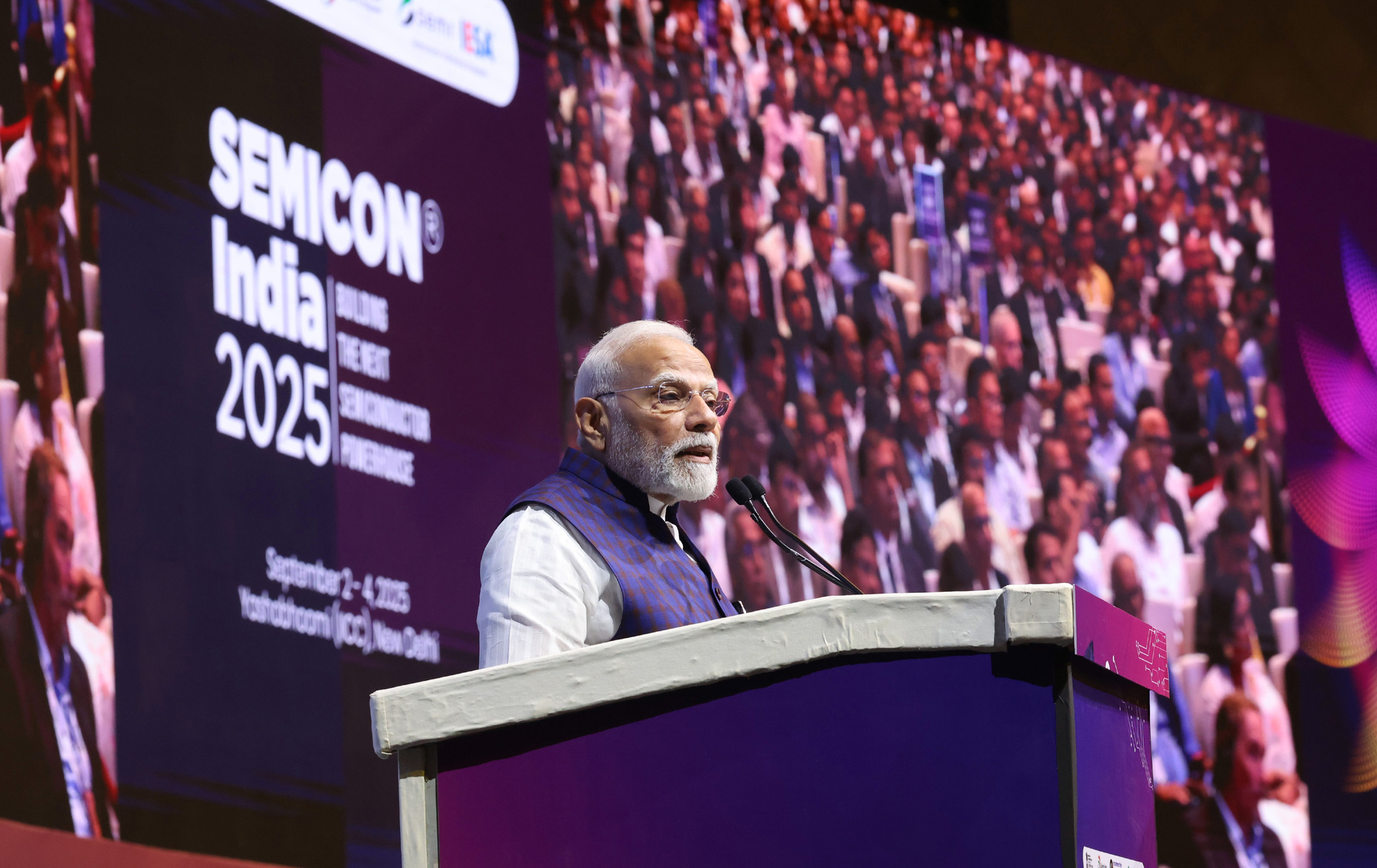
Chips are digital diamonds: PM Modi

Kumar Saurav |

The Prime Minister Narendra Modi inaugurated the ‘Semicon India – 2025’, aimed at catalysing India’s Semiconductor ecosystem, at Yashobhoomi in New Delhi today. Addressing the gathering, the Prime Minister acknowledged the presence of semiconductor industry CEOs and their associates from India and abroad. He welcomed distinguished guests from various countries, entrepreneurs associated with start-ups, and young students who had come from different states across the nation.

Modi stated that he returned last night from his visit to Japan and China, and today he is present among the audience in Yashobhoomi, a hall filled with aspirations and confidence. Mentioning his passion for technology has always been natural and well-known, the Prime Minister said that during his recent visit to Japan, he had the opportunity to visit the Tokyo Electron factory along with Japanese Prime Minister H.E. Mr. Shigeru Ishiba. He mentioned that the CEO of that company is present among the audience today. The Prime Minister emphasized that his inclination towards technology repeatedly brings him among such gatherings. He expressed that being present among the audience today brings him great joy.

Noting the presence of semiconductor sector experts from across the globe, with representation from over 40 to 50 countries, Shri Modi emphasized that India’s innovation and youth power are also visibly present at the event. He stated that this unique combination sends a clear message, “The World trusts India, the World believes in India and the World is ready to build the Semiconductor Future with India”. The Prime Minister welcomed all distinguished guests attending Semicon India and affirmed that they are important partners in India’s journey towards a developed and self-reliant nation.

Pointing to the GDP figures for the first quarter of this year that were released recently, the Prime Minister said, “Once again, India has outperformed every expectation, every estimate, and every forecast”. He noted that while economies around the world are facing concerns and challenges driven by economic self-interest, India has achieved a growth rate of 7.8 percent. Shri Modi emphasized that this growth is visible across all sectors—manufacturing, services, agriculture, and construction—with enthusiasm evident everywhere. He remarked that India’s rapid growth is infusing new energy across industries and among every citizen. He affirmed that this trajectory of growth is propelling India swiftly towards becoming the third largest economy in the world.

Remarking that in the world of semiconductors, it is often said, ‘Oil was black gold, but chips are digital diamonds’, the Prime Minister stated that oil shaped the previous century, and the fate of the world was determined by oil wells. The global economy fluctuated based on how much petroleum was extracted from these wells. However, he emphasized that the power of the 21st century is now concentrated in the small chip. Though tiny in size, these chips possess the potential to accelerate global progress significantly. Shri Modi highlighted that the global semiconductor market has already reached $600 billion, and in the coming years, it is expected to surpass $1 trillion. He expressed confidence that, given the pace at which India is advancing in the semiconductor sector, India will hold a significant share in this $1 trillion market.

Stating that he wished to highlight the speed at which India is progressing, Shri Modi recalled that in 2021, the Semicon India programme was launched. He added that by 2023, India’s first semiconductor plant had been approved, in 2024, several more plants received approval and in 2025, five additional projects were cleared. He further stated that in total, ten semiconductor projects are now underway, involving an investment of over eighteen billion dollars —more than ₹1.5 lakh crore. The Prime Minister emphasized that this reflects the growing global trust in India.

Emphasising that in the semiconductor sector, speed matters, Shri Modi said, “the shorter the time from file to factory, and the lesser the paperwork, the sooner wafer work can begin”. He stressed that the government is working with this very approach. The National Single Window System has been implemented, enabling all approvals from both the Centre and States to be accessed on a single platform. As a result, investors have been freed from extensive paperwork, he further added. The Prime Minister highlighted that semiconductor parks are being developed across the country under a plug-and-play infrastructure model, which offer facilities such as land, power supply, port and airport connectivity, and access to a skilled worker pool. He remarked that when such infrastructure is combined with incentives, industrial growth is inevitable. Whether through PLI incentives or Design Linked Grants, India is offering end-to-end capabilities. This is why investment continues to flow in, he emphasised. Affirming that India is moving beyond backend operations and progressing towards becoming a full-stack semiconductor nation, Shri Modi reiterated that the day is not far when India’s smallest chip will drive the world’s biggest change. He stated, “Our journey began late… but nothing can stop us now.” The Prime Minister informed that CG Power’s pilot plant commenced operations on August 28, just 4–5 days ago. He added that the pilot plant of Kaynes is also about to begin. Test chips from Micron and Tata are already in production. He reiterated that commercial chip production will begin this year, underscoring the rapid progress India is making in the semiconductor sector.

Emphasizing that India’s semiconductor success story is not confined to a single vertical or a single technology, Modi stated that India is building a comprehensive ecosystem—one that encompasses designing, manufacturing, packaging, and high-tech devices, all within the country. He clarified that the Semiconductor Mission is not limited to establishing a single fab or producing a single chip. Rather, India is creating a robust semiconductor ecosystem that will make the nation self-reliant and globally competitive, the Prime Minister added.

Underlining another key feature of India’s semiconductor mission, Shri Modi said that the country is advancing in this sector alongside the world’s most advanced technologies. He stated that India’s focus is to empower emerging technologies through chips manufactured domestically. The Prime Minister noted that design centers being developed in Noida and Bengaluru are working on some of the world’s most advanced chips—capable of storing billions of transistors. He emphasized that these chips will power the immersive technologies of the 21st century. Addressing the challenges faced by the global semiconductor sector, the Prime Minister affirmed that India is actively working to overcome them. He remarked that while towering buildings and impressive physical infrastructure are visible in cities, their foundation lies in steel. Similarly, the foundation of India’s digital infrastructure is built on critical minerals. Shri Modi stated that India is currently working on the National Critical Mineral Mission and is committed to meeting its demand for rare minerals domestically. He added that over the past four years, significant progress has been made on critical minerals projects.

Underscoring that the government envisions a significant role for start-ups and MSMEs in the growth of the semiconductor sector, the Prime Minister highlighted that India contributes 20 percent of the world’s semiconductor design talent, and that the country’s youth represent the largest human capital factory for the semiconductor industry. Addressing young entrepreneurs, innovators, and start-ups, Shri Modi urged them to come forward, assuring that the government stands shoulder to shoulder with them. He emphasized that the Design Linked Incentive Scheme and the Chips-to-Startup Programme are specifically designed for them. He also announced that the Design Linked Incentive Scheme is being restructured to better serve its objectives. The Prime Minister stated that the government is committed to developing Indian intellectual property (IP) in this sector. He added that the recently launched National Research Fund will also support this effort through strategic tie-ups. Noting that several states are actively participating in the semiconductor mission, with many having formulated special policies for the sector, the Prime Minister said that these states are focusing on developing dedicated infrastructure. He called upon all states to engage in healthy competition with one another to build semiconductor ecosystems and enhance the investment climate within their regions.

“India has reached this stage by following the mantra of Reform, Perform, and Transform. A new phase of next-generation reforms will soon be initiated”, stated the Prime Minister affirming that work is underway on the next phase of the India Semiconductor Mission. Addressing all investors present, he expressed India’s readiness to welcome them with an open heart and said, “Design is ready. Mask is aligned. Now is the time for precision execution and delivery at scale”. He emphasized that India’s policies are not short-term signals but long-term commitments and assured that every investor’s needs will be met. “The day is not far when the world will say: Designed in India, Made in India, Trusted by the World”, said the Prime Minister. He concluded by expressing his wish that every bit of India’s efforts be successful, every byte be filled with innovation, and the journey remain error-free and high-performance.


Indian economy logs 7.8% growth in Q1FY26

Nirbhay Kumar |

Marking the highest quarterly growth in five quarters, India’s gross domestic product (GDP) grew by 7.8% year-on-year in April-June quarter (Q1) of the current financial year 2025-26 (FY26).

“Real GDP has been estimated to grow by 7.8% in Q1 of FY 2025-26 over the growth rate of 6.5% during Q1 of FY 2024-25,” an official statement said.

India’s real GDP or GDP at constant prices in Q1 of FY 2025-26 is estimated at Rs 47.89 lakh crore, against Rs 44.42 lakh crore in Q1 of FY 2024-25.

As per the official data, agriculture and allied sector recorded real GVA (gross value added) growth rate of 3.7% in Q1 of the current fiscal, as compared to the growth rate of 1.5% registered in Q1 of last financial year.

Secondary sectors, manufacturing and construction logged strong performance in the quarter under review recording 7.7% and 7.6%) growth respectively.

Mining & quarrying (-3.1%) and electricity, gas, water supply and other utility services sector (0.5%) saw moderated growth rate during Q1 of FY 2025-26. At 9.3%, tertiary sector recorded substantial growth rate in Q1 of FY26.

The official data released by Ministry of Statistics & Programme Implementation (MoSPI) showed Government Final Consumption Expenditure (GFCE) bounced back in the June quarter, registering 9.7% growth rate in nominal terms during Q1 of FY26, over the growth rate of 4% in Q1 of FY25.

Real Private Final Consumption Expenditure (PFCE) reported 7% growth rate during Q1 of FY26 as compared to the 8.3% growth rate in the corresponding period of previous financial year.

Gross Fixed Capital Formation (GFCF) recorded 7.8% growth rate in Q1 of FY26.

Commenting on GDP numbers, ICRA chief economist Aditi Nayar said, “After the unexpectedly strong Q1 FY2026, a lower YoY momentum of Government capex and the looming hit to exports from the US tariff and penalties, would dampen growth prints in the coming quarters, notwithstanding the balm offered by GST rationalisation. Amidst continuing uncertainty, we maintain our baseline GDP growth forecast at 6.0% for FY2026.”

She further said, “The sharper than expected GDP growth print, which represents an acceleration over the previous quarter, has doused any expectations that the tariff related turmoil could prompt monetary easing in the October 2025 policy review.”

Radhika Rao, Executive Director and Senior Economist at DBS Bank said, “With a strong 7.8% year-on-year growth in hand and 2Q likely to enjoy the further benefit of a low base, we will revisit our full year growth number, currently at 6.3% YoY (real GDP growth).”

Reliance Jio IPO 2026: What Investors Need to Know

Devendra Khati | Updated :

Reliance Jio, India’s largest digital services provider, is preparing to launch one of the most anticipated IPOs in Indian stock market history during the first half of 2026. The announcement, made at Reliance Industries’ 48th Annual General Meeting by Chairman Mukesh Ambani, confirmed both the timeline and the strategic intent behind Jio’s public debut.

Jio’s Journey Toward Listing

Since its commercial launch in 2016, Jio has redefined India’s telecom sector by offering low-cost data and free voice services, helping it surpass 500 million subscribers by 2025. This disruptive model not only accelerated India’s digital adoption but also became the backbone for fintech innovations such as UPI and a host of digital-first startups.

Now entering its tenth year, Jio is expected to file for an IPO in H1 2026, subject to regulatory approvals. Market analysts believe the listing could unlock massive shareholder value while providing investors access to one of the fastest-growing digital ecosystems in the world.

Key Milestones and Growth Drivers

  • Unmatched Subscriber Growth: Over 500 million users, including 191 million 5G subscribers, making Jio the largest telecom operator in India.
  • AI-Led Innovation: Integration of AI across customer service, diagnostics, and digital platforms, positioning India as a global AI hub.
  • International Expansion: Plans for global rollouts in smart homes, enterprise digitization, and consumer AI under the theme “AI Everywhere for Everyone”.
  • Potential Mega IPO: Market expectations suggest fundraising of ₹52,000 crore (approx. $6.2 billion), which could make it the largest IPO in India’s history.

Investor Insights: What to Track

  • Valuation: Analysts estimate a valuation above ₹10.4 lakh crore ($120+ billion), putting Jio on par with global technology leaders.
  • Regulatory Leverage: Updated SEBI rules may allow large firms like Jio to list with just 2.5% public float, easing listing requirements.
  • Strategic Impact: The IPO will create liquidity for global investors such as Meta and Google, who invested heavily in Jio since 2020, while also setting benchmarks for India’s digital economy.

The Reliance Jio IPO in 2026 could mark a defining moment for India’s capital markets. With unmatched subscriber growth, strong digital infrastructure, AI-driven expansion, and robust investor interest, the listing is poised to be more than just a fundraising event—it could reshape how global markets view India’s digital opportunity.

Kaushik Bharwad, A Voice of Emotion, Tradition, and Timeless Connection

TheIndiaSaga Team |

In a very short time, Kaushik Bharwad has become one of the most loved and admired artists in the Gujarati music industry. His fame is continuously rising as he captures the heart of his fans with his soleful voice and unique style. His recent hits, includes Bhai Behenni jodi, Nand Gopala, which is proof of his exceptional talent and dedication, and that shows the deep connection he shares with his fans. In the current generation Kaushik is truly a sensation in Gujarat’s musical landscape.

Kaushik Bharwad carries the aura and magnetic energy that brings the listeners to him from every corner. He has a calm and commanding nature without even having to try very hard, and that brings charm to his work. He is well known for his humanity and demure presence, which makes every fan connection feel personal. As well as he often credits his fans for his success. He carries the confidence of the artist who knows his worth but also values his roots more. Whether it’s in the spotlight or behind the scenes, he radiates his energy and authenticity with passion for his music.

Talking about the transformationof life, Kaushik Bharwad shared, “It feels magical how my life has completely turned upside-down. I’m truly overwhelmed by the love and appreciation my fans have showered on me. Their support motivates me to work harder and create even more music for them. Very soon, I’ll be bringing new songs in different genres, and I believe my fans will continue to give me the same love they always have.”

Giving a reflect of his upcoming work Kaushik shares ” Soon, I am going to create many songs that are soulful and full of emotions. I believe my fans will continue to love me just as they always do.”

While the singer is currently working on his ongoing projects, fans eagerly waits what’s next in his bucket.

How to Rank on Google in 2025: A Complete Guide to SEO Success

Shubham Tyagi |

Appearing on the first page of Google is the dream of every website owner, but achieving that spot requires more than luck. With billions of daily searches and constantly evolving algorithms, rank on Google in 2025 means understanding the latest SEO (Search Engine Optimization) strategies and implementing them consistently.

Here’s a comprehensive guide to what works right now.

Understand Google’s Ranking Factors

    Google uses hundreds of ranking signals to decide which websites appear first. While not all factors are publicly revealed, the most important ones include:

    • Content quality and relevance – Does your page answer the user’s query?
    • Backlinks – Do other trusted websites link to your page?
    • User experience (UX) – Is your site easy to navigate and fast to load?
    • Mobile-friendliness – Does it work well on smartphones and tablets?
    • Engagement metrics – Do users spend time on your site or bounce back quickly?

    Create High-Quality, Useful Content

    Content is still king in 2025. To rank on Google, your articles and web pages should:

    • Answer specific questions people are searching for.
    • Be written in simple, clear language with proper grammar.
    • Include long-form content (900–1,500 words) when needed, as it performs better for in-depth topics.
    • Use headings (H1, H2, H3) to make information scannable.
    • Include images, videos, or infographics to keep readers engaged.

    Pro Tip: Use Google Trends or People Also Ask sections to find what your audience is actively searching.

    Master On-Page SEO

    Optimizing your content for search engines is crucial. Key steps include:

    • Keyword placement – Use your main keyword in the title, first 100 words, headings, and meta description.
    • Meta tags – Write clear and compelling meta descriptions (150–160 characters).
    • URL structure – Keep URLs short and keyword-rich.
    • Internal linking – Link to other relevant pages on your website to improve navigation.
    • Image optimization – Use descriptive file names and alt text for images.

    Focus on Technical SEO

    Google rewards websites that are technically sound. Pay attention to:

    • Website speed – A fast site improves user experience and rankings.
    • Mobile optimization – Mobile-first indexing means your site must perform well on smartphones.
    • Secure connection (HTTPS) – Security is a trust signal.
    • Crawlability – Ensure search engines can access all important pages (use sitemaps and fix broken links).

    Build Quality Backlinks

    Backlinks act like “votes of confidence” from other sites. The more trusted websites that link to you, the higher your chances of ranking.

    • Reach out for guest posts on reputable websites.
    • Create shareable content like research, infographics, or case studies.
    • Avoid spammy link-building tactics, as Google penalizes low-quality links.

    Optimize for Voice and AI Search

      With the rise of smart assistants and AI, people search differently today. To prepare for this shift:

      • Target conversational keywords (e.g., “How do I rank on Google?”).
      • Include FAQ sections on your pages.
      • Structure content with featured snippets in mind—clear answers in short paragraphs.

      Improve User Experience (UX)

        Google now prioritizes sites that keep visitors engaged. To improve UX:

        • Use clean, mobile-friendly design.
        • Ensure fast loading times (under 3 seconds).
        • Break content into short paragraphs and bullet points.
        • Add clear call-to-action (CTA) buttons for easy navigation.

        Track Performance and Adapt

          SEO is not a one-time effort. Monitor results and refine your strategy regularly. Tools you can use:

          • Google Analytics – To track traffic and engagement.
          • Google Search Console – To check indexing issues and keyword performance.
          • SEO tools like Ahrefs, SEMrush, or Ubersuggest – For competitor analysis and keyword research.

          Rank on Google in 2025 is not about tricks, it is about relevance, authority, and user trust. If you consistently publish high-quality content, optimize for both search engines and readers, and stay updated with new SEO trends, your website can climb to the top of search results. In simple words: Help users, and Google will help you.

          Indian Army Officer Under Investigation for Assaulting SpiceJet Staff

          Shubham Tyagi |

          Authorities in Kashmir have launched a criminal investigation against an Indian Army officer, Colonel Ritesh Kumar Singh, following a violent altercation at Srinagar Airport. The officer is accused of assaulting SpiceJet ground staff after a dispute over excess baggage charges.

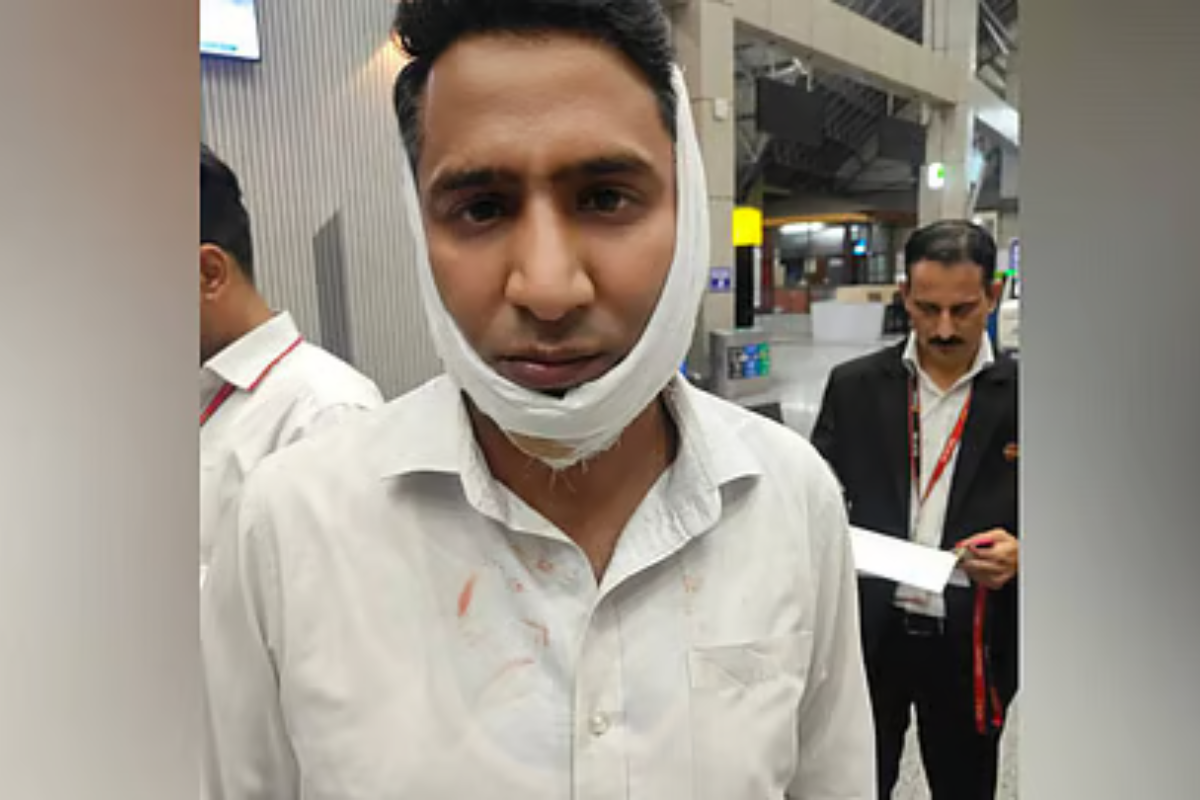
          The incident, which occurred on July 26, went viral over the weekend after CCTV and mobile footage emerged online, showing the officer striking an airline employee with a metal stand. According to SpiceJet, the altercation left one staff member with a spinal fracture and serious jaw injuries.

          Airline Details Sequence of Events

          In an official statement, SpiceJet said the confrontation began when Colonel Singh was preparing to board a flight to Delhi and was found carrying cabin luggage that exceeded the permitted weight limit by double. When asked to pay for the excess baggage, he allegedly refused and attempted to bypass protocol by entering the aerobridge without completing the boarding process.

          As staff escorted him back to the boarding gate, he reportedly turned aggressive. The airline claims he physically assaulted four members of their ground staff. Footage shared on social media shows the officer attacking an employee with a metal stand while others try to restrain him. A policeman can be seen intervening to separate him from the crew.

          The airline further alleged that one employee lost consciousness and collapsed on the floor, but Singh continued to kick and hit him. Another staff member reportedly suffered facial injuries, including bleeding from the nose and mouth, after being kicked in the jaw.

          Army and Police Respond

          The Indian Army acknowledged the incident and stated that it is conducting an internal inquiry. “The Indian Army is committed to upholding the highest standards of discipline and conduct and takes all allegations seriously,” its public relations office said.

          Police in Kashmir have registered a case against Colonel Singh for criminal assault and intimidation. Simultaneously, Singh has filed a counter-complaint, alleging that SpiceJet staff harassed and assaulted him.

          Allegations and Counterclaims

          Colonel Singh, in a statement to The Indian Express, denied the assault allegations and claimed he was provoked by airline staff. His complaint accuses SpiceJet personnel of using force against him. SpiceJet says it has submitted CCTV footage of the incident to law enforcement authorities and has begun the process of placing Colonel Singh on the national no-fly list.

          Wider Implications

          The incident has sparked widespread outrage on social media, with many calling for strict action against the accused while also demanding a fair probe into the officer’s claims of provocation. The case raises fresh concerns about the safety of airline ground staff and the need for stringent enforcement of airport conduct protocols, regardless of the passenger’s status or position. The investigation is ongoing, and both the army and civil authorities have assured that appropriate action will be taken based on the findings.

          Students on the streets; SSC failed the Nation

          Shubham Tyagi |

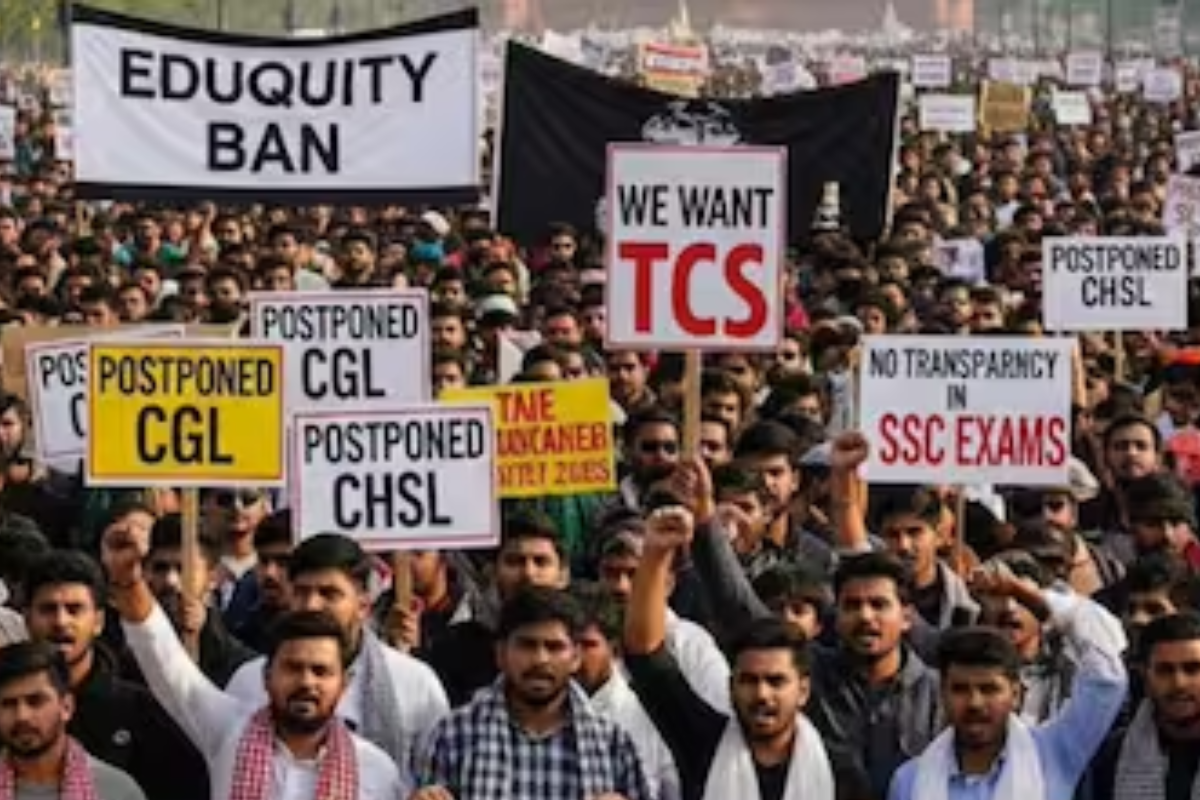
          The heart of the nation is witnessing a rising wave of discontent, as thousands of students and teachers gather in protest against the alleged mismanagement and corruption in the Staff Selection Commission (SSC) recruitment exams. What began as online outrage has now spilled onto the streets, with massive demonstrations being staged in the capital, highlighting long-standing grievances with the examination system.

          From flawed question papers to technical glitches at exam centers, students say they are bearing the brunt of systemic failures. At the center of this growing storm is a simple demand transparency, fairness, and accountability in the recruitment process.

          The Broken System: Voices of Frustration

          India, often celebrated as the land of knowledge and ancient learning, now finds itself grappling with a credibility crisis in its education and recruitment system. The SSC, a key institution responsible for recruiting candidates into various government departments and ministries, is facing serious allegations ranging from paper leaks to poor infrastructure at test centers.

          Students from across the country have been sharing disturbing experiences:

          • Examination centers being located 500 to 1000 kilometers away from a candidate’s hometown.
          • Dysfunctional computers and technical issues during online exams.
          • Incorrect or ambiguous questions in tests.
          • And even after enduring all this, paper leaks that render their efforts meaningless.

          These aren’t isolated incidents but a pattern, say student groups. And this pattern, they argue, is systematically eroding the trust of an entire generation in government institutions.

          A Larger Crisis Brewing

          According to data, nearly 70% of India’s youth still rely on government jobs for employment and economic security. This makes recruitment exams like SSC not just career-defining, but life-defining for millions. The repeated irregularities in these exams do not just disrupt lives they shatter dreams.

          This is not the first time the SSC has come under fire. Protests over paper leaks and delays have become a recurring feature over the past few years. Yet, this time the intensity is different. The protests have become more organized, and the anger more focused.

          “We don’t want favors. We want a fair process,” says Ritu Singh, a postgraduate student from Uttar Pradesh. “Is that too much to ask in a democracy?”

          Where Is the Accountability?

          Despite multiple protests and media coverage, both the government and the SSC have offered limited responses. While officials have promised “investigations” and “reviews,” no significant reforms have been implemented so far. Critics allege that bureaucratic apathy and political disinterest have allowed this mess to grow unchecked.

          Worse, student groups claim that whenever a controversy erupts, it’s brushed off as a “technical error,” with no one held accountable. The exam conducting bodies continue to function without transparent audit mechanisms or external oversight.

          As one protester put it: “It feels like a well-planned business. Delay the exams, cancel the papers, leak questions, make students reappear and earn from application fees every time. We are just customers in a corrupt system.”

          The Human Cost

          Beyond the logistical failures and administrative chaos lies a deeper, more tragic consequence the psychological toll on students. Reports of depression, anxiety, and even suicides among aspirants have become alarmingly frequent.

          When students spend years preparing, only to see their efforts wasted by systemic flaws, the despair is natural. But what’s shocking is the collective indifference to this pain.

          “The system is not just failing us academically. It’s failing us as human beings,” said a protesting teacher. “We are producing a generation that believes merit has no value unless it’s backed by money, power, or political connection.”

          What Needs to Change

          The ongoing protest should not be viewed in isolation. It is a reflection of a deeper crisis in the public recruitment and education ecosystem. Immediate steps that must be taken include:

          • Strict anti-leak mechanisms with independent oversight.
          • Real-time grievance redressal for students during and after exams.
          • Transparent audit reports after each exam cycle.
          • Reforms in center allocation and online exam infrastructure.
          • Psychological support systems for aspirants under extreme stress.

          A Test for Democracy

          At its core, the SSC protest is not just about jobs or exams it’s about trust. Trust in institutions. Trust in the idea that hard work will be rewarded, not punished. If the cries of India’s youth continue to go unheard, the consequences will be far-reaching. A democracy that ignores its students today may find itself without a future tomorrow. For now, the protest continues not with violence, but with questions. And perhaps, that is the most powerful form of resistance.

          Kargil Vijay Diwas: Remembering the Bravery That Defended India’s Honour

          Shubham Tyagi |

          Every year on July 26, India observes Kargil Vijay Diwas to commemorate the bravery and sacrifice of our soldiers who reclaimed Indian territory from Pakistani intruders in the summer of 1999. It is not just a day to honour victory, but a moment to reflect on patriotism, resilience, and the cost of peace.

          The Story of the Kargil War

          The Kargil War, also known as Operation Vijay, was fought between May and July 1999 in the high-altitude region of Kargil, in Jammu & Kashmir. Infiltrators from the Pakistani Army and militants crossed the Line of Control (LoC) and captured strategic Indian peaks.

          Caught off guard, the Indian Army responded with strength, strategy, and unmatched courage. Over 500 Indian soldiers laid down their lives to recapture the posts at altitudes above 16,000 feet, in some of the harshest conditions on earth.

          The conflict ended on July 26, 1999, when India successfully pushed back the intruders and restored control. That day became a symbol of military excellence and national pride, and since then, is celebrated as Kargil Vijay Diwas.

          Saluting the Heroes

          Kargil Vijay Diwas is a day to pay tribute to those who gave their today for our tomorrow. Names like Captain Vikram Batra (PVC), Lieutenant Manoj Kumar Pandey (PVC), Grenadier Yogendra Singh Yadav (PVC), and many others became household legends, reminding the nation what true heroism looks like. Their stories continue to inspire generations not just in the armed forces, but among civilians, youth, and leaders alike.

          National Observances

          The main commemoration takes place at the Kargil War Memorial in Dras, Ladakh, where families of martyrs, senior military officers, and political leaders gather to pay homage. The memorial, built in the shadow of Tololing Hill, bears the names of every soldier who died in the war. Across the country, schools, colleges, government offices, and defence units observe the day with events, parades, film screenings, and remembrance ceremonies.

          Why Kargil Vijay Diwas Still Matters

          In a time of shifting geopolitical dynamics and growing global tension, Kargil Vijay Diwas reminds us of the importance of national unity, strong defence preparedness, and civilian support for the armed forces. It also brings attention to the need for veterans’ welfare, support for the families of martyrs, and the crucial role of young Indians in nation-building.

          Kargil Vijay Diwas is not just a chapter of history, it is a legacy of courage that lives in the heart of every Indian. As we mark the 26th anniversary this year, let us remember that freedom comes at a cost, and it is our duty to honour the sacrifice of those who ensured it. India did not bow then. It will not bow now.

          SIR and the Bihar Elections: The Voter Roll Controversy

          Shubham Tyagi |

          With Bihar headed for assembly elections later this year, a new exercise by the Election Commission of India (ECI) has set off a political firestorm. The initiative, called SIR (Special Intensive Revision), aims to clean and update the state’s voter rolls. However, what was launched as a bureaucratic process has now turned into a major political controversy. Opposition parties are accusing the ECI and by extension, the ruling BJP of using SIR as a tool to disenfranchise large sections of Bihar’s voters. Meanwhile, the BJP-led NDA defends the move as necessary to ensure fair and transparent elections.

          What is SIR?

          The Special Intensive Revision (SIR) is an ECI-ordered, large-scale door-to-door verification drive of Bihar’s 8 crore registered voters. This includes:

          • Identifying and removing duplicate, ineligible, or deceased voters
          • Verifying entries of voters added since 2003
          • Asking voters to provide fresh documents for verification

          This revision was notified on June 24, 2025, and voters were initially given just one month—until July 25—to comply. The EC did not accept common ID proofs like Aadhaar, voter ID cards, or ration cards as sufficient documents in the initial stages.

          Why is the Opposition Protesting?

          Opposition led by the INDIA bloc (Congress, RJD, SP, and others) has strongly opposed the exercise for several reasons:

          1. Fear of Mass Voter Deletion: They allege that the verification rules disproportionately affect migrants, the poor, Dalits, Muslims, and rural communities, many of whom may not have access to the documents required in such a short timeframe.
          2. Timing and Intent: The timing of the exercise during the monsoon season and harvest period has drawn criticism. Leaders say the short deadline is unfair to seasonal migrant workers who are away from home. RJD leader Tejashwi Yadav said this move smells of a deliberate attempt at “vote bandi” (vote suppression).
          3. Demands for Broader Document Acceptance: A major demand has been to allow Aadhaar, EPIC (voter ID), and ration cards as valid proof of identity and residence documents commonly held by most citizens.
          4. Boycott Threats: The opposition has hinted at a possible election boycott if their concerns are not addressed. In Parliament and on the streets, slogans like “SIR is an attack on democracy” have become common.

          EC and BJP’s Response

          The Election Commission maintains that SIR is a routine and constitutional process done to ensure free and fair elections. EC officials argue that previous voter lists contained errors, outdated entries, and duplications that needed urgent correction. BJP leaders have echoed similar sentiments, stating that the exercise is essential to maintain voter roll integrity. They accuse the opposition of politicizing a neutral process and spreading panic. The Commission claims it has already verified 98% of households and flagged over 52 lakh anomalies. It also says guidelines were based on precedents from past revisions in other states.

          Supreme Court Steps In

          On July 10, the matter reached the Supreme Court, which questioned the ECI’s refusal to accept commonly held documents. The court has asked the ECI to reconsider its stance, especially on Aadhaar and EPIC. A further hearing is scheduled for July 28, and its ruling could shape the direction of the entire process.

          Political Stakes in Bihar

          Bihar is a politically charged state. BJP and its allies are looking to consolidate their hold, while the INDIA bloc is fighting hard to regain lost ground. With marginalized communities forming a large part of the electorate, the outcome of SIR could have serious implications. If large numbers of voters are left out due to document issues, it could significantly alter voting patterns and voter turnout in key constituencies.

          What Happens Next?

          With growing pressure from civil society, political parties, and now the judiciary, the ECI may be forced to:

          • Extend the deadline beyond July 25
          • Relax document requirements
          • Issue fresh guidelines to ensure no eligible voter is denied their right

          The opposition, however, is not backing down. They continue to demand a full rollback of the current rules or a postponement of the election process itself.

          SIR, which started as a technical voter roll update, has turned into a symbolic battleground in Bihar’s election war. For the Election Commission, it is a test of transparency and independence. And for political parties, it’s about control over a crucial voter base. For millions of citizens, it’s about their right to vote. As Bihar gears up for polls, one thing is clear: the debate over voter verification will continue to shape the political narrative in the weeks to come.

          A Complete Guide on ITR Filing in India

          Shubham Tyagi |

          Every Indian citizen earning above a certain threshold is required to pay taxes and file an Income Tax Return (ITR) annually. However, many people either delay or skip filing due to lack of awareness or confusion about rules and timelines. Whether you are a salaried employee, a freelancer, a business owner, or even a farmer with taxable income, understanding ITR is essential.

          This article explains basics of ITR, how to file it, key benefits, important deadlines (including mid-September and late-December provisions), and what happens if you miss them.

          What is ITR?

          Income Tax Return (ITR) is a form used by taxpayers in India to report their annual income, deductions, tax liability, and payments to the Income Tax Department. The data filed helps the government track tax compliance and refunds. There are different ITR forms (ITR-1 to ITR-7) based on the type of taxpayer and income source:

          • ITR-1 (Sahaj): For salaried individuals earning up to ₹50 lakh.
          • ITR-2: For individuals with income from more than one house property or capital gains.
          • ITR-3: For business or professional income.
          • ITR-4 (Sugam): For presumptive income under sections 44AD, 44ADA, or 44AE.

          Each form serves a specific group and needs to be filled accordingly.

          How is ITR Filed?

          ITR can be filed online via the official Income Tax e-Filing portal. Here’s a basic step-by-step process:

          1. Register/Login to the income tax portal.
          2. Go to e-File > Income Tax Return > File Income Tax Return.
          3. Select:
            • Assessment Year (e.g., for FY 2024-25, assessment year is 2025-26),
            • Mode of filing (Online/Offline),
            • Applicable ITR form.
          4. Fill in details: Personal info, income, deductions, taxes paid, and bank account.
          5. Validate and submit the return.
          6. E-verify using Aadhaar OTP, net banking, or other available options.

          Benefits of Filing ITR

          Even if your income is below the taxable limit, filing ITR offers many benefits:

          1. Claim Refunds: If excess TDS (Tax Deducted at Source) has been cut from your salary or investment, you can claim it back by filing ITR.
          2. Proof of Income: ITR serves as proof of income and is often required for visa applications, loan approvals, and government tenders.
          3. Carry Forward Losses: Filing ITR allows you to carry forward capital or business losses to offset future gains.
          4. Avoid Penalty: Timely filing helps avoid penalties and legal complications under the Income Tax Act.
          5. Builds Financial Credibility: Regular ITR filing strengthens your financial profile, especially if you’re planning to take credit cards, business funding, or home loans.

          Last Date for Filing ITR for FY 2024–25 (AY 2025–26)

          • For individual taxpayers (not subject to audit): July 31, 2025, This is the original deadline for most salaried individuals and small business owners.
          • For businesses/audited accounts: September 30, 2025, Extended deadline applicable to those whose accounts need to be audited.
          • For businesses requiring transfer pricing report: November 30, 2025

          What If You Miss the July 31 Deadline?

          Don’t worry, the government provides additional options:

          1. Belated Return (Section 139(4)) Till December 31, 2025:

          If you miss the July 31 deadline, you can still file a belated return by December 31, but with penalties and some restrictions:

          • Late filing fee of ₹1,000 (if income < ₹5 lakh) or ₹5,000 (if income > ₹5 lakh)
          • Losses cannot be carried forward
          • Interest under Section 234A, 234B & 234C may apply

          2. Revised Return (Section 139(5)) – Also till December 31, 2025

          Made a mistake in your original or belated return? You can revise it up to December 31 of the assessment year.

          Mid-September Rule: For Audited Cases

          Taxpayers whose accounts are required to be audited (typically businesses with turnover beyond specified limits) have until September 30, 2025, to file their ITR. These include:

          • Professionals earning above ₹50 lakh
          • Businesses earning above ₹1 crore (or ₹10 crore in case of digital transactions)

          They must also submit the Tax Audit Report (TAR) by September 30.

          Late December Rule: Final Deadline

          December 31, 2025, is the absolute last date for:

          • Filing belated returns
          • Filing revised returns
          • After this, you cannot file ITR unless:
            • You approach the Income Tax Commissioner with a valid reason
            • Or receive a notice from the department

          What Happens If You Don’t File ITR at All?

          Failing to file ITR without a valid reason may attract:

          • Penalties under section 234F
          • Prosecution under section 276CC (for high-value non-filers)
          • Inability to claim refunds or carry-forward losses
          • Interest liability on tax dues
          • Loss of government subsidies, especially for LPG or schemes tied to income

          Filing your ITR is not just a legal formality, it is a powerful financial habit which makes you a responsible citizen. Even if you missed the July 31 deadline, you can still file until December 31, though with some penalties. It is better to be late than never. If you fall under audit requirements, the mid-September date applies to you, while December 31 remains the final opportunity to file any ITR (belated or revised) for FY 2024–25. Do not delay, log in to the Income Tax portal and file your return at the earliest to avoid complications.