

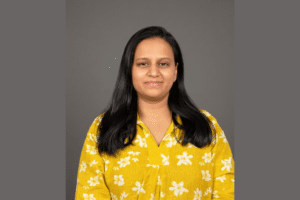
NEW DELHI: ÂI do not want to look back. My life has changed forever. I want to be an achiever and do some proud to the State and the nation, says Afshan Ashiq Captain of the `Chief MinisterÂs XI womenÂs football team.
The `Chief MinisterÂs XIÂ team played the Indian WomenÂs League Football Championship held in Kolhapur, Maharashtra recently.
Afshan, whose life story might soon hit the silver screen with a renowned Bollywood filmmaker planning to launch a biopic on her life, hails from Srinagar. Her life and career made a remarkable U-turn since the days when her picture splashed in the national media as a stone-pelter.
Her tender hands once hurled stones, but now as the teamÂs goalkeeper, stand firmly at her goalpost.
Afshan Ashiq, whose team met Union Home Minister Rajnath Singh, here said the youth (in Kashmir) is talented but there is need for a platform.
In a prompt gesture, the Union Home Minister spoke on the phone instantly with Ms Mehbooba Mufti, the State Chief Minister and conveyed to her the concerns of the young players and that these should be promptly taken up for redressal.
ÂMet the young and energetic girls of J&KÂs first ever Women Football Team. They are highly motivated and driven when it comes to football. Playing the role of new age ÂGender BendersÂ, these girls are setting an example for others to follow. I wish them success and a great future, said Rajnath Singh in a tweet.
The 25 member delegation included three officials who started the team. Of the 22 girls, 11 are from J&K, – five from the Kashmir Valley, four from Jammu region and two from Ladakh. Interacting with the Union Home Minister, the girls drew his attention to the need for creating better sports infrastructure and facilities and providing more opportunities to fulfill the aspirations of the youth from the State.
Rajnath Singh told the team that an additional provision of Rs.100 crore has been specially made for upgradation of sports facilities in the State.
Coach Satpal Singh said the J&K Sports Council has set up State Football Academies in as many as 19 of 22 total districts in the State. The J&K CMÂs XI team comprises 11 girls from other parts of the country including six from Haryana, three from Odisha, and one each from Bihar and Jharkhand. The induction of outside talent raises standards to enable the team come up to the national level, said team Manager Tsering Angmo.
From Stone Pelting To Goal Keeping: Afshan Has Done It All



Legendary Actor Shashi Kapoor Dies

NEW DELHI: Legendary actor Shashi Kapoor who was suffering from kidney ailment for the past several years died in a Mumbai hospital on Monday. He was 79.
Shashi Kapoor, son of illustrious film actor Prithviraj Kapoor and younger brother of actor-director Raj Kapoor, had acted in about 115 movies. He began acting in his father’s plays and began acting as a child artiste in movies like “Aag” and “Awaraa”. Growing to be a handsome young man, Shashi Kapoor is best known for essaying romantic lead roles with ease and flair where he was paired with almost all leading heroines of the day in Mumbai’s filmdom.
He stood his ground in movies like “Deewar”, “Kabhie Kabhie”, “Namak Halal”, “Trishul” and “Kala Pathar” opposite Amitabh Bacchan who had by then emerged as a superstar and Amitabh-Shashi pair became a hit with everyone, winning instant approval of people. Shashi Kapoor is also known for his role in “Junoon”, “Chor Machaye Shor”, “Satyam, Shivam, Sundaram”, “Fakira”, “Sharmilee” and “Heat and Dust”, a Merchant-Ivory film based on a novel of Ruth Prawer Jhabvala.
His exposure to international cinema was noteworthy and so was his love for theatre where he met Jennifer Kendal whom he married later. He is survived by sons Kunal, Karan and daughter Sanjana who has kept his initiative of Prithvi Theatre alive.
President Ram Nath Kovind remembered him for his contribution to meaningful cinema and theatre. Prime Minister Narendra Modi, several ministers and film personalities also recalled his contribution to the film world and theatre.
His career in movies and theatre spanned nearly four decades. He made a rare appearance in the Capital in 2015 to receive the prestigious Dada Saheb Phalke award where his photograph with the leading heroines of his movies Shabana Azmi, Waheeda Rahman, Zeenat Aman, Rekha and Hema Malini went viral. In 2011, he was bestowed with the Padma Bhushan award.
`I can never stop making film, says Akanksha Sood Singh

Akanksha Sood Singh can never stop making films. Film making is her Plan A to Plan Z in life.
Having worked on 86 films in the past 15 years in various capacities and directed 7 films, including 3 feature films, AkankshaÂs works have won her national and international accolades.
The films you make are more on subjects which film makers would not normally touch– social issues such as sanitary napkins and social evils — how difficult is it to make films on these subjects?
It is not easy. Not at all! While the issues were drastically different, the problems I faced were common: lack of awareness, no historical research data, blind faith in superstition and lack of empathy.
In the case of the `Pad Piper  on sanitary napkinsÂthe story was of Arunachalam Muruganandam. He had no qualms about talking and his sanitary napkins manufacturing machine since the work spoke for itself, but for the women, it was a taboo  the subject and even talking on camera!
The biggest challenge was to make women talk  not just in India, even in the United States. Interestingly, I had originally wanted to inter-cut his story with vox pops and also with the phenomenon of the Âmenstruating Goddess in Kerala. I was told only a man could film there.
I worked with a group of women in Coimbatore to reach out to rural women. These ladies roamed the streets and went from house to house trying to educate women about basic hygiene and amenities. Not that they were welcomed with open arms, but at least it was not the camera straight in their face. I spent a lot of time first making ground for a conversation in person.
`MrityubhojÂThe Death Feast started out with a newspaper article on Dr Viresh Raj Sharma and his crusade against this social evil. On reading, it was in the first draft a straight forward film. After Public TV Service commissioned the idea, I traveled through the Chambal belt, filming death feasts thrown by the rich. It was a waste of time  they were like lavish marriages. These feasts are given by the so called Âupper castesÂ.
I was at the 8th feast when I put my foot down  I told Dr SharmaÂs volunteerÂs I was not here to make wedding videos! It had come down to that. This is not my story. This does not show the reality.
I remember that evening  they went helter-skelter looking for a not-so-well-to-do family where a death may have happened a few days before. And what came out from their ground-work in just 4 hours was a family that had just lost the patriarch.
This film is a simple story with the canvas limited to what unfolds with Virender Khushwa over 13 days as he goes about making preparations for his fatherÂs death feast. The landscape is unchanging and there are no dramatic events. What plays out in many rural villages across the Indian heartland, plays out here too. Through the 13 days, as Virender seemingly follows tradition, little does he realize the socio-economic trap he is walking into. Perhaps, for life.
There is a parallel narrative of Dr. Viresh Raj Sharma, the man battling to curb this social evil. Educated and in the police service, he has been able to put his conditioning and prejudices aside to look at death feasts from an outside perspective. Virender and Dr. SharmaÂs path cross in the end of the film  for the former it brought hope, but for the latter, it was a struggle gone in vain.
This is a purely an observational film, with no voice-over. It plays to VirenderÂs thoughts and sometimes to Dr. SharmaÂs. And this came to me as a mark of respect to Virender for allowing me to be a fly on his walls from the day his father died and to his family for the delicate intimacy with which they swept me into their lives. We never spoke. I was as clueless about what will happen next as he was. But we bonded  our presence brought comfort to each other him at the end of every day, a distraction from the conflicts both of us faced.
As I filmed Mrityubhoj, each day, I realized the sensitive issues I was touching upon Âclass, caste, tradition, gender- –a complex matrix. It was easy to get carried away, take a stance, confront but I chose not to. Instead, I chose to bring out reality as it is without prejudicing the audience.
I did another film recently, UrmiÂs Cat, which was co-directed by my partner, Soumadeep Sen. A bit of an experimental film. We wanted to bring up incest. And challenge the way films have shown the perpetrator  always an ÂuncleÂ. No, sometimes, it could be the father. We put it out on social media  free for everyone to watch and think about. It worked.
What do you think is the immediate impact of your films– other than instant appreciation– is there any change in the mindset?
I believe in using films as a tool for spreading awareness, influencing mindsets and thus bringing about a change.
For example:
The Pad Piper is used by the women featured in the as a tool to entertain and start a conversation. And it is working brilliantly.
Manas  Return of the Giants brought back Manas into the limelight, a position it had lost to, living in the shadow of Kaziranga. It is also giving conservation agencies a medium to engage local communities, show them the world they live in and take for granted, from an outside perspective and thus build bridges at the grassroot level for long term conservation measures of landscape, resources, flora and fauna.
For Mrityubhoj  we are about to roll out the campaign. The film is picking up in the festival circuit and as is the press around it. We are now going to take the film and the press it has got so far to villages and hold screenings. We plan to propose to influencers in these communities to curtail the opulence, and propagate alternatives. This is not something that will happen overnight, but at least plant the seeds now.
What are some ideas which you have in mind for making films in the future?
I am working on developing a wildlife series, co-producing and fund raising for an investigate documentary on illegal wildlife trade, exploring some unconventional customs / rituals prevalent in India and also trying to write a feature film story.
What is your primary objective behind making these films — your passion of course is there?
Wildlife films has become a way of living for us. We get so restless- my husband and I- if we donÂt get out to a forest and film regularly. City life chokes us. And the stories that exist in the wild  every person needs to see, know and feel a crucial element of their natural world. I could make a power point presentation, too, and give you the same information, but only a good story will make you sit up and make you empathize.
I have done only two social / human interest documentaries and the response to both has been tremendous. It is a new genre of sorts for me, but I can already see that there is so much to explore, to tell, to change with such films.
What made you go into making films?
I must have been 6 or 7 years old when we got a coloured television. My father was posted in Wellington then. I was glued to it. Television gave way to cinema  especially the wave of parallel films. It had a huge impact on me.
And, with the coming of cable television, came wildlife programming. It gave me a different perspective altogether. Till then I wanted to Âmake filmsÂ, but after cable television, I wanted to be a Âwildlife filmmakerÂ. Through graduation and post graduation and early years of working, I did everything else other than making films. It was in 2002, when I met my husband, that I finally got a chance to be a part of a film, and that too one on the human  leopard conflict in India. It was his student film that was commissioned by National Geographic. It won the Student Emmy.
Which are some of your award-winning films?
Mrityubhoj  The Death Feast is the winner of Best Indian Documentary at the 23rd Kolkata International Film Festival 2017, was official screened at the 5th Woodpecker International Film Festival 2017 and was nominated for Best Documentary at the 4th Asia Rainbow Television Awards, 2017
UrmiÂs Cat (Fiction) was nominated for Best Film at the 12th Calcutta International Cult Film Festival, 2017 and is the winner of the Best Short Film Award at Virgin Spring Cine Fest, 2017.
The Parlour Boys is nominated for the Scroll India PeopleÂs Choice Award, 2017
Manas  Return of the Giants is the winner of Best Film on Wildlife at the 9th CMS Vatavaran Film Festival 2017, Woodpecker International Film Festival, 2016; Winner of Best Film on Asian Elephants at the International Elephant Film Festival, held at the UN Headquarters on the UN World Wildlife Day, 2016
The Pad Piper is the winner of the Best Film on Science and Technology at the 61st National Film Awards given by the President of India
IndiaÂs Wandering Lions and Tigress Blood have also won several awards and hugely acclaimed.
Government Announces National Nutrition Mission

The Modi government has announced setting up of a National Nutrition Mission (NNM) to reduce stunting, under-nutrition, anemia (among young children, women and adolescent girls) and bring down low birth weight by 2%, 2%, 3% and 2% per annum respectively.
Although the target to reduce stunting is at least 2% annually, the Mission would strive to achieve reduction in stunting from 38.4% (NFHS-4) to 25% by 2022. The decision to set up the Mission was taken at a meeting of the Union Cabinet, chaired by Prime Minister Narendra Modi.
The Mission will be rolled out with a three year budget of Rs.9046.17 crore commencing from 2017-18. Implementation uld be based on intense monitoring and Convergence Action Plan right up to the grass root level. NNM will be rolled out in three phases from 2017-18 to 2019-20. The National Nutrition Mission, as an apex body, will monitor, supervise, fix targets and guide the nutrition related interventions across the Ministries.
The broad proposal includes mapping of various schemes contributing towards addressing malnutrition, introducing a robust convergence mechanism, ICT based Real Time Monitoring system and incentivizing States/UTs for meeting the targets.
Anganwadi Workers (AWWs) would be incentivized for using IT based tools and introducing measurement of height of children at the Anganwadi Centres (AWCs). Social audits and setting-up Nutrition Resource Centres as well as involving masses through Jan Andolans for their participation on nutrition through various activities are other highlights of the Mission. More than 10 crore people will be benefitted by this programme. All the States and districts will be covered in a phased manner, beginning with 315 districts in 2017-18, 235 districts in 2018-19 and remaining districts in 2019-20. An amount of Rs. 9046.17 crore will be expended for three years commencing from 2017-18. The government budgetary support would be 60:40 between Centre and States/UTs, 90:10 for NER and Himalayan States and 100% for UTs without legislature. Total Central share over a period of three years would be Rs. 2849.54 crore. There are a number of schemes directly/indirectly affecting the nutritional status of children (0-6 years) and pregnant women and lactating mothers. In spite of these, level of malnutrition and related problems in the country is high. There is no dearth of schemes but lack of creating synergy and linking the schemes with each other to achieve common goal. NNM through robust convergence mechanism and other components would strive to create the synergy.
Result of RK Nagar Bye Poll in Chennai Is Seen As an Anti-BJP Vote

Dhinakaran threatens to form government in Tamil Nadu in three months time.
BJP expected to back cine star Rajnikanth’s political party on December 31.
The stunning and shocking win of rebel AIADMK candidate TTV Dhinakaran contesting as an independent in the R K Nagar bye-election in Chennai adds a new twist to the complex political environment in Tamil Nadu following the death of party supremo and chief minister J Jayalalithaa in December last year.
It is widely being interpreted as an anti-BJP vote which has been reportedly backseat driving the government in Chennai in a bid to make its presence felt in this important southern state which has 39 seats in the Lok Sabha.
The outcome in the R K Nagar bye poll has the portends of queering the pitch for the ruling party leading to a fresh spell of political instability in the troubled state. Dhinakaran not only won by an impressive margin of 40,000 odd votes over his nearest AIADMK rival E Madhusudhanan but dealt a knockout blow to the DMK candidate Marudu Ganesh who lost his deposit.
Winning or losing this seat should not make any difference to the DMK. However, what cannot be lost sight of is that the voters of this constituency have sought to infuse a fresh round of political oneupmanship between Dhinakaran, nephew of Amma’s one time confident Sasikala who is in jail, and the AIADMK where the two factions headed by chief minister E Palaniswamy and deputy chief minister O Paneerselvam respectively have come together in the larger context of occupying the seat of power at Fort St George in the state capital.
An elated Dhinakaran claimed he will assume power in Tamil Nadu in three months time with a renewed bout of bluster rather than being realistic about the complex ground realities. The DMK has suffered considerable erosion in its vote share but is holding its horses in the event of a snap poll in the state in the short to medium term.
Dhinakaran’s shock victory can lead to confusion in the ranks of the AIADMK. Many of the legislators and MPs in the ruling faction of the AIADMK owe their allegiance to Dhinakaran and the Sasikala family. They, however, chose to back Palaniswamy and Paneerselvam as they did not want a mid-term poll.
Be that as it may, Dhinakaran feels in the wake of his electoral victory, many of the legislators may now view the Sasikala factor as a force that can keep the party together and command wider voter support.
Despite having won the battle for the party name and symbol, the fight for political legitimacy is far from over. The question is can the Dhinakaran faction attain a critical mass for the legislators of the ruling camp to resort to desertions on a large scale. This needs to be watched closely in the weeks and months ahead. The ruling faction of the AIADMK has spent far too much time on dousing the internal fires in the party rather than overseeing the critical aspect of governance.
As a measure of abundant precaution the ruling party wasted no time in expelling at least five pro-Dhinakaran functionaries and relieved four more supporters of their position as district secretaries.
Meanwhile, the BJP is keen on knitting alliances in Tamil Nadu with an eye on the 2019 general elections followed by the assembly poll two years later in 2021. They have sought to build bridges with Prime Minister Narendra Modi calling on DMK patriarch M Karunanidhi recently in Chennai.
Now they seem keen on hitching their bandwagon with mega Tamil star Rajnikanth who is expected to reveal his political plans on the eve of the New Year or December 31.
The Lotus party will back Rajnikanth’s entry in politics hoping to improve its prospects of making an impact in Tamil Nadu. The discriminating in the state feel Rajnikanth’s popularity is on the wane compared to those younger than him.
Rajnikanth is also being closely watched by the DMK as any such new venture in Tamil Nadu politics could pose a challenge to DMK’s heir apparent M K Stalin and his efforts to form the next government in Chennai.
(Views are personal)
IIT Roorkee Leads Consortium For Zero Peak Energy Building Design in India

The Indian Institute of Technology, Roorkee is leading an Indo-UK consortium working on addressing the problem of peak demand reduction by aiming to eliminate peak demand of power in buildings. The project named Zero Peak Energy Building Design in India (ZED-i) is being led by IIT Roorkee with the consortium partners being Indian Institute of Technology Delhi and CSIR-CBRI from India and Bath University and the UK Met office. The total project value is around Rs. 15 crore out of which IIT Roorkee will receive a grant of Rs 6 crore. The overall vision of the project is to decouple building energy use from economic growth in India through a new science of zero peak energy building design for warm climates. This will provide Âthermal stress free living conditions whilst minimizing mean and peak demand. The project will work majorly on improved building designs, low-energy cooling & heating, social practices of adaptive thermal comfort and post-occupancy evaluation in order to bring about peak demand reduction. It will also look at providing support through research to urban planning, and integration of information, communication and renewable energy technologies at building level. The ZED-i project will also entail careful consideration of the current and future weather signals, which will be critical for any realistic assessment of mean and peak energy demands. It hopes to replace the current use of a small amount of observed weather data from a small number of sites with a repository of computer generated weather data from approximately 10,000 sites. Importantly, this repository will contain examples of events such as heat waves and cold snaps that can be used to test the resilience of buildings and the stresses they subject their occupants to. It will also include weather up to year 2080, thereby, allowing the impacts of climate change over the lifetime of buildings to be fully considered. The second focus of the project is on delivering a method of construction that is compatible not only with the Indian climate but also its building practices and social customs, thus avoiding the trap of an “imported” standard. This will be delivered through the creation of 60 pathways for a range of building types in 6 cities comprising different climates. Speaking about the Zed-I project, Dr. E. Rajasekar, Faculty of Architecture and Planning, IIT Roorkee said ÂIn many developing countries, rising energy demand, and consequently carbon emissions, is seen as an unequivocal indicator of increasing prosperity. This trajectory has important consequences not just for global carbon emissions but for the ability of countries such as India to achieve its developmental goals. This is because, in most developing countries, growth in energy demand far outstrips growth in supply due to the large capital investment required to build energy infrastructure. Thus, even people with access to energy networks often find that they are unable to meet their comfort needs due to supply shortages. ÂThe population of India is growing at 1.2% per annum and is expected to reach 2.3 by by 2080. The per-capita energy use, driven by greater urbanization, is growing at an even faster pace at around 3.3% annually. This project directly addresses the problem of peak demand reduction by aiming to eliminate peak demand in buildings, where it is created. In most developing countries, the vast majority of the building stock of the future is still to be built, so there is a real opportunity to decouple economic growth from building energy use whilst ensuring comfortable conditions. Dr. Rajasekar added This project brings together world-leading academic expertise in the fields of architecture, civil engineering, computer science, mathematical sciences, environmental psychology, mechanical engineering, electrical engineering, hydrology, climate science and advanced materials to tackle the problem of climate change driven peak energy demand in buildings.
Centre Concerned About Judicial Overreach, Wants Apex Court To Do An Audit

Frequent quibbling along with indulging in one-upmanship between the Executive and the Judiciary about their powers as enshrined in the Constitution has occupied centre stage once again.
Prime Minister Narendra Modi might have been conciliatory but the issue of judicial overreach was left hanging.
This happened on the occasion of commemorating the National Law Day spread over two on November 25 and 26 when President Ram Nath Kovind and Prime Minister Narendra Modi underlined the need for the three organs of the State — the Executive, Legislature and Judiciary — to remain within their limits in fulfilling the wishes of the people.
The message from the highest echelons of the BJP led NDA was unambiguous. The Executive, Legislature and the Judiciary should go about their business without stepping on the toes of one another. Modi drew pointed attention to this aspect emphasising “the balance between the Legislature, Executive and Judiciary has been the backbone of our Constitution. Because of this balance our nation was able to defeat the Emergency. When we are making every attempt to build a new India, these principles as outlined in the Constitution assumes significance. We have to fulful the peoples’ hopes and aspirations while remaining within our limits”.
The emphasis was unmistakable. After the Union Law minister Ravi Shankar Prasad and the Chief Justice of India Dipak Mishra had spoken, it became apparent that the Centre was concerned about judicial activism particularly with regard to the Court striking down the National Judicial Appointments Commission (NJAC) in 2015. What had bothered the government all along tumbled out into the open.
He wondered why the Prime Minister, being a popular global leader in his own right and highly popular at home or he himself as the Law minister could not be trusted to make fair judicial appointments.
He drew attention to the case of Kolkata High Court judge C S Karnan having been held guilty of contempt of court for questioning the collegium system of appointment of judges.
On his part Justice Mishra quoted from a judgement interpreting Article 75 observing the Constituent Assembly had reposed faith in the Prime Minister and “we also repose the same trust in the Prime Minister”. Further, the CJI sought to dispel the impression that judges intended to run the country and cited specific instances to drive home the point.
Quoting various judgements of the Supreme Court, Modi maintained “the Constitution creates three major instruments of power — the Executive, Legislature and Judiciary — demarcating their jurisdiction minutely expecting them to exercise their respective powers without overstepping their limits”.
President Kovind believed the pillars of democracy were designed to lean on each other with countervailing force to strengthen the democratic processes. It is critical to keep this intricate and delicate balance when exploring the relationship among the three branches of the State. They should be careful not to disturb the separation of powers by even unknowingly intruding into the domain of either of the two other branches, the President added.
Union Finance Minister Arun Jaitley observed that the Judiciary may intervene in the case of Executive failure but only to issue directives for taking necessary action. He had no doubt that the judiciary should steer clear of overreach by interfering in Executive functions. The argument that judicial activism was meant to fill the gaps left by other State organs was flawed, Jaitley added.
The focus was on the government and the judiciary respecting each others turf coupled with overcoming their deficiencies. Pragmatism is what the judiciary and the executive need at this juncture. It has become imperative to strike the right balance between the three arms of the government. At the same time the judiciary remains the first among equals and is the unequivocal custodian and defender of the Constitution.
One In 10 Medical Products In Low And Middle Income Countries Not Of Standard: WHO

Every 1 in 10 medical products circulating in low- and middle-income countries is either substandard or falsified, according to new research from the World Health Organization (WHO).
In simple terms, it means that people are taking medicines that fail to treat or prevent disease. Not only is this a waste of money for individuals and health systems that purchase these products, but substandard or falsified medical products can cause serious illness or even death.
Prior to 2013, there was no global reporting of this information. Since WHO established the Global Surveillance and Monitoring System for substandard and falsified products, many countries are now active in reporting suspicious medicines, vaccines and medical devices. WHO has trained 550 regulators from 141 countries to detect and respond to this issue. As more people are trained, more cases are reported to WHO.
Since 2013, WHO has received 1500 reports of cases of substandard or falsified products. Of these, antimalarials and antibiotics are the most commonly reported. Most of the reports (42%) come from sub-Saharan Africa, 21% from the Americas and 21% from the European region.
This is likely just a small fraction of the total problem and many cases may be going unreported. For example, only 8% of reports of substandard or falsified products to WHO came from the WHO Western Pacific region, 6% from the Eastern Mediterranean and just 2% from the South-East Asia region.
WHO has received reports of substandard or falsified medical products ranging from cancer treatment to contraception. They are not confined to high-value medicines or well-known brand names and are split almost evenly between generic and patented products.
ÂSubstandard and falsified medicines particularly affect the most vulnerable communities, says Dr Tedros Adhanom Ghebreyesus, WHO Director-General. ÂImagine a mother who gives up food or other basic needs to pay for her childÂs treatment, unaware that the medicines are substandard or falsified, and then that treatment causes her child to die. This is unacceptable. Countries have agreed on measures at the global level  it is time to translate them into tangible action.Â
In conjunction with the first report from the Global Surveillance and Monitoring System, WHO is publishing research that estimates a 10.5% failure rate in all medical products used in low- and middle-income countries.
This study was based on more than 100 published research papers on medicine quality surveys done in 88 low- and middle-income countries involving 48 000 samples of medicines. Lack of accurate data means that these estimates are just an indication of the scale of the problem. More research is needed to more accurately estimate the threat posed by substandard and falsified medical products.
Based on 10% estimates of substandard and falsified medicines, a modelling exercise developed by the University of Edinburgh estimates that 72 000 to 169 000 children may be dying each year from pneumonia due to substandard and falsified antibiotics. A second model done by the London School of Hygiene and Tropical Medicine estimates that 116 000 (64 000 Â 158 000) additional deaths from malaria could be caused every year by substandard and falsified antimalarials in sub-Saharan Africa, with a cost of US$ 38.5 (21.4 Â 52.4) million to patients and health providers for further care due to failure of treatment.
Substandard medical products reach patients when the tools and technical capacity to enforce quality standards in manufacturing, supply and distribution are limited. Falsified products, on the other hand, tend to circulate where inadequate regulation and governance are compounded by unethical practice by wholesalers, distributors, retailers and health care workers. A high proportion of cases reported to WHO occur in countries with constrained access to medical products.
Modern purchasing models such as online pharmacies can easily circumvent regulatory oversight. These are especially popular in high-income countries, but more research is needed to determine the proportion and impact of sales of substandard or falsified medical products.
Globalization is making it harder to regulate medical products. Many falsifiers manufacture and print packaging in different countries, shipping components to a final destination where they are assembled and distributed. Sometimes, offshore companies and bank accounts have been used to facilitate the sale of falsified medicines.
11th Edition Of Jaipur Literary Festival To Begin On January 25 Next Year

New Delhi: The ZEE Jaipur Literature Festival which has often been described as the Âgreatest literary show on earth and the ÂKumbh Mela of literature has hosted nearly 2000 speakers and welcomed over a million booklovers over the past decade, evolving into a global literary phenomenon. A true champion of literary and artistic traditions and democratic discourse, it encourages freedom of thought through a range of voices from India and abroad engaged in informed and enlightened dialogue and promotes above all a love for literature.
This year, the Festival will welcome over 250 writers, thinkers, politicians, journalists and popular cultural icons from over 35 different nations. It will feature a spectacular line-up of speakers representing the major awards including the Nobel, Man Booker, Pulitzer,Padma Vibhusan anhe Sahitya Akademi Award. The first list of 60 speakers released today include Akhil Sharma, award-winning writer and creative writing professor Amy Tan, author of the widely adapted book The Joy Luck Club; award-winning Indian film director and producer Anurag Kashyap, Indian art critic, art historian, Padma Shri and Padma Bhushan awardee, B.N. Goswamy, former president of Afghanistan Hamid Karzai, English novelist and author of the iconic Bridget Jones Diary, Helen Fielding, Man Booker winner and author of The English Patient Michael Ondaatje;Pulitzer Prize-winning investigative reporter from The Boston GlobeÂs Spotlight team Michael Rezendes; Sahitya Akademi Awardwinner Mridula Garg;2006 Nobel Peace Prize Laurate Mohammad Yunus, essayist and novelist Pico Iyer, best known for travel writing;New York Times bestselling poet and illustrator Rupi Kaur; Indian classical dancer and Padma Vibhushan awardee Sonal Mansingh; Indian philanthropist and writer Sudha Murty; Academy and Tony Award winning Czech-born British playwright and screenwriter Tom Stoppard; and Grammy Award winning tabla maestro Zakir Hussain, among others.
The Festival will open as usual with Jaipur Book Mark (JBM), now in its fifth edition, with a full day of programming on 24 January at Diggi Palace followed by sessions at a dedicated JBM venue at the Festival Hub from the 25-28January.
The ZEE Jaipur Literature Festival sets literary conversations, debates and dialogue against the backdrop of built and cultural heritage including curated art installations, world music performances at the Music Stage and cultural evenings at heritage venues like the Amber Fort and Hawa Mahal.
Namita Gokhale, writer, publisher and Co-director of the ZEE Jaipur Literature Festival, says, ÂThis is a vintage year for the ZEE Jaipur Literature Festival, with an amazing line up of international and Indian writers and multiple strands of thoughtfully curated sessions. A space to interrogate our changing times and to encounter poetry and the dreaming mind, the Festival returns with its unique brand of magic, whimsy and intellectual rigour.Â
According to William Dalrymple, writer, historian and Co-director of the ZEE Jaipur Literature Festival, 2018 may be the best Jaipur ever, fielding an unrivalled literary ÂFirst Eleven made up of star poets and acclaimed novelists, historians and biographers, thinkers and dreamers and scribblers and critics, and half the faculty of Harvard.
Sanjoy K. Roy, Managing Director of Teamwork Arts who produce the ZEE Jaipur Literature Festival, said, ÂAs we wait to celebrate yet another milestone year of the ZEE Jaipur Literature Festival in 2018, we look forward to the infectious energy of intellectual debate and the dynamism that charges the Festival’s atmosphere and comes from a mingling of celebrated minds, diverse perspectives, and heightened cultural experiences.
Rahul Gandhi Rattles BJP in PM’s Home State Of Gujarat.

BJP’s concerted attack against Rahul Gandhi catapults him as main opposition leader. With assembly elections in six states next year, Congress is in power only in Karnataka.
As the scion of the Nehru-Gandhi dynasty, Rahul Gandhi could not have ducked any longer becoming president of the Indian National Congress, the oldest political party in the country. Its significance cannot be lost as the baton of being the ‘numero uno’ of the Congress gets passed from mother Sonia Gandhi to son on the eve of the assembly elections in Gujarat, the home state of Prime Minister Narendra Modi.
The importance of this particular poll cannot be undermined as the BJP has been in power in Gujarat continuously for 22 years. The fight this time between the Lotus party and the Congress appears to be a close one though Modi’s magic coming to the fore in electoral battles as evidenced in the past cannot be ruled out.
Rahul has to steel himself for the daunting task ahead. He barely has 18 months remaining for the next general elections in the first half of 2019. Prior to that there are assembly elections in half a dozen states next year. The Congress is in power only in Karnataka. In the other states — Madhya Pradesh, Rajasthan, Maharashtra, Chattisgarh and Haryana — the saffron brigade has clinically sent the Congress packing.
Despite serious doubts about Rahul’s ability to turn around the fortunes of the Congress particularly as its organisation is in a shambles, there is a big question mark about Rahul’s ability in pulling the chestnuts out of the fire and re-establishing the pre-eminence of Congress in the country’s politics.
The ruling BJP led NDA at the centre is facing growing criticism on a wide range of issues encompassing spiralling prices, surging unemployment coupled with the hurried and poor implementation of the much talked about GST from the first of July. The problem caused by last November’s demonetisation and the distress caused to farmers has also caught the Modi government on the wrong foot.
Even though the country’s map is awash with the saffron colour as never before, Modi being the main campaigner for the Lotus party has proved to be debilitating for the Congress since he stormed to power at the Centre in May 2014.
For Rahul, the do or die battle is revitalising the Congress party. It is widely believed that no one but for a member of the Nehru-Gandhi family can hold the Old Lady of Bori Bunder’s potentially fractious elements together.
Intense infighting in the party and depressed Congressmen leaving the party to join the BJP has been disconcerting as evidenced by its impressive victories particularly in the Hindi heartland. The Lotus party regaining power in the most critical state of Uttar Pradesh with a mind boggling three-fourth majority was stunning.
One of the major handicap confronting the Congress is being shorn of mass leaders in the states. This is on account of the high handedness and peremptory style of functioning of the Congress High Command.
In the last few months since Rahul’s interface with teachers and students in Berkeley in the United States, there has been a marked and refreshing change in his approach. He is more amenable in having an interface and listening to the people along with becoming more active on the social media. At the same time there has been periodic chorus seeking his elevation as President of the 130-year-old party.
There is anti-incumbency against the BJP in Gujarat having been in power on the trot for more than two decades. The angst against Modi who was also the chief minister of Gujarat for more than two terms is discernible.
That the Lotus party has a challenge on its hands is not in doubt. Its leaders in Gujarat insist achieving the target of 150 seats fixed by BJP president Amit Shah in the 182-member assembly is being highly over ambitious. They believe it will be a saving grace if they retain power and manage anywhere from 100 to 110 seats.
Losing power in Gujarat is bound to be a big loss of face for Modi having the portends of casting its shadow in the next general elections two years later. Rahul’s elevation as Congress President next month is more of a formality. This does not mean that the seniors will be sidelined or sent packing.
Rahul will have to think out of the box as its rank and file is feeling demoralised. He has more than his hands full in galvanising and rebuilding the party organisation. A senior politician disappointed with Rahul’s style of functioning emphasised that “politics is a 24X7 job in this country”.
He will have to be politically sound in taking on the formidable Modi-Amit Shah duo. This requires vision and connecting with workers right from the block level infusing a sense of pride and confidence in them.
Lately, there has been a marked change in Rahul’s political approach. Getting elected as the President of the Indian National Congress is the easy part. The difficult part is getting accepted as a serious, interactive and committed leader.
In the 2014 general elections the Congress finishing with its lowest ever tally of 44 seats in the 545-member Lok Sabha was a shocker. The party failed to secure even one-tenth of the seats in the House of the People to become eligible as the Leader of the Opposition. On the other hand the BJP secured a majority on its own for the first time in the Lok Sabha.
BJP’s concerted onslaught against Rahul has contributing in propelling him as the main opposition leader in the country. There is no doubt the Congress requires a radical overhaul. It is a tricky affair requiring patience, tenacity and purposefulness for winning the electorate’s affection. It is for him to get his act together in galvanising the Congress along with forging an opposition front giving Modi and the BJP led NDA a run for its money. After all, the Congress has overcome challenges in the past.