Logo

Logo

Two Indian Universities Secure International Accreditation

The India Saga Saga |

India’s two universities, Chennai-based SRM University and KIIT University in Bhubaneswar have secured the IET (The Institution of Engineering and Technology) Accreditation, an internationally respected benchmark awarded to high-quality programmes that provide an ideal preparation for aspiring professional engineers. This prestigious accreditation was last awarded to Amity University in 2011.

The IET is one of the world’s leading professional societies for the engineering and technology community and IET accreditation, licensed by the Engineering Council, covers a broad spectrum of engineering and technology subjects.  It is recognized globally as an indicator of quality through the Washington and Sydney accords, governed by the International Engineering Alliance (IEA).  Departments with IET accredited programmes are eligible to apply for the EUR-ACE label, awarded by European Network for Accreditation of Engineering Education (ENAEE).

KIIT and SRM University completed the accreditation process this year. As the next step, Nigel Fine, Chief Executive, The IET issued the IET Accreditation & Academic Partner Certificate to both the partners on the sidelines of the IoT India Congress 2017, held in Bangalore.

The affiliation allows students gain access to cutting-edge knowledge content on various engineering disciplines. It provides links to key industry stakeholders globally in an attempt to make them more industry-ready. The programme also includes activities like industrial visits, seminars, conferences, technical workshops to expose students to practical aspects of engineering as well as problem-solving skills in addition to theoretical aspects covered in the syllabus.

According to Dr. C Muthamizhchelvan of SRM University: “SRM encourages students to enroll in reputed national and international professional bodies. We believe in providing the maximum exposure to our students from all the relevant bodies. Receiving the IET accreditation is indeed a great honour and recognizes the highest standards of education we maintain for our students.”

Dr. Achyuta Samanta, Founder, KIIT University says: “We are elated at this association with the IET. This accreditation definitely aligns with our objective to provide the best for our students.”

Founded 146 years ago, the IET is one of the world’s leading professional societies for the engineering and technology community with more than 167,000 members in 150 countries.

PFRDA Rolls-Out Aadhar Powered Digital on Boarding into APY through eNPS

The India Saga Saga |

New Delhi : Pension Fund Regulatory and Development Authority (PFRDA) has embarked upon several digital friendly steps for extension of the benefits of APY to the citizens of India. PFRDA has developed the process to offer APY enrolment through eNPS platform for wider reach. Under this channel a complete end to end digital environment for subscription is enabled without submission of physical form at the convenience of the customer without visiting bank or post office.

So far APY is available for subscription through Banks, BCs and through internet banking. Now, APY is available on eNPS platform and any eligible Indian citizen can enroll through the APY@eNPS channel by visiting www.enps.nsdl.com. The customers of the Bank can visit eNPS portal and submit Aadhaar/ Bank Name and Savings Bank Account Number to join the scheme. 


The benefits of APY@eNPS are:


Paperless registration

No need for visiting Bank Branch.

Online enrollment can be made 24*7 at the customer’s convenience.

No Need for having internet banking Id.


Punjab National Bank is the first Bank to operationalize APY@eNPS and quite a few other banks are expected to launch this platform shortly offering Aadhaar enabled APY enrollment.


Any person in the age group of 18 to 40 years with a savings bank account and Aadhaar can register for APY by providing the minimum information in the APY@eNPS portal as rest of the information will be auto populated from the respective bank. This new feature not only makes it easy for the subscriber to join the APY but also reduces the workload for the Banks/Postal Branch which are implementing the APY.

Cloud-Based Video Conferencing Is Making Small Businesses Global

The India Saga Saga |

Cloud-based Video Conferencing in its new and open avatar is changing the digital landscape like no other technology. It has the potential to disrupt like few other technologies and become the most important pillar of the digital disruption that we are witnessing across the globe. 


From what was hitherto considered a domain of the large corporations, video conferencing has moved from the boardrooms of large corporations to the laptops and mobile phones of SME and even individual service providers. The ever reducing costs and easy adaptability is helping its mass adoption.


Today’s $2.41 billion global web conferencing market is expected to be worth US$8.9 Billion by 2025, expanding at a CAGR of 8.3% during the forecast period between 2017 and 2025 (Source: Frost & Sullivan and Transparency Market Research).  The overall market is seeing accelerated demand propelled by easy-to-use, lower-priced, simplification, and migration from stand-alone audio to web conferencing and collaboration.


Flexibility is driving adoption and opening up newer segments. From what was just a boardroom phenomenon, based on propriety hardware and software, its moved to open technologies like WEBRTC. Both technology and infrastructure problems are being eased at rapid rates. We are seeing the growing adoption both in businesses and consumers. 


Products like DUO (Google), Chime (Amazon) and Skype (Microsoft) are addressing the needs of consumers through their apps which are currently being given free. The growing usage of these apps has broken down the barriers that people had in using video as a tool to communicate regularly. This has also increased the adoption of Video in business communications.


Collaboration needs of organizations both within the organization and with potential and existing customers have seen a large increase. Both large companies and SMEs are now integrating video meeting in their various processes, like, cross-office collaboration, sales meetings, customer care, product demo etc. They have clearly benefited from the adoption by reducing travel times of their employees, increased productivity and reducing the cost of sales and customer care and also improved response times to various stakeholders. The key has been to integrate the video meetings as a part of the existing process. Newer players like GoConsult are solving the problems of flexible integration and ease of using video meetings. They are bringing the services to the doorsteps of the small and really small players. Want to have a like call, don’t have to go Facebook, do it from your own website. Want to consult online, don’t have to ask your customer to come to skype etc, do it from your own website. And all this happens quite incredibly easily.


One of the most innovative adoptions has been by the consulting fraternity. They have now been able to extend the reach of their services beyond their localities. Imagine an Indian Astrologer or a Vastu consultant now being able to extend his practice sitting in Jaipur to the UK and USA. Companies like Goconsult.inare now providing the complete solution for these people who can seamlessly get integrated into their websites and they can start their services. Similarly Imagine Financial consultants, Doctors, Lawyers etc managing their customers from the comfort of their homes and simultaneously being able to extend their geography of services.


To enable speedy adoption of video-based communications where Video is a part of the workflow, a large number of platforms providing specialized solutions are coming up. Platforms which can help hospitals extend their services to locations where they don’t exist currently, a platform where financial institutions can do eKYC. Online portal for hiring where we can get to see the interviewee online before have an in-person meeting.


Government is showing great keenness in adopting cloud-based video conferencing in a large number of their process like courts getting to testimony online, jails getting the inmates to talk to their visitors online, hence reducing the risks. 


The video-driven transformation has truly begun. Businesses will have even more sway on their customers if they are encouraging them to directly interact with the brand – in real time and all from wherever they are. Entrepreneurs are now holding meetings, training employees, and encouraging a collaborative approach to doing business. Using technology to engage with customers worldwide is no more a thing of the future. It’s here. From now and beyond, brands and consumers will be pushing the boundaries to build business relationships without affecting productivity – and those who don’t embrace live video communication just might get left behind.


(The writer is a digital expert and CEO of Eyas Ventures.)

Travelling In Delhi Metro To Be Costlier From Today

The India Saga Saga |

New Delhi : Delhi Metro has hiked its fares from today. Delhi Metro Rail Corporation (DMRC) Board, in its meeting last night, decided to go ahead with fare hike as per the recommendations of the Fare Fixation Committee. 


DMRC Board said, it has no power to change the recommendations of the fare fixation committee, which has proposed the hike. 


The new fare structure will be: up to 2 km Rs.10, 2 to 5 km Rs. 20, 5 to 12 km Rs. 30, 12 to 21 km Rs. 40, 21 to 32 km Rs. 50 and for journeys beyond 32 km Rs. 60.


The fare hike of Rs. 10 for all travels beyond 5 km comes barely five months after the last one. The maximum fare, for journeys beyond 32 km, will now be Rs. 60.


10% discount will  be continued on every journey made by the passengers using Smart Card besides an additional 10% discount to the passengers using Smart Card who enter in the metro system during off peak hours based on the following time zones:


Start of revenue services to 08:00 AM.

Start of revenue services to 08:00 AM.

From 09:00 PM to closing of revenue service


The additional discount is applicable from Monday to Saturday (weekdays) only except national holidays. Thus, in all a passenger may avail 20% discount on smart card while travelling during the off-peak time on these day


There will be no change in the fares of Airport Express Line (Orange Line).

Ban On Sale of Firecrackers in Delhi – NCR Till 1 November ; Supreme Court Orders

The India Saga Saga |

NEW DELHI : The Supreme Court has ordered ban on sale of firecrackers in Delhi-NCR during the upcoming festive season of Diwali. 


A bench headed by Justice AK Sikri had on 6th October reserved its order on a plea seeking restoration of the apex court’s last year order banning the sale of firecrackers in Delhi-NCR. 


The top court, through its 11th November order last year, had suspended all licences which permit sale of fireworks, wholesale and retail within the territory of NCR. 


Later, on 12th September, the apex court had temporarily lifted its earlier order and permitted sale of firecrackers. 


During the hearing on the plea seeking restoration of last year’s order, the Central Pollution Control Board had supported the application. 


The apex court had last month temporarily lifted its earlier order suspending licences for sale of fire crackers, saying a complete ban would be an extreme step and a graded approach was needed to curb pollution caused by them.


Those who had already bought firecrackers can still burst them.


In November last year, the court had stopped the sale of fireworks within the National Capital Region, which includes Delhi and nearby areas, following a petition flagging the alarming rise in pollution levels after Diwali.


Last month, the court temporarily suspended the ban and allowed the sale of crackers, saying a complete ban would be an “extreme step” and a “graded approach” was needed to tackle pollution.


That verdict will now only be effective from November 1. The court today said it wants to test the effect of banning firecrackers on air quality after Diwali, the festival of lights when millions across India celebrate by bursting crackers and lighting lamps.


Each year, the festival leaves the air in Delhi thick with deadly smog and suspended particles and residents complaining of breathlessness and lung difficulties.


Last Diwali, the pollution level in Delhi was said to be the worst in 10 years.

Rajnath to Inaugurate NIA’s New Headquarter Building

The India Saga Saga |

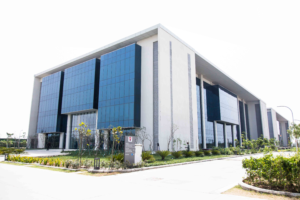
NEW DELHI: Nine years after it was set up as India’s primary counter-terrorism probe agency, the National Investigation Agency (NIA) is all set to get its own new and swanky headquarter building in the heart of the national Capital. 


Union Home Minister Rajnath Singh will inaugurate the new Headquarters Office Complex of the NIA here on October 10.  Ministers of State for Home Affairs, Hansraj Gangaram Ahir and Kiren Rijiju will also be present at the inauguration ceremony. The foundation stone of the NIA Headquarters was laid by Rajnath Singh on September 10, 2015 and the construction has been completed within the stipulated period of two years, official sources said.  


The NIA, which came into existence on December 31, 2008, initially began operations in Hotel Centaur near IGI Airport and then shifted its Headquarters to the NDCC-II Building, Jai Singh Road near Rajiv Chowk. 


In addition to the new headquarters, the NIA has expanded its geographical outreach through a network of branch offices located at Lucknow, Hyderabad, Kochi, Guwahati, Mumbai, Kolkata, Raipur and Jammu. NIA also has its camp offices at Chandigarh, Srinagar, Chennai, Bangalore, Vishakhapatnam, Ahmedabad, Bharuch, Jagdalpur, Patna, Siliguri, Malda, Ranchi, Vijaywada and Imphal. 


The Ministry of Urban Development allotted 1.0356 acres of land opposite CGO Complex, Lodhi Road in Delhi at a cost of Rs.22.78 lacs on December 23, 2013 for construction of the NIA’s headquarters.  After the Home Ministry’s approval a year later, the MoU for construction of office complex building was signed with the National Building Construction Corporation (NBCC) Ltd on December 29, 2014. The Office Complex, comprising of administration building having nine floors & two basements with a total area of 1,14,056 sqft, has been built at a cost of Rs.35.13 crore. 


As the Central Counter-Terrorism Investigation agency, the NIA came into existence in pursuance to enactment of the NIA Act, 2008. with a mandate to investigate serious offences related to terrorist activities affecting the sovereignty, security and integrity of the nation. 


The NIA is investigating the crimes having national and international ramifications and NIA has all-India jurisdiction. The NIA started functioning on January 19, 2009. The first case was assigned to NIA in June, 2009 and by the end of July, 2017, a total 166 cases had been assigned to the NIA for investigation. These cases cover the entire spectrum of terrorism related challenges relevant to India and have involved investigative efforts in 26 States and UTs. 


Out of the 166 breakup cases, 63 cases pertain to ‘jihadi’ terrorism, 25 to terrorist acts by North East insurgents, 41 to cases of terror financing and fake currency, 13 to cases involving Left Wing Extremism while the remaining 24 cases relate to other miscellaneous terrorist acts/gangs. The investigations conducted by the NIA have helped to unearth an entire range of illegal activities involving terror funding to specific incidents of terror involving the killing of innocent persons.

Transporters Calls For Chakka Jam, Protest Against GST & Diesel Price Hike

The India Saga Saga |

Calling for a 36-hour nationwide strike starting from 9th October, truck owners and operators are protesting “disruptive policies” under the GST and are demanding the inclusion of diesel in the new indirect tax (GST) ambit.


“Transporters have decided to protest against the callous and indifferent attitude of government officials, GST, diesel price hike and corruption on roads by observing a token ‘chakka jam’ (strike) on October 9 and 10,” said AIMTC president SK Mittal.


AIMTC, represents around 93 lakh truckers and around 50 lakhs bus and tourist operators across India. 


Truck dealers have expressed displeasure at the “contra laws” in the GST regime that has led to “coercive registration and unnecessary compliance by truckers and transporters”. He added that the sale of used business which attracts GST, leads to double taxation by the government.


Other transporters’ bodies like the All India Transporters Welfare Association (AITWA) said that it will support AIMTC’s strike as the government has failed clarify GST to transporters.


The strike comes bang in the middle of the festive season when transporter bodies usually make a good profit. Calling it a “suicidal move”, transport dealers said that they are going on strike for two days despite making losses. However, if the government does not listen, dealers said they will go on an indefinite strike.


The protest by truck dealers comes just days ahead of the proposed nationwide strike by petrol pump dealers on October 13, to press for various demands including better margins and inclusion of petroleum products in the Goods and Services Tax.


Gujarat HC Verdict On 2002 Godhra Train Carnage Case

The India Saga Saga |

The Gujarat HC on Monday commuted the death sentence of 11 convicts to life imprisonment in the 2002 Godhra train carnage case. It has, however, upheld the life sentence to 20 other convicts.


The court also observed that the State had failed to maintain law and order. It directed the State to pay Rs 10 lakh to the families of the 59 victims, mostly kar sevaks, killed in the incident.


A total of 94 people, all Muslims, had stood trial on charges of murder and conspiracy. In 2011, a court acquitted 63 of them. The High Court today has refused to change that verdict. Those acquitted include Maulvi Umarji, accused of being the mastermind behind the fire.


31 people were convicted of murder, attempt to murder and criminal conspiracy. The death sentence for 11 of them has today been changed to life imprisonment. The others remain sentenced to life in jail.


The special court’s verdict was challenged by the state government and the convicts before the Gujarat High Court on April 6, 2011. The state had appealed for the confirmation of the special court order, whereas convicts had pleaded for quashing of the convictions.


The matter was listed before the division bench of justice AS Dave and justice GR Udhwani.


Submission on the appeal began on March 5, 2014 and was argued for over a year. On May 5, 2015, after submission of the all parties concerned concluded, the division bench reserved the order.


Sabarmati Express was late on February 27, 2002. According to the prosecution’s case, as per pre-planned conspiracy, the chain was pulled just outside the railway station and mob armed with lethal weapon and carrying petrol attacked the train.


They pelted stone and locked the doors of the S6 coach from outside. They poured petrol inside the coach and set it on fire. 59 passengers in the coach died after suffering severe burn injuries and suffocation.


According to police investigation, Aman Guest house owner Abdul Razak Kurkur had procured 60 litre patrol from a fuel pump on February 26.


He had hatched the conspiracy to attack the Sabarmati Express train at his guest house along with Bilal Hussain Kalota.


The other accused according to the police investigation was Maulana Umarji.


The probe said that on the morning of February 27, he had appealed people from minority community using the mosque loud speaker to gather and rush to railway station.


Interestingly, the trial court has acquitted him. After acquittal he died due to old age.


However, Kurkur and Kalota with 29 others were convicted for hatching conspiracy and for murder.


The special court’s additional sessions judge PR Patel while accepting prosecution theory of pre-planned, had passed verdict running in 850 pages in 2011.


The first part of judgment of conviction was announced on February 22 and quantum of punishment on February 25.

New Method To Tinker Cell Surface Proteins Can Help Design New Drugs

The India Saga Saga |

Pic – Dr. Shukla and members of research team.

A group of Indian scientists have found a new way to modulate specific cellular functions by tinkering with proteins that play a role in cells’ response to external chemicals like drugs. 

The new finding, described in a paper published this week in journal Nature Nanotechnology, makes it convenient for researchers to study the workings of a large family of sensor proteins called G-protein-coupled receptors (GPCRs) and to develop potential synthetic antibody-based drugs.

Research teams led by Dr. Arun K. Shukla at IIT Kanpur have engineered synthetic antibody fragments that target beta-arrestin (a class of proteins inside the cell). GPCRs are mobile proteins that sit in the cell membranes and support cells to respond to chemical signals from body parts or external world. GPCRs are the most sought-after drug targets in modern medical research. Drug companies are investing heavily to identify new drug molecule that can target key GPCRs involved in several pathophysiological conditions. Beta-arrestin regulates actions of GPCRs by attenuating its signaling.

“There are more than 800 GPCRs and only limited beta-arrestin which controls its functioning, therefore, targeting beta-arrestin will enable us with a greater handle over the desired signaling across all GPCR types. So, we developed synthetic Fabs (fragment antigen-binding) that targets beta -arrestin and have potential to modulate their functioning,” explained Dr Shukla.

According to the study, small molecule-based drugs, which either bind to stimulate or inhibit GPCR, remains a traditional way of tweaking the GPCRs. Dr. Shukla says that beta-arrestin functions are usually studied by either knocking the gene out or turning their expression down by silencing of protein coding genes). But synthetic Fab molecules can specifically target a particular part of the protein and selectively offset its function without interfering with its any other function, attributed to its other domains. “Our finding is the first demonstration of targeting a specific function of beta-arrestins without altering its other functions,” said Eshan Ghosh, first author of this paper.

This study was an ambitious project to design a generic tool to study GPCRs. “Initially, in vitro studies, we found very encouraging results but the real deal was to replicate the study in cellular systems, where we can really see the molecule in action by monitoring its cellular readouts,” said Dr. Shukla. Interestingly, during microscopic experiments, Dr. Shukla’s team members could observe that this fab in form of an intrabody (an antibody that works within the cell) was clearly blocking the endocytosis (pulling in of a GPCR from the surface to inside of a living cell). 

“Synthetic intrabody we have identified has the potential to treat many diseases implicating GPCRs if its delivery vehicle is well devised,” said Mithu Baidya, one of the authors of this study.

“Our approach has the potential to take antibody-based drug discovery to the next level, where we can dissect to compartmentalize the functioning of a protein and thereby modulate it. This study will flag off a new direction for future drug discovery,” said the study leader.

Research team included Eshan Ghosh, Ashish Srivastava, Mithu Baidya, Punita Kumari, Hemlata Dwivedi, Kumari Nidhi, Ravi Ranjan and Arun K. Shukla (Indian Institute of Technology, Kanpur), Shalini Dogra Prem N. Yadav  (CSIR-Central Drug Research Institute, Lucknow), Akiko Koide, Shohei Koide (Laura and Isaac Perlmutter Cancer Center, USA), Sachdev S. Sidhu (University of Toronto, Canada).

RSS Chief Calls For Integrated Policy To Deal With Diversity

The India Saga Saga |

RSS chief Mohan Bhagwat wants the Narendra Modi government to redraw its policies for perking up the economy.


Prime Minister Narendra Modi has taken serious note of RSS chief Mohan Bhagwat’s emphasis that the ruling BJP cannot brush aside the economic slide back but evolve policies that keep pace with the ever-changing ground realities.  


Bhagwat also wants the ‘Niti Ayog’ to be perked up so that it is capable of solving pressing problems.   


As the ideologue of the BJP, the RSS has already outlined its three-point Hindutva agenda for the country. It pertains to building a Ram Temple in Ayodhya, abrogating Article 370 of the Constitution and having a Uniform Civil Code.


Bhagwat’s annual speech on Dussehra signifying triumph over evil was much more than stock taking. It assumes importance in the wake of the Modi government had crossed far beyond the halfway mark of its five-year term. 


The counsel to gear up policies comes in the wake of criticism about economic slippages that could not have come at a more opportune moment with barely 18 months remaining for the next general elections in 2019. 


Bhagwat laid stress on encouraging the small and medium sectors providing the maximum employment in the country.  They are the country’s security net in times of economic upheaval as crores are employed in such enterprises, he observed. 


While taking exception to the naysayers, Modi’s speech at the Institute of Company Secretaries came when the economy had lost its growth momentum. It is apparent some reform decisions had failed to have the desired effect. 


The Prime Minister has since got down to high power meetings for making the necessary course corrections. 


Bhagwat’s much-awaited Vijayadashmi speech last Saturday at the RSS headquarters in Nagpur was attended by former Deputy Prime Minister L K Advani and Union minister Nitin Gadkari. 


The Modi government has been showering encomiums on itself aimed at transforming this country has hit a highly embarrassing rough patch. There has been widespread criticism of the BJP led NDA government failing to address the distress of farmers as evidenced by the continuing suicides. 


This came to the fore with Bhagwat seeking protection for farmers and the informal sector. He wanted the Modi government to be mindful of the stress caused to the poor and particularly the farmers who feed the country. 


Bhagwat’s annual address on Dussehra signifying good triumphing over evil sets the agenda for the organization as well as the Lotus party’s political leadership. 


He said the proposed “new provisions” through Constitutional amendments is aimed at overcoming the protracted Kashmir tangle. The problem of refugees is still not resolved in the lone Muslim majority state in the country. Despite being citizens of Bharat they (the refugees) are still far away from having basic facilities.


This was in the context of Articles 370 according to special status to J&K and 35A pertaining to residency rights. 


Affirming that many Muslims are also involved in “GauRaksha”, Bhagwat said cow protection was beyond religion. He condemned the death of those involved in cow protection.  


What is encouraging is that Modi has signaled government’s commitment to reversing some of the setbacks to growth. The Prime Minister has also sought to allay the apprehension of traders. government’s commitment to reversing some of the setbacks to growth. The Prime Minister has also sought to allay the apprehension of traders. 


On his part the RSS chief wanted an effective system to be created whereby realistic information from all sources about the execution and impact of the schemes percolating to the lowest level becomes available for bolstering the administrative system. 


Despite signs of a synchronised global economic recovery, this country has been an exception because of the twin shocks from demonetisation and the goods and services tax (GST). 


The immediate challenge is to fix the problems being faced by small and medium traders because of GST as well as the extent to which it has hurt exporters. The increase in the current account deficit in the wake of a slowing economy also requires to be addressed expeditiously.