

NEW DELHI : The Supreme Court has ordered ban on sale of firecrackers in Delhi-NCR during the upcoming festive season of Diwali.
A bench headed by Justice AK Sikri had on 6th October reserved its order on a plea seeking restoration of the apex courtÂs last year order banning the sale of firecrackers in Delhi-NCR.
The top court, through its 11th November order last year, had suspended all licences which permit sale of fireworks, wholesale and retail within the territory of NCR.
Later, on 12th September, the apex court had temporarily lifted its earlier order and permitted sale of firecrackers.
During the hearing on the plea seeking restoration of last yearÂs order, the Central Pollution Control Board had supported the application.
The apex court had last month temporarily lifted its earlier order suspending licences for sale of fire crackers, saying a complete ban would be an extreme step and a graded approach was needed to curb pollution caused by them.
Those who had already bought firecrackers can still burst them.
In November last year, the court had stopped the sale of fireworks within the National Capital Region, which includes Delhi and nearby areas, following a petition flagging the alarming rise in pollution levels after Diwali.
Last month, the court temporarily suspended the ban and allowed the sale of crackers, saying a complete ban would be an Âextreme step and a Âgraded approach was needed to tackle pollution.
That verdict will now only be effective from November 1. The court today said it wants to test the effect of banning firecrackers on air quality after Diwali, the festival of lights when millions across India celebrate by bursting crackers and lighting lamps.
Each year, the festival leaves the air in Delhi thick with deadly smog and suspended particles and residents complaining of breathlessness and lung difficulties.
Last Diwali, the pollution level in Delhi was said to be the worst in 10 years.
Ban On Sale of Firecrackers in Delhi – NCR Till 1 November ; Supreme Court Orders



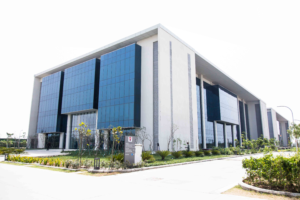
Rajnath to Inaugurate NIA’s New Headquarter Building

NEW DELHI: Nine years after it was set up as India’s primary counter-terrorism probe agency, the National Investigation Agency (NIA) is all set to get its own new and swanky headquarter building in the heart of the national Capital.
Union Home Minister Rajnath Singh will inaugurate the new Headquarters Office Complex of the NIA here on October 10. Ministers of State for Home Affairs, Hansraj Gangaram Ahir and Kiren Rijiju will also be present at the inauguration ceremony. The foundation stone of the NIA Headquarters was laid by Rajnath Singh on September 10, 2015 and the construction has been completed within the stipulated period of two years, official sources said.
The NIA, which came into existence on December 31, 2008, initially began operations in Hotel Centaur near IGI Airport and then shifted its Headquarters to the NDCC-II Building, Jai Singh Road near Rajiv Chowk.
In addition to the new headquarters, the NIA has expanded its geographical outreach through a network of branch offices located at Lucknow, Hyderabad, Kochi, Guwahati, Mumbai, Kolkata, Raipur and Jammu. NIA also has its camp offices at Chandigarh, Srinagar, Chennai, Bangalore, Vishakhapatnam, Ahmedabad, Bharuch, Jagdalpur, Patna, Siliguri, Malda, Ranchi, Vijaywada and Imphal.
The Ministry of Urban Development allotted 1.0356 acres of land opposite CGO Complex, Lodhi Road in Delhi at a cost of Rs.22.78 lacs on December 23, 2013 for construction of the NIA’s headquarters. After the Home Ministry’s approval a year later, the MoU for construction of office complex building was signed with the National Building Construction Corporation (NBCC) Ltd on December 29, 2014. The Office Complex, comprising of administration building having nine floors & two basements with a total area of 1,14,056 sqft, has been built at a cost of Rs.35.13 crore.
As the Central Counter-Terrorism Investigation agency, the NIA came into existence in pursuance to enactment of the NIA Act, 2008. with a mandate to investigate serious offences related to terrorist activities affecting the sovereignty, security and integrity of the nation.
The NIA is investigating the crimes having national and international ramifications and NIA has all-India jurisdiction. The NIA started functioning on January 19, 2009. The first case was assigned to NIA in June, 2009 and by the end of July, 2017, a total 166 cases had been assigned to the NIA for investigation. These cases cover the entire spectrum of terrorism related challenges relevant to India and have involved investigative efforts in 26 States and UTs.
Out of the 166 breakup cases, 63 cases pertain to Âjihadi terrorism, 25 to terrorist acts by North East insurgents, 41 to cases of terror financing and fake currency, 13 to cases involving Left Wing Extremism while the remaining 24 cases relate to other miscellaneous terrorist acts/gangs. The investigations conducted by the NIA have helped to unearth an entire range of illegal activities involving terror funding to specific incidents of terror involving the killing of innocent persons.
Transporters Calls For Chakka Jam, Protest Against GST & Diesel Price Hike

Calling for a 36-hour nationwide strike starting from 9th October, truck owners and operators are protesting “disruptive policies” under the GST and are demanding the inclusion of diesel in the new indirect tax (GST) ambit.
“Transporters have decided to protest against the callous and indifferent attitude of government officials, GST, diesel price hike and corruption on roads by observing a token ‘chakka jam’ (strike) on October 9 and 10,” said AIMTC president SK Mittal.
AIMTC, represents around 93 lakh truckers and around 50 lakhs bus and tourist operators across India.
Truck dealers have expressed displeasure at the “contra laws” in the GST regime that has led to Âcoercive registration and unnecessary compliance by truckers and transportersÂ. He added that the sale of used business which attracts GST, leads to double taxation by the government.
Other transporters bodies like the All India Transporters Welfare Association (AITWA) said that it will support AIMTC’s strike as the government has failed clarify GST to transporters.
The strike comes bang in the middle of the festive season when transporter bodies usually make a good profit. Calling it a Âsuicidal moveÂ, transport dealers said that they are going on strike for two days despite making losses. However, if the government does not listen, dealers said they will go on an indefinite strike.
The protest by truck dealers comes just days ahead of the proposed nationwide strike by petrol pump dealers on October 13, to press for various demands including better margins and inclusion of petroleum products in the Goods and Services Tax.
Gujarat HC Verdict On 2002 Godhra Train Carnage Case
The Gujarat HC on Monday commuted the death sentence of 11 convicts to life imprisonment in the 2002 Godhra train carnage case. It has, however, upheld the life sentence to 20 other convicts.
The court also observed that the State had failed to maintain law and order. It directed the State to pay Rs 10 lakh to the families of the 59 victims, mostly kar sevaks, killed in the incident.
A total of 94 people, all Muslims, had stood trial on charges of murder and conspiracy. In 2011, a court acquitted 63 of them. The High Court today has refused to change that verdict. Those acquitted include Maulvi Umarji, accused of being the mastermind behind the fire.
31 people were convicted of murder, attempt to murder and criminal conspiracy. The death sentence for 11 of them has today been changed to life imprisonment. The others remain sentenced to life in jail.
The special court’s verdict was challenged by the state government and the convicts before the Gujarat High Court on April 6, 2011. The state had appealed for the confirmation of the special court order, whereas convicts had pleaded for quashing of the convictions.
The matter was listed before the division bench of justice AS Dave and justice GR Udhwani.
Submission on the appeal began on March 5, 2014 and was argued for over a year. On May 5, 2015, after submission of the all parties concerned concluded, the division bench reserved the order.
Sabarmati Express was late on February 27, 2002. According to the prosecution’s case, as per pre-planned conspiracy, the chain was pulled just outside the railway station and mob armed with lethal weapon and carrying petrol attacked the train.
They pelted stone and locked the doors of the S6 coach from outside. They poured petrol inside the coach and set it on fire. 59 passengers in the coach died after suffering severe burn injuries and suffocation.
According to police investigation, Aman Guest house owner Abdul Razak Kurkur had procured 60 litre patrol from a fuel pump on February 26.
He had hatched the conspiracy to attack the Sabarmati Express train at his guest house along with Bilal Hussain Kalota.
The other accused according to the police investigation was Maulana Umarji.
The probe said that on the morning of February 27, he had appealed people from minority community using the mosque loud speaker to gather and rush to railway station.
Interestingly, the trial court has acquitted him. After acquittal he died due to old age.
However, Kurkur and Kalota with 29 others were convicted for hatching conspiracy and for murder.
The special court’s additional sessions judge PR Patel while accepting prosecution theory of pre-planned, had passed verdict running in 850 pages in 2011.
The first part of judgment of conviction was announced on February 22 and quantum of punishment on February 25.
New Method To Tinker Cell Surface Proteins Can Help Design New Drugs

Pic – Dr. Shukla and members of research team.
A group of Indian scientists have found a new way to modulate specific cellular functions by tinkering with proteins that play a role in cells response to external chemicals like drugs.
The new finding, described in a paper published this week in journal Nature Nanotechnology, makes it convenient for researchers to study the workings of a large family of sensor proteins called G-protein-coupled receptors (GPCRs) and to develop potential synthetic antibody-based drugs.
Research teams led by Dr. Arun K. Shukla at IIT Kanpur have engineered synthetic antibody fragments that target beta-arrestin (a class of proteins inside the cell). GPCRs are mobile proteins that sit in the cell membranes and support cells to respond to chemical signals from body parts or external world. GPCRs are the most sought-after drug targets in modern medical research. Drug companies are investing heavily to identify new drug molecule that can target key GPCRs involved in several pathophysiological conditions. Beta-arrestin regulates actions of GPCRs by attenuating its signaling.
ÂThere are more than 800 GPCRs and only limited beta-arrestin which controls its functioning, therefore, targeting beta-arrestin will enable us with a greater handle over the desired signaling across all GPCR types. So, we developed synthetic Fabs (fragment antigen-binding) that targets beta -arrestin and have potential to modulate their functioning, explained Dr Shukla.
According to the study, small molecule-based drugs, which either bind to stimulate or inhibit GPCR, remains a traditional way of tweaking the GPCRs. Dr. Shukla says that beta-arrestin functions are usually studied by either knocking the gene out or turning their expression down by silencing of protein coding genes). But synthetic Fab molecules can specifically target a particular part of the protein and selectively offset its function without interfering with its any other function, attributed to its other domains. ÂOur finding is the first demonstration of targeting a specific function of beta-arrestins without altering its other functions, said Eshan Ghosh, first author of this paper.
This study was an ambitious project to design a generic tool to study GPCRs. ÂInitially, in vitro studies, we found very encouraging results but the real deal was to replicate the study in cellular systems, where we can really see the molecule in action by monitoring its cellular readouts, said Dr. Shukla. Interestingly, during microscopic experiments, Dr. ShuklaÂs team members could observe that this fab in form of an intrabody (an antibody that works within the cell) was clearly blocking the endocytosis (pulling in of a GPCR from the surface to inside of a living cell).
ÂSynthetic intrabody we have identified has the potential to treat many diseases implicating GPCRs if its delivery vehicle is well devised, said Mithu Baidya, one of the authors of this study.
ÂOur approach has the potential to take antibody-based drug discovery to the next level, where we can dissect to compartmentalize the functioning of a protein and thereby modulate it. This study will flag off a new direction for future drug discovery, said the study leader.
Research team included Eshan Ghosh, Ashish Srivastava, Mithu Baidya, Punita Kumari, Hemlata Dwivedi, Kumari Nidhi, Ravi Ranjan and Arun K. Shukla (Indian Institute of Technology, Kanpur), Shalini Dogra Prem N. Yadav (CSIR-Central Drug Research Institute, Lucknow), Akiko Koide, Shohei Koide (Laura and Isaac Perlmutter Cancer Center, USA), Sachdev S. Sidhu (University of Toronto, Canada).
RSS Chief Calls For Integrated Policy To Deal With Diversity

RSS chief Mohan Bhagwat wants the Narendra Modi government to redraw its policies for perking up the economy.
Prime Minister Narendra Modi has taken serious note of RSS chief Mohan Bhagwat’s emphasis that the ruling BJP cannot brush aside the economic slide back but evolve policies that keep pace with the ever-changing ground realities.
Bhagwat also wants the ‘Niti Ayog’ to be perked up so that it is capable of solving pressing problems.
As the ideologue of the BJP, the RSS has already outlined its three-point Hindutva agenda for the country. It pertains to building a Ram Temple in Ayodhya, abrogating Article 370 of the Constitution and having a Uniform Civil Code.
Bhagwat’s annual speech on Dussehra signifying triumph over evil was much more than stock taking. It assumes importance in the wake of the Modi government had crossed far beyond the halfway mark of its five-year term.
The counsel to gear up policies comes in the wake of criticism about economic slippages that could not have come at a more opportune moment with barely 18 months remaining for the next general elections in 2019.
Bhagwat laid stress on encouraging the small and medium sectors providing the maximum employment in the country. They are the country’s security net in times of economic upheaval as crores are employed in such enterprises, he observed.
While taking exception to the naysayers, Modi’s speech at the Institute of Company Secretaries came when the economy had lost its growth momentum. It is apparent some reform decisions had failed to have the desired effect.
The Prime Minister has since got down to high power meetings for making the necessary course corrections.
Bhagwat’s much-awaited Vijayadashmi speech last Saturday at the RSS headquarters in Nagpur was attended by former Deputy Prime Minister L K Advani and Union minister Nitin Gadkari.
The Modi government has been showering encomiums on itself aimed at transforming this country has hit a highly embarrassing rough patch. There has been widespread criticism of the BJP led NDA government failing to address the distress of farmers as evidenced by the continuing suicides.
This came to the fore with Bhagwat seeking protection for farmers and the informal sector. He wanted the Modi government to be mindful of the stress caused to the poor and particularly the farmers who feed the country.
Bhagwat’s annual address on Dussehra signifying good triumphing over evil sets the agenda for the organization as well as the Lotus party’s political leadership.
He said the proposed “new provisions” through Constitutional amendments is aimed at overcoming the protracted Kashmir tangle. The problem of refugees is still not resolved in the lone Muslim majority state in the country. Despite being citizens of Bharat they (the refugees) are still far away from having basic facilities.
This was in the context of Articles 370 according to special status to J&K and 35A pertaining to residency rights.
Affirming that many Muslims are also involved in “GauRaksha”, Bhagwat said cow protection was beyond religion. He condemned the death of those involved in cow protection.
What is encouraging is that Modi has signaled government’s commitment to reversing some of the setbacks to growth. The Prime Minister has also sought to allay the apprehension of traders. government’s commitment to reversing some of the setbacks to growth. The Prime Minister has also sought to allay the apprehension of traders.
On his part the RSS chief wanted an effective system to be created whereby realistic information from all sources about the execution and impact of the schemes percolating to the lowest level becomes available for bolstering the administrative system.
Despite signs of a synchronised global economic recovery, this country has been an exception because of the twin shocks from demonetisation and the goods and services tax (GST).
The immediate challenge is to fix the problems being faced by small and medium traders because of GST as well as the extent to which it has hurt exporters. The increase in the current account deficit in the wake of a slowing economy also requires to be addressed expeditiously.
Empowering The Personal Funding Growth In An Evolving Digital India

According to the India Philanthropy Report 2017, ÂEvery philanthropy segmentÂcorporate, individual, government/publicÂis growing but individual philanthropy is on the fastest growth track,Â
With more people in the country capable of and willing to give, online fundraising has found new meaning in digital India. Crowdfunding platforms have particularly benefited from this change, making it easier for people to participate in philanthropic activities. Crowdfunding platforms give people a chance to choose from a wide range of causes. They are categorised and verified, allowing people to see the direct impact of their participation in anotherÂs life.
Raising funds is not a new phenomenon, taking it online is. People have always turned to friends and family for help, when a significant amount of money is required for an urgent need. We are only making it digital, and reducing the hassles involved, making it easier to give and receive help. This also opens up an array of challenges, mainly in terms disrupting conventional notions of the online space. Through the seven years that Milaap has been making online fundraising accessible to more and more people, we have faced three major challenges.
The first and major challenge is a set apprehension regarding the legitimacy of an online fundraiser. For an online crowdfunding platform, this directly translates to their reputation– the major factor that drives the donor community. To tackle this, Milaap has established a robust system to verify all fundraising request as soon as they are set up. The authenticity of the beneficiary and of the need are confirmed by dedicated teams, only after which the request is made public on the platform. Another factor towards establishing legitimacy is ensuring the funds are utilised for the exact purpose mentioned to donors.
To assure donors, it is important to keep them posted through updates. Since Milaap allows campaign organisers to withdraw funds in multiple installments, as and when needed, they are encouraged to post updates, preferably with pictures, to let donors know how their contribution is really helping. We also have fellows on ground to visit beneficiaries for follow-up checks.
Secondly, a crowdfunding platform would receive a large number of payments on a daily basis, coming from various modes of payment. With this, the risk of fraudulent transactions and card details security also goes up. This could be dangerous and discouraging to people in a country that has just about started to embrace the use of debit and credit cards. In January 2017, a total of 28.8 million credit cards and 818 million debit cards were in operation, according to the Reserve Bank of India.
Generally, this can be kept in check by securing your website with the highest level transaction security currently available on the Internet. These days, banks are already providing the 3D Secure password service for online transactions, providing an additional layer of security through identity verification.
It is best to have credit card and debit card payments processed through secure and trusted payment gateways managed by leading banks. Milaap has additionally also built sophisticated algorithms to filter suspicious cards, donors and devices for another level of scrutiny.
The final challenge is breaking the language barrier to reach out to communities where a certain need matters. Recent reports confirm that only about 10% of the Indian population can speak English. With fundraising appeals and pages mostly generated and shared in English everywhere, it only narrows the reach of a need further. There is also, of course, the risk of losing relatability of the cause to translation while people in dire need of funds struggle to express their situations in a language they are not most comfortable in. Here, the regional media plays a great role in extending a cause to the right people. Since the media knows itÂs people best, it is always a good idea to seek the help of the press to not only communicate an urgent need to the right community, but also to reinforce the credibility of an appeal to people who are still apprehensive of the digital space.
Being an industry that is expanding rapidly, it is important to always be on the lookout for these challenges. It is best to come up with long term solutions to avoid any cracks in the system. The best way to do so is by constantly staying in touch with and taking feedback from the community, of individuals, groups and even NGOs who need funds, and those willing to help. This makes the identification of challenges simpler, and gives us enough time to be equipped with the right solutions.
Milaap constantly stays in touch with their community, and are available to instantly resolve queries for over 15 hours a day, every day in a week. The platform is proactively reaching out to people, making the easier, digital way to raise funds better accessible to more and more people in their country!
(The Author is Co-founder of Milaap, a crowdfunding platform)
Bharat Biotechs Typbar-TCV, Vaccine Confirms High Efficacy

Vaccine Innovator Bharat Biotech has announced that its next-generation typhoid vaccine, Typbar-TCV, has demonstrated its safety and efficacy in a high-risk human challenge clinical study carried out at Oxford University. What is very significant is the clinical studies produced 87% effectiveness as per the trial results published in Lancet.
The study is the first to demonstrate that immunization with Typbar-TCV is safe, well tolerated and will have a significant impact on disease incidence in typhoid endemic areas that introduce the vaccine. This study was conducted in 112 adult volunteers and used a Âcontrolled human infection modelÂ.
According to the study published in Lancet vaccine is safe, 100% immunogenic, and prevents up to 87% of infections, when using real-life definitions of typhoid fever. Efficacy data from this trial will help to fill a long existing knowledge gap regarding Vi-conjugate vaccines.
This data is highly significant since the currently available vi-ps typhoid vaccines cannot be administered to children below 2 years, and do not confer long-term immunity. Typbar-TCV® can be administered to children below 2 years of age and does confer long-term immunity. Protection over a longer term reduces the need for repeat vaccinations.
Typhoid is caused by the bacterium Salmonella Typhi, and is responsible for around 20 million new infections and 200,000 deaths each year, mainly in South and South East Asia and Africa. Although typhoid as a disease is amenable to antibiotics treatment, increasing frequencies of multi-drug resistance among the invasive isolates is posing a serious threat and limiting the effectiveness of such treatments.
According to Dr. Krishna Ella, Chairman & Managing Director the Company is pleased that the vaccine has been found to be extremely effective in the first ever high-risk human challenge studies. ÂThe results of this study and the 87% effectiveness success endorse more than 10 years of R&D efforts to develop this vaccine and various clinical trials that have been carried out over the past 8 yearsÂ, he said.
ÂMultidrug-resistant Salmonella typhi has become a major public health problem, as more people are prescribed antibiotics for even common fever in developing nations, Dr. Ella said while citing the example of drug resistance against typhoid fever found in Hyderabad city in Pakistan.
“We are proud being world-first to pursue a high-risk human challenge study and be successful. This paves way for an early realization of an effective vaccine that can help reduce the typhoid fever disease burden faced by millions of families,ÂÂ he added.
The trial led by Prof. Andrew Pollard, Director, Oxford Vaccine Group, was designed based on human infection models where many of the participants, mostly University students, were to consume a drink containing bacteria.The results of the trial clearly show that the new Typhoid Conjugate vaccine gives significantly superior performance compared to the Typhoid Vi polysaccharide vaccine.
It is unconscionable that children are still dying by the thousands every year from diseases like typhoid that are completely preventable,” said Anita Zaidi, director of the Enteric and Diarrheal Diseases team at the Bill & Melinda Gates Foundation. “The prevention and control of typhoid should be a global health priority and we are pleased to support the Typhoid Vaccine Acceleration Consortium as part of our overall strategy to combat typhoid through an integrated approach including access to clean water, improved sanitation, and immunization.”
The Typbar TCV conjugated to tetanus toxoid vaccine human challenge study holds great promise particularly in of south Asia and sub-Saharan Africa which have a high burden of typhoid fever including the incidence of multidrug resistance challenge that cities like Hyderabad in Pakistan and Bangladesh are aiming to tackle currently. Bharat Biotech is working with the Consortium in carrying out field trials in different countries to evaluate the efficacy of TypbarTCV®.
The Product Summary File has been submitted to World Health Organisation for prequalification. WHO prequalification would allow for UNICEF to procure this vaccine for low-income countries where the disease burden is very high.
TypbarTCV is currently licensed in India, Nigeria, and Nepal, with registrations underway in Malaysia, Turkey, Thailand, Uganda, Kenya, Bangladesh, Pakistan, Vietnam, and 30 other countries.
World Cerebral Palsy Day

Cerebral palsy (CP) is characterized by motor impairment and can also present with global, physical and mental dysfunction. It is the commonest physical disability in childhood, occurring in 2.0 to 2.5 per 1000 live births. About one half of paediatric patients have seizures. Growth problems are common, as well as neurologic abnormalities such as impaired vision or hearing and abnormal touch and pain perceptions.
CP by definition is non-progressive, therefore, children who show deterioration with respect to previously acquired skills and development should be evaluated for genetic, metabolic, muscular, or neuronal tumour disorders that precipitate neurodegenerative conditions. It is not possible to early diagnose CP in infants less than 6 months cases. Observation of slow motor development, abnormal muscle tone, and unusual posture are common initial clues to the diagnosis of cerebral palsy.
ÂCP is a chronic condition with considerable impact on affected individuals. Overall prevention of CP has not been successful. Mesenchymal stem cells are able to travel to and change the injured environment, increasing survival of neurons and making up for losses, thus proving to be a promising approach for treatment of CP, said Dr Pradeep Mahajan, Regenerative medicine researcher, StemRx.
Spasticity is present in 70-80% of patients with CP. Affected limbs may demonstrate increased deep tendon reflexes, tremors, muscular hypertonicity, weakness, and a characteristic scissors gait with toe-walking. Some are characterised by abnormally slow, writhing movements of the hands, feet, arms, or legs that are exacerbated during periods of stress and absent during sleep. In few other instances, CP predominately impairs balance and coordination. These patients walk with a wide-based gait and have intention tremors that complicate performance of daily activities requiring fine-motor function. Intellectual impairment occurs in about two thirds of patients with CP.
About one half of paediatric patients have seizures. Growth problems are common, as well as neurologic abnormalities such as impaired vision or hearing and abnormal touch and pain perceptions. CP by definition is non-progressive, therefore, children who show deterioration with respect to previously acquired skills and development should be evaluated for genetic, metabolic, muscular, or neuronal tumour disorders that precipitate neurodegenerative conditions.
Bone marrow and umbilical cords are rich sources of mesenchymal stem cells (MSC), which normally produce the tissues of the skeletal, muscle, and circulatory systems. Evidence suggests that MSCs can migrate to the brain and improve function following injury with the help of its strong self-renewal, proliferation, and differentiation potentials. These cells can be induced to differentiate into neuron-like cells and glial cells. The mechanism underlying the function of stem cell transplantation in neurological conditions may involve cell replacement function and neurotrophic effect.
Additional modalities of physiotherapy, neuromuscular stimulation, oxygen therapy, yoga, diet modification, nutraceuticals also play an important supportive role in management of cases with CP. Studies have reported an improvement in spasticity, gait as well as cognitive and behavioural parameters following cellular therapy and rehabilitation programme.
A Case Study:
A rare case of Prathamesh Tanavade, 20 years old was experiencing recurrent seizures; he is a known case of hypoxic brain injury. He has been under anti-epileptic medications since his first seizure episode in 2008. Incidents of falls during seizures have also been reported. Prathamesh also had delayed developmental milestones and still speaks slowly and stammers while speaking. He had no medical history except for being kept in incubator for 15 minutes after birth, but no other pre or post-natal complications were reported.
ÂAfter meeting Dr Mahajan, Prathamesh underwent 3 sessions of cell based therapy. He also underwent sessions of Hyperbaric Oxygen therapy as adjuvant to cell based therapy. He was also advised regular Yoga, Physiotherapy and Nutraceuticals. Improvement was noticed as the intensity of convulsions that Prathamesh suffered had reduced. No new incidents of falls were reported. Speech is also gradually improving,ÂÂ said Pradeep Tanavade, Father of the patient.
Milder convulsion, no stammering, Matured look and reduced weight are signs of improvement in Prathamesh.
First Batch of Women Fighter-Pilots Will Fly Warplanes From December, says IAF Chief

NEW DELHI: The first batch of women fighter-pilots will fly warplanes from December after finishing the final leg of their training, which is underway at Kalaikunda Air Force facility in West Bengal, Air Force Chief Air Chief Marshal B S Dhanoa said on Thursday.
Addressing journalists ahead of the 85th Air Force Day, the Air Chief said, ÂLast year in July, we have moved a step forward by inducing the first batch of women pilots in fighter’s stream. You will be glad to know that their performance has been at par with other pilots despite demanding nature of the flying.”
“Consequently, the next batch of three women trainees were selected in the fighters stream in July and are presently undergoing the second stage of their training. On successful completion of the training, these three women pilots will be commissioned in December this year,” Air Chief Marshal Dhanoa said.
Bhawana Kanth, Mohana Singh, and Avani Chaturvedi were commissioned as flying officers in the IAF in June 2016. They are currently training on British Hawk advanced jet trainers.
These pilots were supposed to be assigned to fighter squadrons in June 2017 but the plan got delayed by four months due to training backlog and weather-related issues.
On further inclusion of female pilots in the fighters stream, the Air Chief said, ÂFlying is gender neutral like driving. Women have to volunteer to become fighter pilots and also have to make the cut into aptitude as flying is the game of physics.Â