Logo

Logo

Best Places to visit in India during Summer Vacations

Shubham Tyagi |

These days, heat waves are at their peak all over India, so people have to feel extreme heat. However, India’s geographical location is such that it also has good places for people to visit during summer. When one can comfortably enjoy the season. When this season comes in India, it brings summer vacations, providing families a good opportunity to travel. For many families, their maternal grandmother’s house is still the favourite place to visit during summer holidays, but there are some places for those who want to beat the scorching heat.

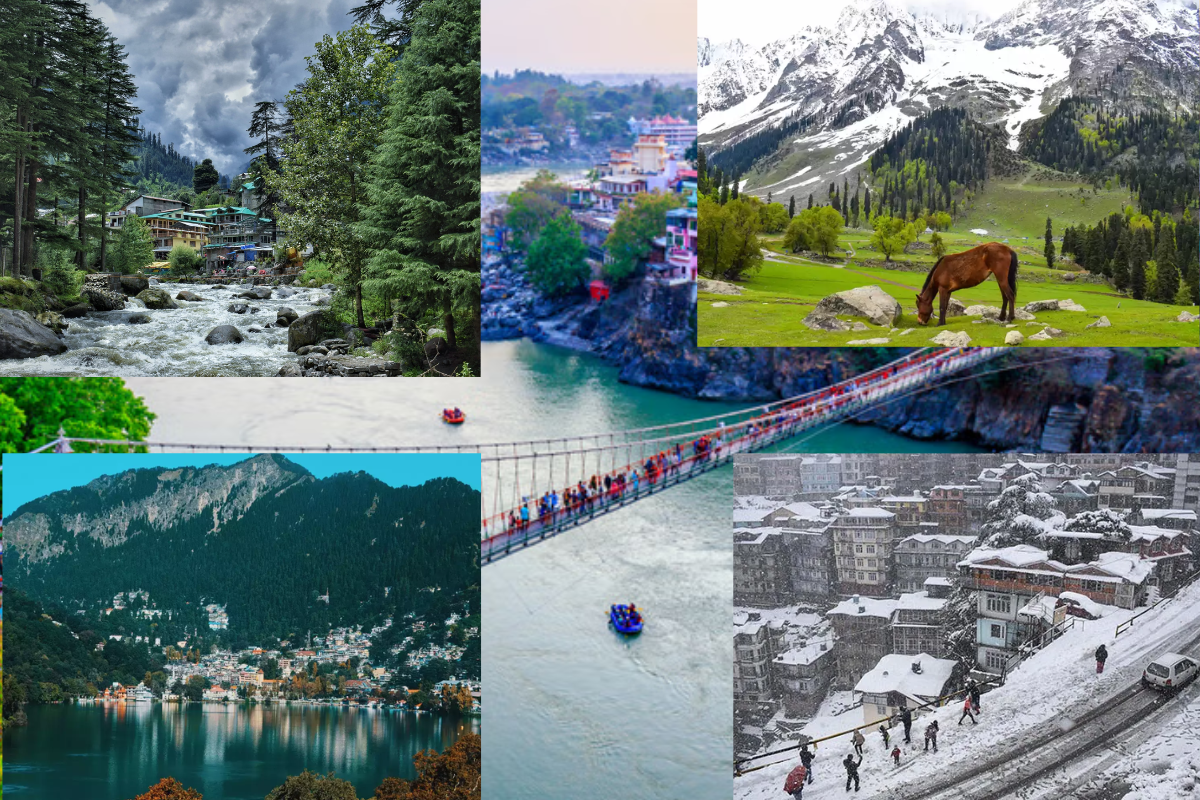
Five best places to visit in summer vacations

Nainital 

Nainital is one of the most talked about places for vacations in school books. Every student, once in his lifetime, definitely wants to visit the tempting Himalayas and lakes. People from Delhi/NCR can arrange a weekend getaway to Nainital during the summer. One of the nicest locations in India is this hill station. Among the well-liked tourist destinations are the High Altitude Zoo and Naina Peak. Additionally, you can engage in sports like paragliding, rafting, and boating.

Kashmir

With its pleasant weather, snow-capped mountains, lovely meadows, lush green gardens, breathtaking water bodies, traditional houseboats, delicious food, charming valleys, amazing architecture, world-famous pashmina, and unadulterated natural beauty, Kashmir draws you closer to the magic of nature. As you explore its tourist attractions more, you become increasingly enthralled with them. It is a starting point for visits to several more stunning Kashmiri valleys.

Shimla

Shimla is the ideal fusion of colonial history and contemporary India. One can tour the magnificent Viceregal Lodge’s halls and stroll Mall Road to experience the local way of life. If a tourist wants to enjoy the outdoors, then one has to go there.

Manali

In Manali, you can enjoy breathtaking views of the snow-capped mountains and the chilly climate. The Rohtang Pass, the Nyingmapa Buddhist Temple, and the Himalayan National Park are a few of Manali’s breathtaking locations. Adventure sports are available to you, including camping, trekking, and rafting. If this is your first time coming here, visit in the summer.

Rishikesh

People travel from all over the world to northern India’s most popular tourist destination. The ancient town of Rishikesh, in search of peace. It is not incorrect to refer to Rishikesh as the “yoga capital of the world.” The location is bustling with tourists who are there to take yoga and meditation classes. There are many ashrams in Rishikesh, some of which are recognized globally as hubs for yoga, philosophy studies, and other age-old Indian healing practices.

International HR Day: From Recruitment to Retention, Crucial Contributions of HR Teams

Roshni Yadav |

On May 20th, International HR Day, HR professionals’ incredible value and beneficial influence on businesses and their workforces are acknowledged and celebrated. As the backbone of any company, HR specialists play a critical role in bringing in top talent, improving the working environment, and navigating the challenges of a rapidly changing business environment. Shaping the New Future is this year’s theme, emphasising how important HR is to fostering an inclusive, welcoming, and sustainable future for work. 

Since it is an essential part of their daily work, HR professionals are no strangers to the significance of employee retention. However, human resources has the highest turnover rate of all professions. Due to the demanding nature of their work, HR professionals are prone to burnout, further compounded by a lack of recognition and appreciation. 

The Importance & Roles Of HR Individuals

Human resources are the key to any organisation’s success; they are more than just the office party planners or the paperwork police. By securing a company’s most valuable asset—its employees—HR promotes growth and competitiveness, moulds the workplace culture and environment, and maintains employee performance, engagement, loyalty, and well-being.

Talent Management: Hiring and Holding on to Talent An Outstanding Group

The HR department’s talent management team is essential to attracting, nurturing, and keeping top talent. Recruiters are the architects of a robust workforce. They are responsible for finding applicants, conducting interviews, and ensuring the onboarding procedure runs smoothly.

Employee relations or support aims to enhance the employer-employee relationship. In addition to resolving workplace conflicts and fostering harmony, productivity, and success, managers in this role also promote employee engagement, job satisfaction, and organisational culture.

Pay & Benefits: Recognizing Excellence & Fostering Well-Being 

HR responsibilities in pay and benefits include creating attractive pay scales and all-inclusive benefit plans. They assess industry standards, determine equitable remuneration, and work with talent management to ensure efficient succession planning. They also arrange retirement plans and negotiate group health insurance rates to support workers’ financial security. 

Workplace Safety: Giving Protection First Priority

Maintaining a safe and healthy workplace is an essential tactic for any prosperous business, and it is also required by law. The HR department creates safety training courses, keeps the required documentation, and works with benefits experts on workers’ compensation claims. They exhibit a dedication to Occupational Safety and Health Administration compliance and employee well-being.

Training & Development: Unlocking Potential & Driving Growth

The training and development team empowers employees to realise their greatest potential in their positions. Through professional development initiatives, leadership training, and orientation programs, they provide employees with the knowledge and skills necessary for success.

International HR Day is especially important for honouring and recognising HR professionals because of their significant influence on organisational success. But what exactly is the difference between appreciation and recognition? These terms are sometimes used synonymously but have different meanings and purposes. 

Acknowledging accomplishments or performance is the act of recognition. This could be given formally with a thank-you speech or a public shout-out, or it could take the shape of prizes, bonuses, promotions, and raises. Employees are encouraged to aim for greater success because they are significant and inspiring. However, there are some inherent limitations since recognition is: 

  • Conditional due to its performance-based nature 
  • Retrospective rather than rooted in the present 
  • It is scary as not everyone can get a promotion, raise, etc. 
  • This is offered from the top since formal recognition, such as promotions, raises, etc., is usually given by senior leaders. 

HR professionals tirelessly tackle challenges, drive growth, and support organisational success. So, while International HR Day is a designated time to recognise and appreciate HR professionals, it is important to extend appreciation beyond the observance. By making gratitude a daily practice, organisations can cultivate a culture where HR professionals feel valued, supported, and motivated to continue their vital work.

Top 7 highly anticipated films premiering at the 2024 Cannes Film Festival

Shubham Tyagi |

The Cannes Film Festival initiates the process of selecting a number of the year’s top films each year. One of the most prominent festivals. Its 77th edition features a wide selection of intriguing new films from international filmmakers. Here are the selected few movies you should watch, in random order.  

All We Imagine as Light

Three decades later, an Indian feature film competing? Audiences are incredibly excited for Payal Kapadia’s All We Imagine as Light film. The story of this Indo-French production centres on Prabha (Kani Kusruti), a nurse who is surprised by a gift from her long-estranged husband. Anu, her roommate and younger friend (Divya Prabha) is looking for a quiet place to spend time with her partner. After travelling to a beach town, the two women discover that there is room for their aspirations to flourish. Her previous work, the documentary A Night of Knowing Nothing, won the Golden Eye award at Cannes a few years ago, and this is also Kapadia’s first feature debut.

Kinds of Kindness

Yorgos Lanthimos appears to have fully embraced his fascination with strangely funny and nonconformist roots from the Dogtooth era with his most recent competition feature. With some humorous trivia, Kinds of Kindness arrives. It was recorded during Poor Things’ post-production, bringing him back with actors Margaret Qualley, Emma Stone, and Willem Dafoe. This is also a triptych of separate stories combined, clocking in at 165 minutes. This one will be quite the ride if the crazy early reviews are any guide.

Megalopolis

With his masterpiece Megalopolis, Francis Ford Coppola returns to the French Riviera after many years away. It is undoubtedly a cinematic event of some sort. The fact that he used all of his wine fortune to self-produce Megalopolis tells the story of a renowned director who finally lets his creative freedom run wild and tells a story the way he wants to. After its premiere, the movie stars Aubrey Plaza, Giancarlo Esposito, Adam Driver, Nathalie Emmanuel, and Laurence Fishburne, has already caused controversy among critics.

The Balconettes

The closest thing fans of Portrait of a Lady on Fire imagine is a reunion. Working with Céline Sciamma, Noémie Merlant wrote the screenplay for The Balconettes, her sophomore feature film. In this dark comedy, Merlant, Sanda Codreneau, and Soheila Yacoub portray three women obsessed with their neighbours’ lives during a severe heat wave.

Santosh

In addition to All We Imagine as Light, Sandhya Suri’s drama Santosh, which opens in the Uncertain Regard section at Cannes this year, is another film showcasing India. The movie centres on Shahana Goswami, a widow whose late husband was assigned to the police force.

The Apprentice

Is there a market for a movie about a young Donald Trump? Cannes certainly is. In Ali Abbasi’s The Apprentice, Sebastian Stan portrays the former President. He recounts his early years as a protégé of attorney Roy Cohn (played by Jeremy Strong’s Kendall Roy in Succession). Even further, Abbasi asserts that The Apprentice is not satire. Maria Bakalova, who plays Ivana Trump in Borat, was cast.

Oh, Canada

Oh Canada, a film that Paul Schrader is presenting at Cannes, is thought to be his most autobiographical work to date. Richard Gere plays writer Leonard Fife and his journey to Canada in this Competition entry based on Russell Banks’ novel Foregone. Uma Thurman, Michael Imperioli, and Kristine Froseth make up the supporting cast, with Jacob Elordi portraying the younger version of him.

A Beginner Guide to Understanding Blockchain

Roshni Yadav |

Blockchain applications have multiplied since the launch of Bitcoin in 2009 thanks to the development of smart contracts, decentralised finance (DeFi) apps, non-fungible tokens (NFTs), and other cryptocurrencies.

What is Blockchain? 

The definition of a blockchain is “a distributed database that keeps an ever-expanding list of ordered records, called blocks,” Cryptography is used to link these blocks together. Each block has transaction data, a timestamp, and a cryptographic hash of the block before it. A blockchain is a distributed, public, decentralised digital ledger that records transactions across numerous computers. Its purpose is to prevent record tampering without affecting all subsequent blocks and network consensus.

Trust is only required when a user or program enters data, as blocks cannot be changed. This feature lessens the requirement for reliable third parties, typically auditors or others who incur expenses and make mistakes.

How Does a Blockchain Work?

You may have worked with databases or spreadsheets before. Since a blockchain is a database that stores and enters information, it is comparable in certain ways. However, the structure and accessibility of the data distinguish a blockchain from a conventional database or spreadsheet.

A blockchain comprises scripts that carry out the operations typically performed in a database: entering, retrieving, and saving data, among other things. A distributed blockchain requires multiple copies to be saved on numerous machines and must match to be considered legitimate.

Like a cell in an information spreadsheet, the blockchain gathers transaction data and stores it in a block. When filled, an encryption algorithm is applied to the data, generating the hash—a hexadecimal number. After that, the hash is encrypted along with the other data in the block and added to the next block header. As a result, a chain of linked blocks is produced.

The Benefits of Blockchains 

1. Ensure Security 

Your data is important and sensitive, and blockchain can drastically alter your perspective on this vital information. The blockchain assists in the prevention of fraud and illegal activity by producing an unchangeable, end-to-end encrypted record. By using permissions to restrict access and anonymise personal data, you can address privacy concerns on the blockchain. Information is stored across a network of computers rather than on a single server, making it more difficult for hackers to access data.

2. Great transparency 

With blockchain, every organisation can maintain a separate database. Blockchain records data and transactions in multiple locations identically using a distributed ledger. Full transparency is ensured because all network users with authorised access view the same data simultaneously. Every transaction is time- and date-stamped and irreversibly recorded. 

3. Time conservation

Transaction times on blockchain are reduced from days to minutes. Because transaction settlement doesn’t need central authority verification, it can happen more quickly.

4. Cost savings 

Costs are saved, transactions require less supervision, and valued items can be directly exchanged between participants. Blockchain makes work less redundant by allowing users to access a shared ledger.

The Difference: Centralized vs. Decentralized Systems

Conventionally, a single organisation, like a bank or government agency, stores and manages the data in these systems. The risks inherent in this centralised approach are as follows: there are single points of failure, and it is easily manipulated or censored.

Conversely, blockchain is a decentralised network in which every user or node keeps a copy of the complete ledger. Consensus processes validate and append transactions to the blockchain, ensuring that no one party controls the entire network.

Unlike conventional centralised systems, decentralised systems like blockchain offer many significant advantages. They are safer because there isn’t a single point of failure or attack. The ledger’s integrity can still be preserved even if one machine on the network is compromised. Furthermore, decentralised systems are more transparent because anybody can view the complete blockchain and all the transactions that have occurred.

Blocks and Chains

Blockchain’s basic units of analysis are “blocks,” which are collections of transactions. The links connecting each block to its predecessor form a chronological chain of blocks, producing an immutable transaction record. This chain of linked blocks makes it nearly impossible to change historical data without the network’s approval.

Transactions 

The blockchain ensures that transactions are transparent and unchangeable. A participant starts a transaction, broadcasts to the network, and is validated by nodes using sophisticated cryptographic algorithms. After verification, the transaction is appended to the blockchain and permanently recorded as part of a block.

Consensus Mechanism 

Consensus mechanisms are essential to validate transactions and preserve the blockchain’s integrity. Two well-liked consensus algorithms are Proof of Work (PoW) and Proof of Stake (PoS), each with unique benefits and drawbacks. PoS measures the influence of participants by their stake in the network, whereas PoW uses computational power to validate transactions.

What are the limitations of blockchain? 

1. Scalability: Scalability is one of the main issues blockchain technology has regarding distributed applications. As the number of participants and transactions in a blockchain network increases, the system’s capacity to handle the load becomes a significant concern. 

2. Energy Consumption: Another disadvantage of blockchain technology is its high energy consumption. The mining process requires substantial processing power to validate transactions and add them to the blockchain, consequently consuming much electricity. 

3. Regulatory Uncertainty: The regulatory environment for cryptocurrencies and blockchain technology is still developing in many jurisdictions. Regulatory uncertainty may impede blockchain technology adoption and investment.

4. Data Privacy: Blockchain technology presents issues with privacy and confidentiality even though it provides immutability and transparency. Sensitive data is frequently protected in traditional centralised systems with safeguards in place, but in a blockchain network, every transaction is visible to every member.

5. The intricacy and learning curve of blockchain technology is noteworthy. It encompasses intricate ideas like distributed systems, cryptographic algorithms, and consensus mechanisms. Some organisations may need help to enter the blockchain space due to the expertise required to comprehend and apply blockchain solutions.

Beyond Bitcoin: Applications of Blockchain

The mechanism behind Bitcoin (BTC -4.68%) is where the blockchain concept originated. Satoshi Nakamoto created an unchangeable ledger of transactions that connects data blocks using digital cryptography to address the double-spending issue related to virtual currencies. Blockchain technology has many other practical uses, even though it works incredibly well for cryptocurrencies like Bitcoin. 

Financial exchanges

Many businesses offering decentralised cryptocurrency exchanges have appeared in the last few years. Faster and less expensive transactions are possible when using blockchain for exchanges. Decentralised exchanges also give investors more control and Security because they do not require depositing their assets with a centralised authority. The idea could also be used for more conventional investments, even though blockchain-based exchanges mainly deal in cryptocurrencies.

Lending

Smart contracts on blockchain technology enable lenders to carry out collateralised loan transactions. Blockchain-based smart contracts allow specific events to automatically initiate actions such as service payments, margin calls, loan repayment in full, and collateral release. Lenders can offer higher rates due to quicker and less expensive loan processing.

Insurance

Customers and insurance providers may benefit from increased transparency through smart contracts on a blockchain. Customers could only make one claim for the same event if all claims were recorded on a blockchain. Smart contract implementation also expedites the claimants’ payment process.

Supply chain monitoring and logistics

There are several benefits to tracking goods as they travel through a supply chain or logistics network using blockchain technology. First, because data is accessible on a secure public ledger, it facilitates communication between partners easier. Second, since data on the blockchain cannot be changed, it offers higher security and data integrity.

Voting

We are only a few steps away from using blockchain technology to cast our votes if personal identity information is stored on it. Voter fraud can be prevented, duplicate votes cannot be cast, and only eligible voters can cast ballots using blockchain technology. Furthermore, making voting as easy as tapping a few buttons on your smartphone can expand voting accessibility. The price of holding an election would also significantly drop at that point.

What is the Future of Blockchain?

Blockchain technology is poised to revolutionise industries across the board. Its decentralised and transparent nature offers unparalleled Security and trust in data management. In finance, blockchain streamlines transactions, reducing costs and eliminating intermediaries. Beyond finance, it’s reshaping supply chain management, healthcare, and voting systems, ensuring data integrity and fostering innovation. As blockchain matures, its potential to disrupt and transform industries will continue to grow, fundamentally altering how we interact with and trust data.

What is Cryptocurrency, and How Does it Work?

How can we emphasise its potential to disrupt various industries and reshape how we interact with data? 

Blockchain technology can disrupt numerous industries and fundamentally change how we interact with data in the future. Its decentralised and immutable nature offers unparalleled Security and transparency, paving the way for transformative applications across sectors.

In finance, blockchain can streamline transactions, reducing costs and settlement times while enabling new financial products and services. It could democratise access to banking services, particularly in underserved regions, and revolutionise how assets are traded and managed.

Supply chain management benefits from blockchain’s ability to provide a transparent and traceable record of product movement from raw materials to end consumers. This transparency can help combat issues like counterfeit goods, improve efficiency, and ensure ethical sourcing practices.

In healthcare, blockchain can secure patient data, facilitate interoperability between disparate systems, and enable more efficient sharing of medical records while maintaining patient privacy and data integrity.

Moreover, blockchain has the potential to revolutionise digital identity management, voting systems, intellectual property rights, and more by providing secure and transparent platforms for various applications.

Looking to the future, blockchain technology promises to create a more interconnected, transparent, and secure digital world. Individuals own and control data in this world, and trust is established through cryptographic consensus rather than centralised authorities. As this technology evolves, its impact on various industries and our interactions with data will only continue to grow.

How can further exploring this evolving technology and its potential applications be encouraged?

Encouraging further exploration of blockchain involves highlighting its dynamic nature and diverse potential applications. Beginners should be motivated to explore the technology’s capabilities beyond its current uses. This includes delving into emerging trends such as decentralised finance (DeFi), non-fungible tokens (NFTs), and decentralised autonomous organisations (DAOs), which are reshaping traditional industries and creating new opportunities for innovation.

Furthermore, beginners can be encouraged to engage with blockchain through hands-on learning experiences such as building simple, smart contracts, participating in blockchain-based projects or hackathons, and joining online communities and forums dedicated to blockchain technology. By immersing themselves in the ecosystem, beginners can gain practical insights and deepen their understanding of blockchain’s potential.

Lastly, it’s important to emphasise blockchain development’s collaborative and interdisciplinary nature. Encouraging beginners to explore the intersection of blockchain with fields like artificial intelligence, the Internet of Things, and cybersecurity can spark creativity and inspire them to envision novel applications and solutions. Ultimately, beginners can contribute to blockchain technology’s continued evolution and advancement by fostering a culture of curiosity and exploration.

Conclusion

For beginners looking to understand blockchain, grasp its decentralised and immutable ledger system, which ensures secure and transparent data transactions. Emphasise its potential to disrupt industries like finance, supply chain, and healthcare while enabling new applications in digital identity, voting systems, and more. Encourage further exploration of blockchain’s evolving technology and its wide-ranging potential applications as it revolutionises various sectors and reshapes our digital future.


Jio’s New Air Fiber plan unlocks Netflix, Prime & MORE OTTs

Roshni Yadav |

Jio, the largest telecom company in India, has introduced a new bundled streaming plan for customers who would rather not pay extra for various OTT services. It is introducing its ‘Ultimate Streaming Plan,’ a postpaid option designed exclusively for JioFiber and Jio AirFiber subscribers and priced competitively at Rs 888 per month.

Jio claims the plan meets the needs of customers who want uninterrupted streaming and limitless content access. Even with a 30 Mbps speed limit, the plan guarantees continuous streaming. The true highlight is the inclusion of more than 15 premium OTT subscriptions bundled into the plan. 

Plan Jio AirFiber

With this plan, you can access a huge selection of content from well-known platforms like JioCinema Premium, Prime Video (Lite), and Netflix (Basic plan). Disney+ Hotstar, Sony Liv, Zee5, Sun NXT, and numerous other local and specialised OTT services such as Hoichoi, Discovery+, ALTBalaji, Eros Now, Lionsgate Play, ShemarooMe, DocuBay, EPICON, and ETV Win (through JioTV+) are also available to subscribers.

Furthermore, even though the plan is new, Jio hasn’t forgotten about its current user base. Those who are presently on a prepaid plan or a JioFiber/AirFiber plan with less bandwidth (10 Mbps or 30 Mbps) can easily switch to this postpaid plan in order to access the wealth of OTT content. This plan matches Jio’s recently announced IPL Dhan Dhana Dhan offer. With their Jio home broadband connection, qualified users can receive a 50-day discount credit voucher, ideal for watching every moment of the current Twenty20 cricket tournament.

Recently, Jio updated its over-the-top (OTT) plan and added a new ad-free tier to its JioCinema Premium membership service. With the Rs 29 plan launch and the Rs 89 family plan, users can customise their viewing experience.

Jio Cinema Plan 

Subscriptions to JioCinema Rs 29 Premium Plan, which offers a monthly subscription with numerous benefits, are available to users. These consist of a wide variety of exclusive series, films, Hollywood hits, kids’ content, and TV entertainment, as well as access to 4K content, ad-free viewing, and the option to download content for offline viewing. While ad-free viewing is offered, it should be noted that sports and live channels are not included in this benefit. 

On the JioCinema Rs 89 Premium Plan, subscribers enjoy similar benefits to the Rs 29 plan. This includes access to 4K content, ad-free viewing, offline viewing capabilities, and exclusive content. Again, ad-free viewing does not extend to sports and live channels. However, what sets the Rs 89 plan apart is its allowance for simultaneous streaming on up to four devices. This feature makes it ideal for families or households with multiple users, enhancing the plan’s value proposition and ensuring everyone can enjoy their favourite content simultaneously.

India’s top trading partner in FY24 is China, surpassing the US.

Roshni Yadav |

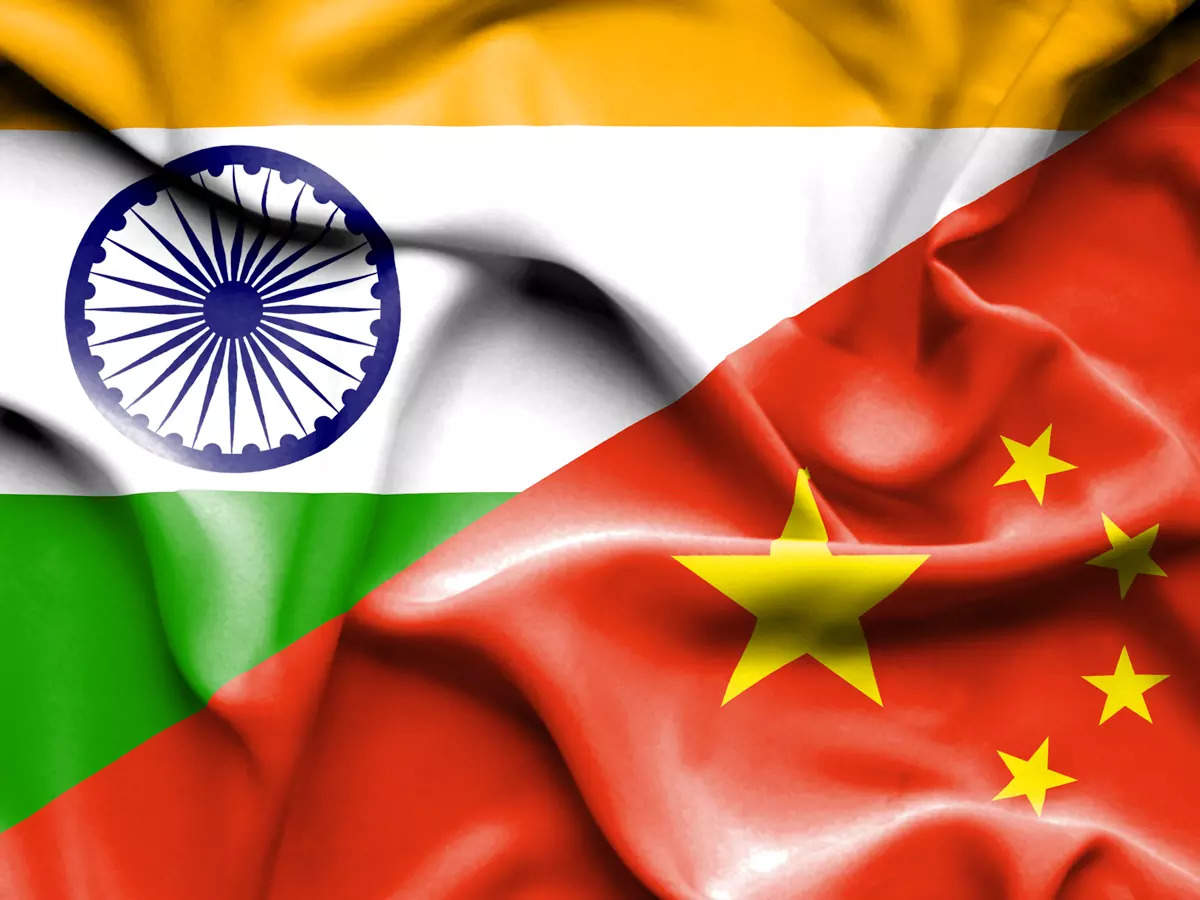
According to data from the economic think tank GTRI, China surpassed the US to become India’s largest trading partner in the FY 2023–2024 with $118.4 billion in two-way trade. India and the US had $118.3 billion in bilateral trade in 2023–2024. For 2021–2022 and 2022–2023, New Delhi’s principal trading partner was Washington. 

The report states that during the most recent fiscal year, India’s exports to China increased by 8.7% to $16.67 billion. The primary industries with robust export growth to that nation include iron ore, plastic, linoleum, spices, cotton yarn/fabrics/made-ups, handloom products, fruits and vegetables, and herbs.

The neighbouring nation’s imports reached $101.7 billion, up 3.24 per cent. As per the report, imports fell by roughly 20% to $40.8 billion, while exports to the US decreased by 1.32 per cent to $77.5 billion in 2023–24 from $78.54 billion in 2022–23. According to the Global Trade Research Initiative (GTRI), India’s trade dynamics with its top 15 trading partners experienced significant changes between fiscal year 2019 and FY2024. These changes affected ex[ports and imports and the status of trade surplus or deficit across various sectors. 

China lectures India to be more open-minded

It further stated that although China’s imports increased by 44.7%, from USD 70.32 billion to USD 101.75 billion, its exports decreased marginally by 0.6%, from USD 16.75 billion to USD 16.66 billion. “This growth in imports led to an expanding trade deficit, rising from USD 53.57 billion in FY2019 to USD 85.09 billion in FY2024, highlighting concerns over stagnant exports amidst rising imports,” Ajay Srivastava, founder of GTRI, stated.

According to the report, trade with the US increased, with exports rising significantly by 47.9% from $52.41 billion to $77.52 billion. The United States’ imports increased by 14.7 per cent, from $35.55 billion to $40.78 billion. As a result, India’s trade surplus increased, going from $16.86 billion to $36.74 billion. 

Data from the Commerce Ministry shows that China was India’s principal trading partner in 2020–21 as well as in 2013–14, 2017–18, and 2020–18. The UAE was the nation’s top trading partner before China. The US constituted the largest partner in 2022–2023 and 2022–2023. With USD 83.6 billion, the UAE ranked India’s third-largest trading partner in 2023–2024. Singapore ($35.6 billion), Saudi Arabia ($43.4 billion), and Russia ($65.7 billion) came next.

What caused the aurora lights in India to be visible from Ladakh?

Roshni Yadav |

In the late evening of Friday, May 10, and Saturday, reddish-hued aurora lights were visible beneath Ladakh’s stunning skies. The Indian Astronomical Observatory (IAO) in Hanle, Ladakh, has all-sky cameras surrounding it that the astronomers at the Indian Institute of Astrophysics, Bengaluru (IIA) used to record the auroras.

The aurora borealis, referred to as the Northern Lights, was observable from Ladakh at 34–36°N, an exceptionally uncommon sight at such low latitudes. The phenomenon in Ladakh is anticipated to persist throughout the weekend as more coronal mass ejections penetrate Earth’s outer atmosphere. 

These cameras are installed on IAO, owned and run by the IIA, and can continuously image the sky. It demonstrated that space activity continued from Saturday night at midnight until the early hours of the following day, with the highest activity being recorded at two in the morning.

What are Aurora Lights? 

The Earth’s magnetosphere and charged solar winds interact actively in space to form auroras, which are vivid, colourful lights. Solar winds are charged particles ejected from the Sun’s atmosphere, and they are primarily made up of protons and electrons.

Given that Ladakh is located at mid-latitudes, the US National Oceanic and Atmospheric Administration (NOAA) Space Weather Prediction Center reports that a severe (G4) Geomagnetic storm occurred there. Experts attribute this aurora’s earlier sighting in Ladakh on the night of April 22–23, 2023, to a coronal mass ejection on April 21. On Earth, this ejection caused a geomagnetic storm of the G-4 class. 

The aurora borealis can be seen in parts of China, Europe, and Ladakh. Unlike traditional auroras, which display various colours in dynamic patterns, the arcs formed were reddish and fixed in colour. 

Why were auroras visible from Ladakh?

It has to do with increased space solar flare activity. According to solar physicists at the Indian Institutes of Science Education and Research (IISER) in Kolkata, where the Centre of Excellence in Space Science India is located, at least four powerful solar storms crossed Earth between Friday and Saturday.

Coronal Mass Ejections (CMEs), which are massive outbursts of plasma and magnetic particles from the Sun’s corona, the outermost region of its atmosphere, were the cause of these storms. On May 8, these CMEs left AR13664, which is presently an active region on the Sun.

The Earth-bound CMEs, which were travelling at 700 km/second, disrupted the otherwise calm space weather on May 10 and 11, when they got closest to the planet’s atmosphere. When solar flares struck the Earth, their speed was 815 km/s.

What is the Sun’s current state?

The visible solar disk displays several magnetically active regions generating numerous high-energy flares. Until May 12, many CMEs are expected to approach Earth. For the next two days, persistent solar storms will likely disrupt space weather and Earth’s magnetosphere.

Do solar storms pose a threat?

Strong solar storms can potentially disrupt and jeopardise the uninterrupted functioning of satellites in Low Earth Orbit, or LEO, which is an altitude of 200–1,600 km.  The most popular low-Earth orbit (LEO) satellites serve various functions, including communications, navigation, military use, and intelligence gathering. Thus, solar storms may threaten Earth’s satellite-based GPS and navigation systems, among other things.

These solar storms’ extremely energetic particle environment has the potential to warm the upper atmosphere as well. This raises the possibility of radiation risks, which disadvantage satellites in low Earth orbit. If there is too much drag, the satellites may experience unbearable friction, which, in severe circumstances, may catch fire and destroy the spacecraft, ending their operations. 

Abhiishek Mohta and Smriti Pandey Bags the lead role for an Immigration Agency Advertisement

TheIndiaSaga Team |

Abhiishek Mohta, acclaimed as one of the top 10 casting directors in the Indian television industry, continues to make waves with his diverse creative endeavors. Renowned for his keen eye for talent and innovative projects, Mohta recently grabbed attention with his latest venture – an immigration agency advertisement starring himself and the talented actress Smriti Pandey in the lead roles.

Mohta’s recent successes have solidified his reputation as a multifaceted creative force. His music video “Pyar Mein Tere Dooba Raha” featuring model Riya swiftly soared past the 100k views mark on YouTube within a mere 24 hours, attesting to his ability to craft captivating content that resonates with audiences. Additionally, his collaboration with popular Punjabi actress Shezali Sharma on the music video “Tu Hai Wahi” further showcased his knack for bringing together diverse talents to create compelling visual narratives.

Beyond the realm of music videos, Mohta’s ventures extend into the world of gaming, as evidenced by his recent collaboration with the Tiger Exchange gaming app. This foray into gaming underscores his adaptability and forward-thinking approach in embracing new mediums to connect with audiences.

In his latest advertisement for an immigration agency, Mohta once again demonstrates his prowess as a storyteller, this time sharing the screen with Smriti Pandey, a notable TV actress and fashion model. Pandey’s portfolio boasts numerous episodic lead roles, highlighting her versatility and acting prowess. Beyond her television work, she commands attention on fashion runways and in modeling photoshoots, further enhancing the advertisement’s visual appeal and credibility.

With Mohta and Pandey at the forefront, supported by a talented ensemble cast in secondary roles, this immigration agency advertisement promises to be a compelling narrative that not only promotes the brand but also showcases the talents of these two dynamic individuals. As they continue to push creative boundaries and collaborate across various mediums, Abhiishek Mohta and Smriti Pandey stand poised to captivate audiences with their distinctive blend of talent and charisma.

The Movement of Nifty 50 in the Last 25 Years: What Next?

The India Saga Saga |

The Nifty 50 is more than just an index. It is a record of India’s remarkable economic development that effectively monitors the performance of the 50 largest and most liquid firms that are listed on the Indian National Stock Exchange (NSE). In this article, we will cover how this index has grown in the last 25 years.

Evolution of Nifty 50

We can undoubtedly learn more about the elements that have driven our success and the potential obstacles the Nifty 50 may face in the years to come by looking at its previous performance.

The base value was set at 1000 when the Nifty 50 first began to show its strength in 1996. And now, in the present, the nifty 50 chart on TradingView of all timeshows an upward trajectory of this index and the Indian economy too.

This index includes a wide spectrum of businesses, from the titans of information technology and banking to vital areas like consumer products and oil and gas.

Movement of Nifty 50 in Last 25 Years

The famed ascent of the Nifty 50 wasn’t created in a single day. To properly map out its future trajectory, we must go back 25 years and examine its utterly amazing path.

1.    Political Instability of 1996–98

The Nifty 50 was established in India amid a time of political unrest. An environment of uncertainty for investors was brought about by frequent changes in government. The index increased slower during this initial time than it did in subsequent years.

2.    Asian Financial Crisis (1997–1998)

The Global markets were rocked by this regional economic collapse, and India was not exempt. The first major dip in the Nifty 50 index demonstrated how intertwined the financial systems are. But the rebound happened quickly, demonstrating the fundamental strength of the Indian economy.

3.    Dot Com Bubble (1995–2000)

During this time, technology equities enjoyed a global upsurge. The Nifty 50 was influenced by the mood of the global market even though India at the time did not have a sizable IT sector. The collapse of the dot-com boom resulted in a temporary correction in the index, albeit one that was not as severe as the Asian crisis.

4.    The Global Financial Crisis of (2008)

The Nifty 50 saw its greatest loss ever, shedding more than 50% of its value. This global economic collapse was a true test for the index. The Nifty 50 index recovered thanks to diversification and a stronger emphasis on domestic consumption.

5.    Taper Tantrum in (2013)

The US Federal Reserve’s announcement that it would be scaling back its quantitative easing programme set off a period of market trepidation. This led to capital flight from developing economies such as India, which caused a brief period of volatility in the Nifty 50.

6.   COVID (2020)

The COVID-19 pandemic had a quick and significant effect on the Nifty 50, in contrast to other catastrophes. Early in 2020, as lockdowns and economic instability swept the globe, the index saw a dramatic fall. But the tale doesn’t stop there.

7.    Future of Nifty 50

The Nifty 50 recovered more quickly than anticipated thanks to the Indian government’s prompt stimulus package implementation and the innate adaptability of Indian companies. The index showed the market’s faith in India’s long-term growth story by not only making up lost territory but also setting new records. At present the Nifty 50 index is trading above Rs. 22000.

Conclusion

The 25-year history of the Nifty 50 is evidence of the resilience and strength of the Indian economy. Despite a pandemic, international crises, and political unrest, it has persevered and grown stronger. The Nifty 50 is in a good position to serve as a beacon as India’s economy continues to rise, demonstrating the potential and vibrancy of the Indian market.

Investors can take part in this exciting journey and make educated judgments by having a thorough understanding of the Nifty 50’s historical performance as well as the elements that will shape its future. To invest in this index, open an account with Dhan.

Air India & Vistara merger by year-end, staff integration starts

Roshni Yadav |

To expedite the transition to a single full-service carrier operating under the Air India brand, Air India plans to complete the merger of Vistara with itself by the end of this year. Phased employee integration will begin in June. According to people with knowledge, the chief executives of Vistara and Air India updated the employees on the merger during a town hall meeting on Monday.

The Air India group leadership provided this timeline, which is earlier than previously said. In January, Vistara’s chief executive officer (CEO) Kannan stated that the merger of Air India and Vistara would be finalised by the middle of the following year. Kannan also serves as the chief integration officer at the Air India group.  

The most necessary regulatory approvals for the Air India-Vistara merger have been obtained, including approvals from Singapore’s and India’s competition watchdogs. The National Company Law Tribunal (NCLT) approval hearings are now over, and an order is pending. Singapore Airlines (SIA) has also filed an application to be approved as part of the combined company. In the combined Air India, SIA, which currently owns a 49% share in Vistara, will own a 25.1% share.

The group is merging its budget carriers, Air India Express and AIX Connect (formerly AirAsia India), and the merger of Air India and Vistara. After the merger, the Air India group will consist of two airlines: Air India, a full-service carrier, and Air India Express, a low-cost carrier.

The CEOs of Vistara and Air India, Campbell Wilson and Vinod Kannan, respectively, told staff members that although the final approvals are still pending, the operational process harmonisation initiative is going well. According to sources, about 120 pilots have already been seconded between Air India and Vistara, and the two airlines have operationalised an integrated pilot upgrade sequence for group-level career progression opportunities for the flight crew.  

A portion of Vistara pilots expressed concerns following the merger, reportedly due to their dissatisfaction with the new pay scale, which was aligned with Air India’s, and their worries regarding prospects for career advancement within the combined airline. These were a few causes of the widespread sick calls that many Vistara pilots made at the beginning of April, severely disrupting the airline’s operations throughout the entire network. 

During the merger update on Thursday, the staff was notified that more than 60 Vistara employees had already been seconded to Air India to expedite the integration process. Additionally, it was learned that talent fitment for over 7,000 employees had been completed and was in an advanced assessment stage. Approximately 3,500 are flying employees, and the remaining 2,500 are not. It is estimated that Vistara and Air India employ close to 24,000 people combined.

Sources claim Wilson and Kannan informed staff members that people integration is a major area of focus for the merger and that employees are being fit for the combined company through a merit-based system. According to information obtained, the combined airline will employ five airlines workers for every twelve Air India workers. Additionally, managerial positions will be expanded by 1.5 times to ensure workers have the necessary career advancement opportunities. 

People integration is frequently one of mergers’ trickiest and most complicated aspects, especially regarding airlines. In addition to achieving pay parity, integrating workers from various organisational cultures can be very difficult. If poorly handled, mergers may breed mistrust among workers from various organisations because of conflicts over seniority, the chain of command, and worries about opportunities for career advancement within the larger combined company.