

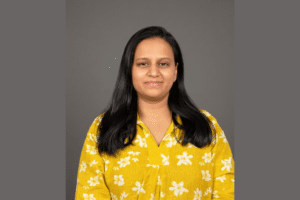
Some are born with exceptional talent, and the one who practiced hard in the field he/she love then no one can stop them from achieving success in life. We met one fabulous talent who is multitalented, what will you call her A Fashion Designer, Entrepreneur, Tattoo Artist and what not? Divya Kapoor is a gem of talent and she is using it in the right direction. Diva who hails from North India (Jammu and Kashmir) and has her tattoo studio named ÂTaboo the tattooist located in the beautiful city of Jammu. SheÂs is only Female Tattoo Artist in Jammu (J&K). Diva is proving to be an example for all the youth who are aspiring to become a Tattoo artist. Although her journey to become one wasnÂt so easy, as she did not have any formal training in tattoo art. She explains in her own words, ÂFrom being a small-time temporary tattoo artist to become an expert inking artist wasnÂt a piece of cake, the journey was really hard. When I attended a seminar to learn the art, there was no one to try upon, so I used my own body and inked myself to master the art which was very difficult, but I never lost hope and never looked backÂ. For her passion for the art, she kept working relentlessly. Diva has picked up amazing tattoo skills at an unbelievable pace. She is inspired by her husband Gourav Jamwal, who is also a famous tattoo artist in India. Beacause of her appealing beauty, Diva is also getting offers from Pollywood. Diva is an ideal example for people who want to achieve big things in life. If you don’t get success in one thing, you can try other things in life. You have to just bring out your inner strength in life to achieve big in life. Here’s wishing Divya Kapoor all the best for her upcoming ventures. This girl will do many things in life as she blessed with some talent, and she is using her skill in the right direction by working hard on things passionately.
Divya Kapoor aka Diva is an emerging tattoo artist, fashion designer & with many amazing skills



Godse to Nirbhaya rapists, Buxar Jail again in the news

As the country waits with bated breath for the execution of the four convicts in the infamous December 16, 2012, Nirbhaya gang rape and murder case, Buxar Jail in Bihar has again come in news for one reason– making hanging ropes.
Buxar jail have supplied the nose for Naturam Godse, who was sent to gallows in November 1949, for assassinating Mahatma Gandhi, Parliament attack convict Afzal Guru, 1993 Bombay bomb blasts convict, Yakub Memom, 26/11 Mumbai terror attacks culprit Ajmal Kasab, Dhananjoy Chatterjee, a security guard in Kolkata for raping and murdering a 14-year-old girl, Satwant Singh and Kehar Singh convicted in the assassination of Prime Minister Indira Gandhi on October 31, 1984, all were hanged by ropes made in this jail.
Ever wondered what is the reason why hanging ropes are made on in Buxar Central Jail.
Actually, Buxar jail has been making execution ropes since 1880 and the tradition was started by the British rulers–16 years after the East India Company established full control over the region extending from Bengal to Uttar Pradesh at the Battle of Buxar on October 23, 1764.
Four years later, that is in 1884, the British brought a machine in the Buxar jail to manufacture hanging ropes.
Before that, the hanging ropes were imported from Manila, the capital of Phillippines and hence the name Manila Rope is popular for this grade of the noose.
Later on the Indian Factories Act, gave Buxar Central Jail, the exclusive rights to make the hanging ropes and other jails are prohibited,
Buxar Central Jail has a power loom inside its premises for the purpose of making hanging ropes. It is overseen by employees of designated for the purpose.
The jail has four to five posts for such employees. They train the inmates for rope making. Usually, senior inmates typically those serving life sentences are employed in making hanging ropes and utmost care is taken in not employing death row convicts for this work as they are not employed in any work in the jail.
Before starting with work, once the Buxar gets directive to prepare the hanging ropes, the prisoners making such ropes follow religious and spiritual practices. They observe fast to ensure their mental and physical purity before beginning the work and pray.
The said prisoners throw a stone on the direction where they are supposed to knit the hanging rope with the belief that they may never get the news of a death sentence,
Superintendent of Buxar Central Jail Vijay Kumar Arora said the hanging rope making is a complex task.
A group of eight prisoners fashion the ropes, ten in number with the help of a power loom through the twist and torque using J-30 cotton.
A particular type of yarn, called J-34 is used for making the hanging rope. The cotton for this yarn is cultivated in Punjab, which supplies the raw material to Buxar jail.
J-34 fiber are braided into yarns. A total of 154 such yarns are woven to prepare 154 braids. Six such braids are used to make a hanging rope.
A huge quantity of water is used to make sure that hanging rope is soft. The rule of execution says that the hanging rope has to cause death of the condemned prisoner but cannot inflict any injury on the neck. It is ascertained in the post mortem of the body.
Arora said ” one rope is prepared with 7,200 fine threads– all merged by hand-rolled with a bronze brush and treated with certain chemicals so that each can bear up to 150 kg weight. A sum of Rs 1,700 is the cost of making one such rope and the whole process takes about three days, it is believed that the task was given to Buxar jail by the British keeping in mind the climate and availability of water near the jail. Buxar Central Jail is located on the banks of the Ganga and also has well inside the premises, an uncommon feature in jails.
Humidity is another factor essential for making the hanging rope. Humid conditions make the rope smoother and yet stronger. Another reason, the ropes got the name in the Philippines because they are made of fiber obtained from the leaves of the Abaca tree that grows in the island nation.
That fiber is called Manila hemp. The Manila rope made in Buxar is, however, not made from this hemp.
As the suspense continues over the hanging of the four convicts, a Delhi court on January 31, postponed the execution of the death warrant on February 1, on the convicts till further orders.
The Delhi High Court on February 2, in a special hearing on a Sunday, reserved its verdict on the Centre’s plea challenging stay on the execution of the four death row convicts in the Nirbhaya case.
On December 16, 2012, a paramedical student was gang-raped and brutally assaulted by six men in a private bus and thrown out of the moving vehicle along with her male friend.
The girl died on December 29, 2012, at Mount Elizabeth Hospital in Singapore where she airlifted by an air ambulance on December 27, 2012, at midnight.
All the four convicts were sentenced to capital punishment. The order has been upheld by the Delhi High Court and the Supreme Court.
The incident generated widespread outrage across India and abroad. The fifth convict , Ram Singh, described at the main suspect was found dead in Tihar Jail from possible suicide on March 11, 2013. The sixth accused, a juvenile, was released from the correction Home on December 20, 2015, after he completed three years in the Home.
Sightsavers India announces India Fellowship Program 2020

Sightsavers India, a global development organization, has opened the application for Sightsavers India Fellowship Program 2020. This fellowship is designed to enhance awareness about eye care and aims to groom the young ophthalmologists through an innovative course of mentoring and surgical exposure to expand their perspectives on rural eye health and to shape the youth into promising and skilled ophthalmologists. The fellowship is designed in a way that gives an opportunity to master the craft as a clinician and a surgeon.
Sightsavers India Fellowship Program 2020 is a promising career opportunity for ophthalmologists. It aims to take ?ve selected fellows through an exciting journey of 24 months. The selected fellows will be placed in one of the 7 states  Madhya Pradesh, Uttar Pradesh, Bihar, Jharkhand, West Bengal, Chhattisgarh, and Odisha.
The last date of application is 30th April 2020, and the fellowship will begin from June 2020.
Over a period of 24 months, the fellows will experience a structured skill enhancement and mentoring process covering not only clinical and surgical ophthalmology but also managerial and holistic life skills. The process involves skills up-gradation components and personal interactions with eminent leaders in eye care and development sector. Every stage of the fellowship program will optimize learning that will help the fellows transform into all-rounder seasoned professionals. Selected fellows will receive an attractive appreciative stipend through the fellowship period.
Speaking on the launch of the second season of the India Fellowship Program, Mr. RN Mohanty, CEO at Sightsavers India said, ÂThe programÂs vision is to cultivate a capable and motivated workforce in the eye care ?eld for rural India. Currently, there are nearly 18,000 Ophthalmologists present in the country, which is nowhere near enough with respect to the ratio of the population in India. With this program, we hope to bring about a positive substantial impact on society. An education in ophthalmology with the mettle of being a team player and attributes of empathy and zeal to explore rural India are important for the fellows to be a successful part of the program.Â
Dr. Anoop Kumar Singh, MES Medical College, Kerala. Being trained at SNC, Chitrakoot, Madhya Pradesh said, ÂThe programme is providing surgical as well as clinical training with excellent mentorship and guidance which would have needed more time investment outside the fellowship. My weekly schedule is packed with surgical training, clinical postings, OT observations, wet labs and lecture classes along with routine departmental presentations and CMEs. Also, the support from Sightsavers team is incomparable and rare to ?nd.Â
About Sightsavers: Sightsavers is a global development organization working in India since 1966 to eliminate avoidable blindness and to ensure that people who are irreversibly blind are supported adequately to lead lives of independence and dignity.
Ex Roadies Contestant Mehakdeep Singh Randhawa Is All The Inspiration You Need, Check It Out!

Punjabi artist and ex roadies contestant Mehakdeep Singh Randhawa has exceptionally excelled in achieving all his goals no matter what.
Coming from a small village like Mehta Chowk, Mehakdeep studied to be a mechanical engineer. His college years were a turning point where he started bodybuilding. Soon, he represented his University at the Inter-University level and also won the title of Mr. PTU.
Mehakdeep had a thrilling journey through his life where he got the chance to even star beside Sippy Gill. He has also starred and worked in a lot of Punjabi music videos, movies and serials as well. Currently, he is venturing his way into people’s hearts by doing a wonderful job in a Punjabi daily soap titled ÂKamli Ishq di” where he is playing the character of Lucky, a comic negative lead character.
He surely happened to come across a golden opportunity where not only one but two big chances were knocking his door were on one side was joining CISF, where he received the offer letter and on the other side was one of the biggest reality TV show Roadies, lastly, Mehakdeep had to choose Roadies over his job as he had shown sheer determination to not only participate but win the show. After Roadies, he was even offered a film “Patwar” for PTC Punjabi.
He truly believes, “Failure will never overtake me if my determination to succeed is strong enough” and strives to work even harder for a better future.
Coronavirus: India reports third case, task force set up

India’s third case of Novel Coronavirus was reported on Monday morning after the southern state confirmed the country’s first two cases of the deadly virus that has killed over 360 people in China in the last four days.
All three patients are students who returned from China’s Wuhan city, the epicenter of the epidemic.
The latest third case, a medical student, is in an isolation ward at Kanhangad district hospital in Kasargod, Kerala’s Health Minister KK Shailaja informed the state Assembly Monday.
“Third positive case of Novel Coronavirus patient has been reported in Kerala. The patient has travel history from Wuhan in China. The patient has tested positive for Novel Coronavirus and is in isolation ward in the hospital.
The patient is stable and is being closely monitored,” Union Health Ministry said in a statement Monday.
Shilaja said that to speed up the process of testing, all arrangements have been made in the state laboratory. The virology lab in Alappuzha district now has the facility and that would save time. Currently, all samples are being sent to the National Institute of Virology, Pune.
A total of 1,999 people, who have a travel history from China and other affected countries, are under close observation in Kerala, of whom 75 are in isolation wards of various hospitals in the state.
The remaining 1,924 are under home quarantine as per a medical bulletin issued on Sunday night.
Kerala’s Health Minister made it clear that those under observation at home should keep away from public functions and should not participate in any events or go out of their homes during the 28-day incubation period.
India’s first case of Coronavirus was reported from Thrissur on January 30 with a women medical student who returned from Wuhan testing positive from the infection.
Over 360 people have died in China’s Wuhan city so far and Coronavirus has already affected 15,000 people in the country.
The disease has spread to around 25 countries so far, including India and the United States. The Union Health Ministry has also asked people who have a travel history to China, since January 1, to report to the nearest health facility if they experienced any symptoms such as fever, cough and breathing trouble.
Over 52,000 passengers from 326 flights have been screened for Novel Coronavirus at various hospitals across India till Saturday, according to the Government. Ninety-seven symptomatic travelers have been referred to isolation facilities, officials said.
In the wake of the rise of a global epidemic, India issued a fresh travel advisory on Sunday. People are asked to avoid traveling to China. Anyone with travel history in China since 15th January 2020, and now on could be quarantined, Health Ministry said in a statement Monday.
The Central Government also suspended issuing electronic visas, or e-visas to Chinese passport holders and applicants of other nationals residing in China. The Airports Authority of India (AAI) has also set up screening and testing counters in most of North East India.
The Central Government has set up a task force to monitor the situation arising out of the Novel Coronavirus with a representative from Ministries of Health, Home, Civil Aviation and Women, and Child Development, Union Minister Gangapuram Kishan Reddy said Monday.
Meanwhile, the West Bengal government has provided two thermal scanners to the Netaji Subhash Chandra Bose International Airport at Kolkata to help the authorities conduct surveillance on passengers to contain the attack of Coronavirus.
In another development, a software engineer and TLC employee from Andhra Pradesh, who was allegedly not allowed to board the two special Air India flights that brought back many Indians from the Coronavirus-hit Wuhan as she was running high body temperature, is now seeking help for her early evacuation.
Annem Jyothi, a software engineer from Kurnool claims that she was not allowed to board the two special Air India flights from Wuhan, because of high body temperature.
A total of 406 people from Wuhan are being looked after by a team of expert doctors at Chhawla isolation facility of Indo-Tibetan Border Police (ITBP) and all tests are negative till now, officials said, The World Health Organisation said Monday it was working round the clock with internet and social media giants to combat the widespread misinformation surrounding the deadly Novel Coronavirus outbreak.
The UK pharmaceuticals giant GlaxoSmithKline (GSK) on Monday it was joining a global race to develop a vaccine for a new strain of the deadly Coronavirus. At least another 171 cases have been reported in Australia, Britain, France, Germany, Hong Kong, Japan, Russia, Spain Thailand, the United States, and 14 other countries and regions outside mainland China.
The United States, Australia, Singapore, New Zealand, and Vietnam are among the countries that have denied entry to foreign nationals who have recently been in China. Global airlines have suspended or scaled back direct flights to China’s major cities.
India reports the second case of Coronavirus

In a big development, India’s second case of Novel Coronavirus has been reported in Kerala, Union Health Ministry said Sunday.
The second positive case of Novel Coronavirus patient has been reportedin Kerala. The patient has travel history from China, The patient is stable and is being closely monitored, the Government said in a statement. The patient is said to have returned from China on January 24.
On January 30, Kerala reported the first case of the deadly Coronavirus– a medical student studying in China’s Wuhan city, the epicenter of the outbreak of the virus. She was quarantined at a hospital in Thrissur after she ‘self-reported throat infection.
Kerala’s Health Minister KK Shailaja said Sunday they are yet to get confirmation on the second case of Coronavirus.
“We have been informed on a phone call by the National Institute of Virology in Pune that there is a possibility of another positive case in Alappuzha. We areyet to receive the results. Right now, all tests are being allowed at NIV Pune. That causes a delay in getting the results,” she said, Wuhan, the capital of Hubei province in central China, is the epicenter of the outbreak. Across the world, the Coronavirus has been reported in 24 cities, including India.
The death toll from the epidemic in China has reached 304 as of the end of February 1. There were 2,599 new confirmed infections on Saturday.
In another development, the national carrier, Air India’s second special flight to the Chinese city of Wuhan, the epicenter of the Novel Coronavirus outbreak, landed at the Indira Gandhi International airport with 323 Indian and seven and seven Maldivian citizens onboard. The flight departed at 3.10 am (IST) from Wuhan on Sunday and landed at New Delhi airport around 9.45 am Air India’s jumbo B747 aircraft made two flights to Wuhan city to evacuate stranded Indian mostly students from the Chinese city as the World Health Organisation (WHO) declared the deadly Coronavirus a global health emergency.
Of the 323, 104 are housed at Indo-Tibetan Border Police (ITBP) Chawla Camp and the remaining 220 are in Manesar, Haryana.
The first flight, carrying 211 students, 110 working professionals, and three minors reached the national capital on Saturday, Government of India said that as of Sunday, 52,332 passengers from 326 flights were screened, Total 97 symptomatic travelers have been referred to isolation facilities and 98 samples were tested of which 97 were found to be negative.
Amid the global outbreak, the Central government asked all the hospitals and Union Territories (UTs) to prepare isolation wards.
The Indian Army has set up a quarantine facility at Manesar near Delhi to keep those evacuated from China’s Hubei province. Officials said they would be monitored for any signs of infection for a duration of two weeks by a qualified team of doctors and staff members.
LUCKNOW GIRL DIVYA MISHRA RAISING THE FASHION BAR OF THE CITY OF NAWABS

Divya Mishra is one of the most popular Indian fashion beauty and lifestyle blogger from Lucknow. Divya Mishra started her own fashion blog back in 2014 and gradually with consistency and time she gained a lot of popularity which she never expected would know her door !!
Admired for her beatnik style and innate fashion sense, Divya Mishra from Fashion Chauvinism is inspiring every woman to try something offbeat and distinct.
Not just her style, her beauty lessons have been inspiring us to the core! From jewelry trends to makeup sheÂs painting the town in all happy colors and her charming smile and creative feed !!
We personally feel Divya Mishra a fashionista to reckon with !! So we got an opportunity to ask all about her journey as a blogger and influencer
When did you start fashion blogging?
I started blogging back in 2014 but wasnÂt very consistent due to college and schooling! But then gradually I gained my interest in this and it naturally progressed into fashion blogging, which gives an outlet for my interest in fashion.
Describe your style!
ItÂs effortlessly comfortable, trendy and casually chic
What is your beauty mantra?
I am a sucker of organic products and following a beauty routine is my mantra! I take utmost care to ensure that I donÂt skip my skincare routine and I am consistent on that. Also not experimenting a lot with beauty products and sticking to one that actually compliments my skin
Every website has a story behind it. What was yours? What was the motivation behind starting this Blog?
I always loved fashion and my passion never got pushed away no matter what field I joined. I am persuading my LLB. Soon my blog picked up and I decided to give it my best time and energy.
If there was one thing that you feel makes your blog stand out, what would that be?
Like I mentioned earlier, it’s comfort over anything else. I believe you should follow trends but not at the expense of your comfort. Effortless styling without doing much and still rocking it like a pro !!
For her success is about having peace of mind. ÂYou are successful when you find your happiness in every single day instead of wishing to be somewhere to be happyÂ, said Divya Mishra
So thatÂs all about this Lucknow beauty who is inspiring zillions of people and growing and progressing!
Check her page – @divyamisra2 and stay updated Lucknow
Rohit Kishnani Talks About His Experience Being Filmmaker And A Producer For Music Videos

Every filmmaker has got a different vision to make something interesting for their audience. Rohit Kishnani is known for making horror the r genre in Bollywood. He recently hit the headlines when he introduced American backwoods style thriller film in Bollywood titled ÂKyun: The Killer Night. Rohit along with his brother Rohan Kishnani has been investing in several Bollywood films. The duo has been working for several projects together including a lot of music videos. With having launched more than 10 music videos with Zee Music Company and T-Series, the brothers are making smart investments and producing some really good stuff for the audience.
While both of them hail from Canada, their roots are from India and they are trying to bring a change in Bollywood with American style films. Moreover, the brothers have two production houses  Rohit Kishnani Productions and RSR Films where they plan to produce a lot of music videos. Some of their best works include a song titled ÂO Jaana with music maestro Rahat Fateh Ali Khan which had actress Iqra Aziz in it. The talented brothers have worked with many other renowned singers like Mohammed Irfan, Mika Singh, Fateh doe, Aishwarya Majmudar among others.
As a producer, Rohit has produced some music videos named ‘Pyar Jatt Da’, ‘So High’, ‘Lariya Ishq’ and many others. His latest work was a music video titled ‘Tere Bajon’ which was released in December 2019. ‘Soniye’ and ‘Kala Suit’ were also released in November last year. While speaking about his experience, Rohit said, ÂA filmmaker has got his/her freedom to make a film. In these recent years, I have shifted my focus towards making some relevant cinema for the audience and I along with Rohan will soon be working on some films which will be releasing soon.”
Tarun Dutta’s Bodybuilding Journey Is An Inspiration

Humble beginnings, big dreams, and an envy-inducing physique  that would be the best way to describe DelhiÂs bodybuilding champ, Tarun Dutta. He has just won the title of Mr. Pan Pacific 2017 at the Pan Pacific ProAm International 2017, held in New Zealand, and is the only Indian to have done that. Looking at him today, itÂs hard for one to imagine that he, at one point, weighed a meager 45 kgs. ÂThat had been my motivation. I used to be so thin during school days that my peers would bully me, and thatÂs when I decided to start gaining weight, he says, talking about how his interest was sparked. Dutta tells us that he reached 108 kilos before thinking of becoming lean again, post which he again lost a few kilos
ÂIÂm from a very middle-class family. Bodybuilding wasnÂt as huge then, so my family would ask me to focus on my studies. TheyÂd say: ÂTune itna gain bhi kar liya hai, itna khaane lag gaya hai. Padhai pe dhyaan de le (YouÂve gained so much weight, you eat so much…now start studying), he continues, adding, ÂAnd back then, a jar of protein was around ?4000, so, it was hard to arrange. Toh tab main stalls lagata tha (I would put up stalls), and I would earn ?100 per day. Then, I started coaching in gyms, borrowed some money from parents and invested it all in my body. Woh din the aur ek aaj ka din hai.Â
The 39-year-old has won over ten international titles and is a medallist at events organized by International Bodybuilding and Fitness Federation, including Mr. World 2015 and 2016 and Mr. Universe 2016. Ask him about the hard work that goes into it, and Dutta lists four hours of working out a day and a strict diet. ÂEven during the offseason, I diet for ten days non-stop before indulging in a cheat day. Then I gorge on golgappas, ice creams, and vegetarian food. If I ever give up bodybuilding, main non-vegetarian food ki taraf dekhunga bhi nahi  Maine itna kha liya hai (I wonÂt even look at non-veg, I have eaten it so much!), he jokes.
And despite all his successes, he believes he still has a long way to go. ÂFor now, I want to continue participating in competitions, for at least the next 10 years. I also want to bring fitness to every house and I am working towards that, he says.
Finishing up, Dutta says that credits for his success go to his parents and gurus. ÂApart from my gurus and my parents, no one has supported me. For all those of you who want to scale new heights in life, find a guru, and respect and follow him or her, he concludes.
Budget 2020: Finance Minister announces pro-middle class budget

Finance Minister Nirmala Sitharaman on Saturday announced cuts in personal income tax, extended tax benefits for affordable housing and gave relief to companies on payment of dividends in the Union Budget for 2020-21 as the government looked to boost consumption to bring an economy out of the worst slowdown in 11 years.
Aspirational India, economic development and a caring society for all are the three prominent themes of the Union Budget 2020-21, Sitharaman said presenting her second Budget in the Lok Sabha.
Sitharaman’s marathon 2 hour 43 minutes speech, the longest by any Finance Minister, which she had to truncate with only two pages left unread, sought to lift the economy largely on Rs 13 lakh crore government spending and set an ambitious disinvestment target that hinges on a stake sale in crown jewel Life Insurance Corporation of India, which has a net worth of over Rs 31 lakh crore.
The Finance Minister proposed raising customs duty on a variety of products ranging from tableware and kitchenware to footwear, furniture, stationery, and toys to give a level-playing field to domestic companies and boost ‘Make in India.’
Sitharaman in her Budget for 2020-21, proposed new income tax slabs of 15 percent and 25 percent in addition to the existing 10 percent, 20 percent, and 30 percent.
The new income tax slabs would be for individuals not availing certain specified deductions or exemptions. Under the proposed income tax slabs, annual income up to Rs 2.5 lakh is exempt from tax, Those individuals earning between Rs 2.5 lakh to Rs five lakh will pay 5 percent. Income between Rs 5 lakh and Rs 7.5 lakh will be taxed 10 percent, while those between Rs 7.5 lakh and Rs 10 lakh at 15 percent.
Those earning between Rs 10 lakh and Rs 12.5 lakh will pay tax at 20 percent whereas those between Rs 12.5 lakh and Rs 15 lakh will pay at the rate of 25 percent. Income above Rs 15 lakh will be taxed at 30 percent. Individuals opting for taxation under new rates will not be entitled to exemption/deductions, including under Section 80C and 80D, LTC, housing rent allowance, the deduction for entertainment allowance, professional tax and interest on self-occupied/vacant plot.
Currently, annual income up to Rs 2.5 lakh is exempt from income tax, While a 5 percent tax is charged for income between Rs 2,5 lakh and Rs 5 lakh. 20 percent for income between Rs 5 lakh and Rs 10 lakh and 30 percent for those whose income is above Rs 10 lakh.
Clad in a bright yellow sari with a light green border, Sitharaman recited a poem in Kashmiri and its Hindi translation in her Budget speech. The poem referred to Shalimar Bagh and Dal Lake in Kashmir emphasizing that India belongs to all its citizens.
The gesture comes as Kashmir valley remains on the path to normalcy after the abrogation of Article 370.
The Hindi translation of the poem read: Humara watan, Khilte hue Shalimar Bagh jaise, Humara watan Dal Lake mein khilte hue kamal jaisa nau jawanon ke garam khoon jaisa, mere watan tera watan humara watan, duniya ke sabse pyara watan,
Sitharaman followed up with Tamil adage about tending to land, after which she announced measures to boost the agricultural sector and farmers’ income. As the Finance Minister delivered her Budget speech, some of her remarks including Beti Bachao, Beti Padhao met with protests from the Opposition Benches, Sitharaman’s Budget speech was peppered with quotes from Kalidasa’s Sanskrit work Raghuvamsam, Tamil philosopher Thiruvalluvar’s Tirukkural”The new regime shall be optional for taxpayers,” she said.”The proposed structure will provide significant relief to taxpayers and more those in the middle class,” Sitharaman said.To boost growth, the Finance Minister announced higher spending on infrastructure, rural development, and the Agri sector, The government is proposing a 16-point action plan to boost agriculture and farmers’ welfare, she said.
On the other hand, the Finance Minister’s Budget announcement failed to lift investor sentiments with BSE Sensex tumbling over 1,000 points and Nifty slipping below 11,650 marks, Budget 2020 has also proposed a new tax regime. As per the new regime, 70 tax exemptions will be removed.
“In order to simplify the income tax system, I have reviewed all the exemptions and deductions which got incorporated in the income tax legislation over the past several decades. It was surprising to know that currently more than one hundred exemptions and deductions of different natures are provided in the Income Tax Act. I have removed around 70 of them in the new simplified regime. We will review and nationalize the remaining exemptions and deductions in the coming years with a view to further simplify the tax system and lowering the tax rate,” Sitharaman said.
To further ease the process to allot PAN (Permanent Account Number), the government will launch a system of instant allotment of PAN on the basis of Aadhar, ” the Finance Minister said.
The government has permitted Deposit Insurance and Credit Guarantee Corporation (DICGC) to raise deposit insurance coverage by five times to Rs 5 lakhs from Rs 1 lakh, Prime Minister Narendra Modi said new reforms in Budget 2020 will accelerate the economy.
He said agriculture, infrastructure, textiles, and technology are the main areas of employment. “In order to increase the employment generation, these four have been given a lot of emphasis in the Budget, ” he said.