Logo

Logo

Parliamentary Panel Concerned Over Doklam Infrastructure

The India Saga Saga |

NEW DELHI: The Parliamentary Committee on External Affairs has expressed its concern that Chinese infrastructure built uncomfortably close to the tri-junction at Doklam has not yet been dismantled.

In its 22nd report on “Sino-India Relations, including Doklam, Border Situation and Cooperation’’ presented to the Lok Sabha Speaker Sumitra Mahajan on September 4, the 30-member Committee termed the uncalled for Chinese intrusion at Doklam during 2017 summer as a “blatant but unsuccessful attempt to unilaterally change the status-quo.’’

It noted that the Chinese attempt was to change the status quo “by shifting the India, Bhutan, China tri-junction from Batang La to Gyomochen, thereby seriously affecting India’s security interests by enhancing China’s ability to dominate the vulnerable Siliguri corridor.’’

The Parliamentary Committee, headed by senior Congress leader Shashi Tharoor, a former Minister of State for External Affairs, observed that Chinese actions were in clear violation of the 1988 and 1998 agreements between Bhutan and China which stipulated no change in the status quo while boundary negotiations were still in progress.

“Doklam was not a sovereignty issue for India, as the disputed territory was Bhutanese, but nevertheless it was a major security challenge for us,’’ the Committee noted in its report.

The panel put on record their highest appreciation for the brave and timely action of Indian security forces which checked the PLA troops from continuing with their road construction activity in South Doklam. The Committee also appreciated the skilful diplomatic efforts of the External Affairs Ministry due to which the stand-off was defused without bloodshed.

Noting that during the entire period of the face-off situation at Doklam, India maintained close consultations and coordination with Bhutan at various levels and between various agencies, the Committee said it attests to the enduring and time tested relations between India and Bhutan.

From the specific deliberations held about road construction activities in Doklam area, the Committee concluded that it was not the first time that PLA troops entered the Doklam area.

“As the Doklam area is a disputed territory between Bhutan and China, PLA has been crossing the Batang La- Meruga La- Sinchela Ridge Line over the years and making ingress into the Bhutanese territory. But this time, the PLA came with the objective of changing the status quo because they came in substantial numbers and brought along construction equipment with them,’’ it said in the report.

The Committee was informed that Chinese had built the track across the Batang La- Meruga La- Sinchela 22 Ridge Line over the last 25 years. It was because of this track that they were able to reach the face-off site. It is clear to the Committee that the PLA took advantage of the absence of the Bhutanese troops at Batangla- Meruga La- Sinchela Ridge Line which is Bhutan’s sovereign territory.

The Committee recommended that India should constantly engage with Bhutan on the subject of North Doklam so as to dissuade the PLA from making direct ingress into Southern Doklam in future and trying to shift the tri-junction point southwards.

When asked by the Committee during the course of the briefing to point out some takeaways from the Doklam incident, Foreign Secretary Vijay Gokhale stated on February 22, 2018: “This was perhaps the most serious border tension in a long time and by far the longest face-off that we have had with China, with very sharp political rhetoric by the Chinese side. However, both sides were able to resolve matters through dialogue.’’  

On being asked to provide the views of the Ministry of Defence on Doklam, the Defence Secretary Sanjay Mitra during the course of evidence on the same day said that he agreed with the Foreign Secretary’s views that the Doklam incident was an attempt to change the status quo.

“We made it clear that the road would not be constructed and further progress towards Torsa Nala and Zompelri Ridge was not to be permitted. There was a standoff after 72-day faceoff. The planned road could not be constructed and both forces were disengaged at the faceoff site. This is essentially due to very mature and considered view by the Defence Forces as well as from the diplomatic engagement. Other than that, at this point, the status quo continued, forces were disengaged and we have consolidated our presence on our own side of the border to counter any contingency. We are continuously monitoring the Chinese activities in the area and we are well prepared to respond to any contingency,’’ the Defence Secretary told the Committee.

On the basis of India’s diplomatic communication with China, the issue was eventually resolved with the disengagement of border personnel at the face-off site at Doklam on August 28, 2017, the report said.

Rahul Gandhi, Family Partially Owned Kingfisher Airlines Through Proxy: BJP

The India Saga Saga |

 The BJP on Thursday alleged that the UPA government gave “sweet deals” to fugitive businessman Vijay Mallya, while claiming that Congress President Rahul Gandhi’s family “partially owned the now-defunct Kingfisher Airlines through proxy”.

“There are documents that show how the RBI and UPA under Sonia Gandhi and Manmohan Singh had given sweet deals to Kingfisher Airlines,” Bharatiya Janata Party (BJP) leader Sambit Patra told the media. 

“And it appears through these chain of documents that Kingfisher Airlines was owned not by Mallya but by the Gandhi family through proxy,” he alleged showing the letters written by the Reserve Bank of India (RBI) to the State Bank of India (SBI) requesting for the restructuring of the loans of Kingfisher Airline

The accuracy of the documents could not be ascertained. There was no immediate response from Rahul Gandhi’s office.

The BJP leader’s remarks came a day after Rahul Gandhi on Wednesday demanded the resignation of Finance Minister Arun Jaitley while referring to the statement of Mallya alleging that he met the BJP leader before leaving the country. 

Patra also alleged that the party has enough evidence which shows that Rahul Gandhi was “using black money” and the Gandhi family was helping Mallya with sweet deals. 

He said that Rahul Gandhi travelled free in Kingfisher Airlines, which was once owned by Mallya.

“Rahul Gandhi took one crore loan from a shell company, we have the confession of the company director Umashankar Gupta,” Prasad said.

The BJP leader also demanded that the Congress President “clear the air over his family’s relations” with Mallya.

Mallya, who left India on March 2, 2016, and is facing charges of fraud and money laundering amounting to around Rs 9,000 crore and fighting an extradition case, had told reporters in London that he met the finance minister before leaving India and offered to settle with the banks.

However, Jaitley rejected Mallya’s claim as factually false.

“My attention has been drawn to a statement made to the media by Vijay Mallya on having met me with an offer of settlement. The statement is factually false in as much as it does not reflect truth,” Jaitley had said in a Facebook post.

Earlier in the day, Union Law Minister Ravi Shankar Prasad told reporters that all the allegations against Jaitley were “false”. 

“All these allegations are false. I want to question one thing, all these remarks are being made after Rahul Gandhi’s London visit,” Prasad said. 

“Is there anything common between them (Mallya and Rahul Gandhi)?” the Law Minister asked. 

He also said that since 1947 till 2008 the banks in the country gave loans to the tune of Rs 18 lakh crore. 

“And from 2008 to 2014 it increased to 52 lakh crore. So when Mallya got the maximum loan under which government you all know,” Prasad added. 

Women Make More Suicide Attempts, But It Is Men Who Die More : Study

The India Saga Saga |

In India, suicide is the leading cause of death in the 15-39-year age group with 37 per cent of the total global suicide deaths among women coming from the country, according to a new study.


Conducted by Indian Council of Medical Research (ICMR), Public Health Foundation of India (PHFI) and Institute for Health Metrics and Evaluation (IHME) in collaboration with the Ministry of Health and Family Welfare along with health experts and stakeholders released the study on Wednesday.

“Women make more suicide attempts, but it is men who die more. Globally, the age between 15-19 years is the phase where majority of the women commit suicide,” Rakhi Dandona, PHFI, said.

“An important finding is the very high contribution of India to the total suicide deaths in the world, especially among women. The ten-fold variation between the states in the suicide death rate for women emphasises the need to better understand the reasons behind these suicides and make concerted efforts to reduce this avoidable loss of predominantly young lives,” said Professor Balram Bhargava, Secretary, Health Ministry and Director ICMR.

The study suggested that prevalence of ischemic heart diseases (IHD) and stroke has increased by over 50 per cent between 1990 and 2016 in India, leading to doubling of deaths caused by them.

Punjab has been ranked at the top for the burden of IHDs, followed by Tamil Nadu, and vice-versa for diabetes. West Bengal was at the top position for the burden of stroke, followed by Odisha, according to the comprehensive analysis of several major non-communicable diseases (NCDs).

The study noted that diabetes prevalence in India has more than doubled in the period from 26 million to 65 million.

The proportional contribution of cancers to the total health loss in India has doubled from 1990 to 2016, but the incidence of different types of cancers varies widely between the states. Kerala was ranked at the top for the burden of cancer, followed by Assam.

According to the study, contribution of air pollution to chronic obstructive pulmonary disease (COPD) and disability-adjusted life years (DALYs) was found to be higher than that of smoking in India.

The study also found that chronic obstructive lung disease cases in India has increased from 28 million to 55 million between 1990 to 2016 leading to a rise in death rate among these cases twice has high in the less developed states than in the more developed states.

Coffee May Prolong Lifespan For People With Kidney Disease

The India Saga Saga |

Drinking coffee may help reduce the risk of death for people with chronic kidney disease, suggests a study.


Comparing with people that consumed less caffeine, patients that consumed higher levels of caffeine presented a nearly 25% reduction in the risk of death over a median follow-up of 60 months.

The possible protective effect of caffeine might be related with effects at vascular level as caffeine is known to promote the release of substances, such as nitric oxide, that improve the function of the vessel, the researchers said.

“Our study showed a protective effect of caffeine consumption among patients with chronic kidney disease. The reduction in mortality was present even after considering other important factors such as age, gender, race, smoking, other diseases, and diet,” said lead author Miguel Bigotte Vieira from the Centro Hospitalar Lisboa Norte in Portugal.

“These results suggest that advising patients with kidney disease to drink more caffeine may reduce their mortality. This would represent a simple, clinically beneficial, and inexpensive option,” Vieira added.

For the study, described in the journal Nephrology Dialysis Transplantation, the team involved data from 4,863 people. 

However, the researchers emphasised that this observational study cannot prove that caffeine reduces the risk of death in patients with chronic kidney disease, but only suggests the possibility of such a protective effect.

Rafale Will Power India To Fight ‘Grave Threat’ From China, Pakistan: IAF chief Dhanoa

The India Saga Saga |

Rafale jets will power the Indian Air Force (IAF) to fight “grave threats” India faces from Pakistan and China, Air Chief Marshal B.S. Dhanoa said on Wednesday, strongly batting for the French-made fourth generation aircraft whose purchase has triggered allegations of financial irregularities.

The IAF chief said that by acquiring the French fighters, the IAF would also be able strengthen its depleting fleet of fighters at a time when India’s neighbours were “not sitting idle” and continuously modernizing their air warfare capabilities.

Speaking at a seminar here, Air Chief Marshal Dhanoa said the Russian-made S-400 Triumf advanced air defence systems to be bought from Moscow would also enhance the capability of the air force.

“By providing the Rafale and the S-400 (anti-missile system), the government is strengthening the IAF to counter the shortfall of our depleting numbers of aircraft,” he said. 

“The hi-tech fighters like Rafale are needed because medium-tech fighters like Tejas alone cannot do.” 

He said the IAF was already down with only 31 squadrons from the sanctioned strength of 42. “Even when we do have 42 (squadrons), we will be below the combined strength of our two adversaries,” he said, adding that the gap was being “partially fulfilled by getting the hi-tech aircraft.

“The question that is asked very often in public domain is why 42 squadrons when older aircraft like MiG-21s are being replaced by more capable aircraft.

“There are reasons (for that) because our neighbours are not sitting idle. Pakistan has upgraded F-16s and made them 4.5 generation as far as avionic electronics goes and is inducting JF-17 (from China) in large numbers.

“China is rapidly replacing its 2nd and 3rd generation fighters with 4th generation fighters and is developing 5th generation fighter which is likely to be deployed very soon.”

He said very few countries were facing challenges like India, which is surrounded by “two nuclear-armed neighbours”.

“We have to match neighbours Pakistan and China to tackle a two-front war. Intentions of our adversaries can change overnight. We need to match force level of our adversaries,” he said.

The IAF chief’s comments come a day after former Bharatiya Janata Party ministers Yashwant Sinha and Arun Shourie alleged Prime Minister Narendra Modi’s “personal culpability” in the Rafale deal which they dubbed as the country’s “biggest defence scam”.

The procurement of 36 Rafale fighters from France’s Dassault Aviation has come under fire from the Congress, alleging that the Modi government had compromised national security and bought the bombers at a higher price than what the UPA had negotiated with the French government.

Earlier this month, IAF Vice Chief Air Marshal S.B. Deo too endorsed the Rafale, saying the aircraft will give India “unprecedented combat capabilities”.

Finance Minister Jaitley Denies Mallya’s Claim, Says Never Met Him

The India Saga Saga |

Finance Minister Arun Jaitley on Wednesday rejected Vijay Mallya’s claim that the fugitive businessman met him before he left India two years ago.

“My attention has been drawn to a statement made to the media by Vijay Mallya on having met me with an offer of settlement. The statement is factually false inasmuch as it does not reflect truth,” he said in a Facebook post shortly after the fugitive businessman made the claim outside a London court where he is facing extradition trial.

Jaitley said he had never given Mallya any appointment to meet him since 2014 and “the question of his having met me does not arise”. 

“However, since he was a Member of Rajya Sabha and he occasionally attended the House, he misused that privilege on one occasion while I was walking out of the House to go to my room. 

“He paced up to catch up with me and while walking uttered a sentence that ‘I am making an offer of settlement’,” the Minister said.

Jaitley said having been fully briefed about his earlier “bluff offers”, without allowing him to proceed with the conversation, “I curtly told him ‘there was no point talking to me and he must make offers to his bankers’. I did not even receive the papers that he was holding in his hand.” 

The Minister said besides this one-sentence exchange where he misused his privilege as a Rajya Sabha Member in order to further his commercial interest as a bank debtor, he never gave Mallya any appointment to meet him. 

Mallya, who left India on March 2, 2016, also claimed that he was disliked by both the major parties in India — the BJP and Congress. 

“I had a scheduled meeting in Geneva. I met the Finance Minister before I left… repeated my offer to settle with the banks. That is the truth,” he told reporters outside a Westminster Magistrate court where he is fighting an extradition case filed by Indian authorities.

“I am a political football… As far as I am concerned, I have made a comprehensive settlement offer before the Karnataka High Court. I hope the honourable judges will consider it favourably.” 

Fugitive business tycoon Vijay Mallya, wanted in India for his alleged role in a multi-crore bank loan fraud case, claimed on Wednesday that he met Finance Minister Arun Jaitley before leaving India in 2016.

Asked if he could settle his dues, Mallya, who headed the now-defunct Kingfisher Airlines and the United Breweries, said: “Obviously. That is why a settlement offer has been made.” 

Mallya, who faces charges of defrauding banks to the tune of Rs 9,000 crore, said he did not file any clemency plea in the Karnataka High Court where he was ready to settle all dues.

“I put almost Rs 15,000 crore offer on the table of the Karnataka High Court. I feel like a scapegoat. Both political parties don’t like me,” he said, adding that the banks had rejected his settlement offers. 

IIT Mandi and NIRDPR Document Best Practices Under MGNREGA in HP

The India Saga Saga |

Mahatma Gandhi National Rural Employment Guarantee Act (MGNREGA) has been instrumental in changing the lives of the rural people in Himachal Pradesh. The transformations are visible not just in the sheer numbers of check dams, land development projects, footpaths, garbage pits, school buildings, Anganwadi and Mahila Mandal buildings and other infrastructures, but also in the quality of life of the people. There has been a significant impact on the lives of women and the underprivileged sections of the society, a study has said.

The Indian Institute of Technology (IIT) Mandi collaborated with the National Institute of Rural Development and Panchayati Raj (NIRDPR) for conducting this study on and documenting the successful implementation of MGNREGA in Himachal Pradesh.

The study titled Â‘Documentation of Successful Practices and Scalable Models under MGNREGA in Himachal Pradesh’sought to identify and delineate the practices and processes responsible for the successful implementation of MGNREGA in the diverse areas of the State.

The topography of Himachal Pradesh, the climate, culture and agricultural cycles, in addition to the relative absence of industrial factories that are the mainstay of urban employment in several other States sets the Himachal region apart from the rest of the country. Since the inception of MGNREGA, the State has been ahead of many others on parameters such as the number of people registered, person-days generated and increasing participation of women. Himachal Pradesh has successfully met some of the core objectives of MGNREGA including inter alia rural asset creation, micro-watershed development, checking urban migration, empowering women, and uplifting scheduled castes, scheduled tribes, economically and socially backward sections. The State has been honoured with several national awards for its exceptional participation in the MGNREGA scheme.

This study found that the impact of MGNREGA can be observed most significantly in the lives of women in Mandi district. The scheme has helped address the issue of financial dependence of women in the rural areas by providing them with an individual source of income that also led to a gradual increase in their self-confidence. About 75% of the work under the MGNREGA in Mandi district of Himachal Pradesh was executed through women as against the national average of 48% in the country. Further, in certain panchayats in the district, women brought about a ban on liquor through the rapport they had built by working under MGNREGA and the subsequent creation of women’s groups.

A good example of convergence stemmed from the issue of severe water shortages for irrigation and domestic use faced by the people of the Nihri village. The solution to this was arrived at through the collective efforts of MGNREGA and the Irrigation and Public Health (IPH) department of the State.

The mutual cooperation and trust demonstrated between the panchayat officials and villagers has been instrumental in the success of MGNREGA in Himachal Pradesh. An example of this cooperation was documented during the attempts of the people of Lambathach panchayat to build a footbridge on the Chaddhi khad rivulet that becomes extremely fierce during monsoons and is the only passage to five villages. After having failed three to four times, the panchayat officials and villagers came together to devise a strategy to complete the construction of the bride in time, before the onset of the next monsoon. The labour put in extra hours and worked beyond their 100 days’ requirement sometimes without wages, while the panchayat officials ensured the availability of raw materials in time and shared some of the expenses from their own pockets.

The Kangra district became the first district in the country to geotag 100% of the assets under MGNREGA, remarkably within one month of its declaration. This is despite the fact that a significant part of the district lies in the mid or high Himalayas and some parts do not even have road connectivity.

Elaborating on the role of NIRDPR in the study, Prof. S. Jyothis, Head, Centre for Wage Employment, NIRDPR said,“The study is supported by NIRDPR under the Annual Action Plan of the MGNREGS, Ministry of Rural Development, which reveals that MGNREGS in Himachal Pradesh is not only efficient and effective in terms of building infrastructure, natural and social capital at grassroots level, but also in helping in decentralized governance and women empowerment. The inputs from the study are also used in the course materials for MGNREGS capacity building programmes at the Centre for Wage Employment, NIRDPR.”

Speaking about the relevance of the study, Dr. Ramna Thakur, Assistant Professor at the School of Humanities and Social Sciences IIT Mandi said,“There was a great need to document successful practices and the mitigation strategies in MGNREGA in Himachal Pradesh to encourage others to treat MGNREGA as a sustainable way to uplift the rural livelihoods, and to change the face of rural India.”

Some recommendations as well have stemmed from this study, which take into account the unique socio-geographical landscape of the region. Given that the winter months (December to February) are a lean period in agriculture, MGNREGA must provide more work opportunities during this period such that the local people do not feel compelled to travel long distances for seeking employment. In addition, introducing skilled work under MGNREGA will allow the educated population to put their skills to better use. Integration of a skills development component into MGNREGA will also achieve the twin objectives of imparting work-specific training and addressing the paradox of educated, skilled people engaged in unskilled manual work. Finally, targeted awareness campaigns will be crucial in ensuring the local people know about the MGNREGA scheme and the benefits under it, as well as help reduce any stigma associated with unskilled manual labour.

UPA Gave Loans Blindly, Weakened Banking Sector: BJP

The India Saga Saga |

The BJP on Wednesday attacked the Congress-led UPA government for blindly giving loans and weakening the banks due to which their losses increased from Rs 18,000 crore to Rs 53,000 crore, and said the NDA government brought transparency and forced people to repay their loans.


“Swachh Bharat Mission of Prime Minister Narendra Modi is not restricted only to the cleanliness of courtyards but is also about the cleanliness in our economic system,” Union Minister Piyush Goyal told a press conference here.

The Bharatiya Janata Party (BJP) leader said that after assuming the office in 2014, the Modi government inherited an extremely fragile banking sector.

“But the Prime Minister and Finance Minister Arun Jaitley took a wise decision not to bring any such white paper and they responsibly ran the government and brought sustainable solution to only strengthen the economy,” Goyal said.

Slamming the previous United Progressive Alliance (UPA) government for giving loans without doing the fact-check of projects, Goyal said: “The UPA government started distributing loans from 2006 and the procedure went on till 2014. The bank losses increased from Rs 18,000 crore to Rs 53,000 crore in those years.”

“Due to blindly giving of loans overcapacity was created,” he said.

Citing example of the Indian Bank, Goyal said: “Same situation of the non-performing assets (NPAs) was prevalent when Atal Bihari Vajpayeeji’s government had come to power. And at that time, he brought the transparency and the Indian Bank is running in profit.”

“And today, we have also brought transparency in the NPA loans and tried to resolve the entire mess that Congress gave us,” he said.

Attacking the Congress-led government, Goyal said: “UPA blindly gave out loans and weakened the banks, but the Modi government ushered in transparency and forced all the responsible individuals to repay the loans.”

“In case they couldn’t repay the loans, we tried to resolve through Insolvency and Bankruptcy Code,” he said.

The Railway and Coal Minister also said that during the UPA government, a lot of big people took loans without taking into account the responsibility that comes along with it.

“But it is Modi government which has acted tough with these people and forced them to pay back,” he said.

Goyal further said that the strictness of the government also led to the implementation of the Fugitive Law, under which the properties of the defaulters are attached.

This is the first government which has taken strict action against the rich people to repay loan, he underlined. 

Citing the achievements of his government, Goyal said: “Our government implemented the Benami Act. We brought GST instead of 40 different taxes,” the BJP leader added.


Remunerations For ASHAs and Anganwadi Workers Enhanced

The India Saga Saga |

Prime Minister, Narendra Modi, has announced an increase in remuneration for ASHA and Anganwadi workers. The announcement, which will be effective from next month, was made during a video bridge interaction with lakhs of ASHA, Anganwadi and ANM workers.
The Prime Minister announced the doubling of routine incentives given by the Union Government to ASHA workers. In addition, all ASHA workers and their helpers would be provided free insurance cover under Pradhan Mantri Jeevan Jyoti Bima Yojana and Prime Minister Suraksha Bima Yojana.

Prime Minister also announced significant increase in the honorarium given to Anganwadi workers. Those receiving Rs. 3000 so far, would now receive Rs. 4500. Similarly those receiving Rs. 2200, would now get Rs. 3500. The honorarium for Anganwadi helpers has also been increased from Rs. 1500 to Rs. 2250.

He also announced that Anganwadi workers and helpers using techniques such as Common Application Software (ICDS-CAS), would get additional incentives. The incentives ranging from Rs. 250 to Rs. 500, would be based on performance.

Interacting with teams of three As – the ASHA worker, Anganwadi worker and ANM (Auxiliary Nurse Midwife) from across the country, Mr Modi appreciated their efforts to work together, to use innovative means and technology, to improve the delivery of health and nutrition services and achieve the goal of the POSHAN Abhiyan – reduction of malnutrition in the country.

Highlighting the importance of the National Nutrition Mission, PM said that ‘Poshan Abhiyaan’ launched from Jhunjhunu in Rajasthan, targets reduction in incidence of stunting, anaemia, malnutrition and low birth weight. He added that it is essential to involve maximum women and children with this movement.

PM said that the Government has focussed on aspects relating to nutrition and quality healthcare. Vaccination efforts are progressing at a quick pace, helping women and children in particular.

US Award For Indian-Born Woman Research Scholar

The India Saga Saga |

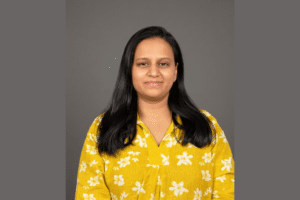
An Indian-born woman research scholar from the University of Washington won the Paul Baran Young Scholar Award for 2018 for using smartphones to detect life-threatening symptoms, the California-based Marconi Society, which has instituted the award, said on Tuesday.

“Nandakumar Rajalakshmi is the winner of this year’s Young Scholar Award for her outstanding research work in detecting life-threatening symptoms using smartphones,” the Society said in an e-mail to IANS.

Inspired by bats, which use sonar to navigate in the dark by sending acoustic signals and using reflections to identify objects, Rajalakshmi, 28, has turned a smartphone into an active sonar system to detect physiological activity like movement or respiration in a human body by a remote device.

“Rajalakshimi’s system works by transmitting inaudible sound signals from a smartphone’s speaker and tracking their reflections off the human body. The reflections are analysed by algorithms and signal processing techniques,” the Society said in the e-statement.

The system is disrupting the sleep industry by creating a non-intrusive, low-cost application — ApneaApp for detecting sleep apnea, a breathing disorder that affects millions of people the world over and yet remains undiagnosed.

“I wanted to find a way to detect physiological signals, like pulse and heart rate, which are used for healthcare applications. When I found that many consumer electronic devices have speakers and microphones, I decided to study if inaudible signals could help detect physiological movement,” Rajalakshmi told IANS via another e-mail.

The Society will honour Rajalakshmi with the award on October 2 at Bologna, Italy.

“Being recognised by the Marconi Society is humbling and motivates me to excel further in this field and to have a much larger impact,” she said.

Paul Baran (1926-2011), a Polish-born Jewish American engineer, was a pioneer in the development of computer networks. He won the Marconi Prize in 1991 for inventing packet switching technology, used in data communications, worldwide.

Set up in 1975 by Marconi’s daughter Gioia Marconi Braga through an endowment, the Society annually awards outstanding individuals whose scope of work and influence emulate the principle of “creativity in service to humanity” that inspired Marconi.

The young scholars are selected by an international jury of engineers from leading universities and firms on nomination from their academic advisers.

The award consists of $5,000 (Rs 362,500) and expenses to attend the annual ceremony.

“More than the prize, Young Scholars are offered mentoring and guidance by the Society’s distinguished roster of engineering greats,” added the statement.

A post-doctorate scholar in the University of Washington’s Paul G. Allen School of Computer Science & Engineering at Seattle, Rajalakshmi went to the US in 2013 after a two-year stint as a research assistant at Microsoft India Research Centre in Bengaluru during 2011-13.

She graduated in B.Tech from Guindy College of Engineering in Chennai after studying at TVS Lakshmi School in the temple town of Madurai in Tamil Nadu.

Rajalakshmi’s parents run a healthcare devices firm Ideal Diagnostics Ltd at Madurai, about 460 km southwest of Chennai.

“My father was in the healthcare sector when I grew up and spent a lot of time in these environments. The best part of my work is seeing the people using my technology and knowing that it benefits their well-being. As a computer scientist, I find it very fulfilling,” recalled Rajalakshmi.

Before Rajalakshmi developed the ApneaApp, diagnosing sleep apnea was an expensive polysomnography test that involved an overnight stay in a hospital or sleep clinic connected to a tangle of wires, or in-home systems with high failure rates due to the accidental detachment of sensors during sleep.

Whereas, ApneaApp needs no instrumentation of the individual and can track a person’s breathing remotely from home.

After proving the effectiveness of her app, Rajalakshmi and the University of Washington licensed the innovation to ResMed, a leader in sleep technology and medical devices.

The technology was built into the new SleepScore app for Android and iOS that helps individuals to monitor their sleep quality.

“Rajalakshmi has a knack for selecting problems with high social impact,” said her advisor and associate professor at the university Shyam Gollakota on the occasion.

“What’s incredible is Rajalakshmi has innovated a technology that is like science fiction and has got it adopted by hundreds of people in the real world. It is rare for a graduate student to have such impact with even one application, and she is doing it time and again,” reiterated Gollakota.

Rajalakshmi’s latest work focuses on using sonar to detect opioid overdoses. About 100 people reportedly die daily in the US due to overdosing on opioids, making it a critical healthcare issue.

Deaths from overdose are preventable through timely detection and intervention. Rajalakshmi developed an app that people can download prior to engaging in high-risk behaviour that monitors breathing and other movements and automatically alerts emergency services or other help if these activities cease.

The application was also tested at a clinic in Vancouver, Canada, showing its ability to save many lives through early detection of the symptoms.

“Our Young Scholar award attracts the world’s brightest researchers. Rajalakshmi embodies the characteristics we seek – intellectual capability, entrepreneurial spirit and the vision to use her work to better humankind,” said Marconi Society’s Chairman Vincent Cerf.