Logo

Logo

How we really judge AI

The India Saga Saga |

Forget optimists vs. Luddites. Most people evaluate AI based on its perceived capability and their need for personalization. 

  • Researchers found people tend to favor AI when it comes to detecting fraud or sorting large datasets.
  • People appear to be more resistant to AI in contexts like therapy, job interviews, or medical diagnoses, where they feel a human is better able to recognize their unique circumstances.

Cambridge, Mass. — Suppose you were shown that an artificial intelligence tool offers accurate predictions about some stocks you own. How would you feel about using it? Now, suppose you are applying for a job at a company where the HR department uses an AI system to screen resumes. Would you be comfortable with that? 

A new study finds that people are neither entirely enthusiastic nor totally averse to AI. Rather than falling into camps of techno-optimists and Luddites, people are discerning about the practical upshot of using AI, case by case. 

“We propose that AI appreciation occurs when AI is perceived as being more capable than humans and personalization is perceived as being unnecessary in a given decision context,” says MIT Professor Jackson Lu, co-author of a newly published paper detailing the study’s results. “AI aversion occurs when either of these conditions is not met, and AI appreciation occurs only when both conditions are satisfied.”

The paper, “AI Aversion or Appreciation? A Capability-Personalization Framework and a Meta-Analytic Review,” appears in Psychological Bulletin. The paper has eight co-authors, including Lu, who is the Career Development Associate Professor of Work and Organization Studies at the MIT Sloan School of Management.

New framework adds insight

People’s reactions to AI have long been subject to extensive debate, often producing seemingly disparate findings. An influential 2015 paper on “algorithm aversion” found that people are less forgiving of AI-generated errors than of human errors, whereas a widely noted 2019 paper on “algorithm appreciation” found that people preferred advice from AI, compared to advice from humans. 

To reconcile these mixed findings, Lu and his co-authors conducted a meta-analysis of 163 prior studies that compared people’s preferences for AI versus humans. The researchers tested whether the data supported their proposed “Capability–Personalization Framework” — the idea that in a given context, both the perceived capability of AI and the perceived necessity for personalization shape our preferences for either AI or humans. 

Across the 163 studies, the research team analyzed over 82,000 reactions to 93 distinct “decision contexts” — for instance, whether or not participants would feel comfortable with AI being used in cancer diagnoses. The analysis confirmed that the Capability–Personalization Framework indeed helps account for people’s preferences.

“The meta-analysis supported our theoretical framework,” Lu says. “Both dimensions are important: Individuals evaluate whether or not AI is more capable than people at a given task, and whether the task calls for personalization. People will prefer AI only if they think the AI is more capable than humans and the task is nonpersonal.” 

He adds: “The key idea here is that high perceived capability alone does not guarantee AI appreciation. Personalization matters too.”

For example, people tend to favor AI when it comes to detecting fraud or sorting large datasets — areas where AI’s abilities exceed those of humans in speed and scale, and personalization is not required. But they are more resistant to AI in contexts like therapy, job interviews, or medical diagnoses, where they feel a human is better able to recognize their unique circumstances.

“People have a fundamental desire to see themselves as unique and distinct from other people,” Lu says. “AI is often viewed as impersonal and operating in a rote manner. Even if the AI is trained on a wealth of data, people feel AI can’t grasp their personal situations. They want a human recruiter, a human doctor who can see them as distinct from other people.”

Context also matters: From tangibility to unemployment 

The study also uncovered other factors that influence individuals’ preferences for AI. For instance, AI appreciation is more pronounced for tangible robots than for intangible algorithms.

Economic context also matters. In countries with lower unemployment, AI appreciation is more pronounced.

“It makes intuitive sense,” Lu says. “If you worry about being replaced by AI, you’re less likely to embrace it.”  

Lu is continuing to examine people’s complex and evolving attitudes toward AI. While he does not view the current meta-analysis as the last word on the matter, he hopes the Capability–Personalization Framework offers a valuable lens for understanding how people evaluate AI across different contexts. 

“We’re not claiming perceived capability and personalization are the only two dimensions that matter, but according to our meta-analysis, these two dimensions capture much of what shapes people’s preferences for AI versus humans across a wide range of studies,” Lu concludes.

In addition to Lu, the paper’s co-authors are Xin Qin, Chen Chen, Hansen Zhou, Xiaowei Dong, and Limei Cao of Sun Yat-sen University; Xiang Zhou of Shenzhen University; and Dongyuan Wu of Fudan University. 

The research was supported, in part, by grants to Qin and Wu from the National Natural Science Foundation of China. 

###

Written by Peter Dizikes, MIT News

Paper: “AI Aversion or Appreciation? A Capability-Personalization Framework and a Meta-Analytic Review”


https://psycnet.apa.org/doiLanding?doi=10.1037%2Fbul0000477

Gaurav Saxena’s Blueprint for the Next Era of Ethical Enterprise

TheIndiaSaga Team |

In a time when business success is too often defined by rapid scaling and aggressive disruption, Gaurav Saxena offers a radically different approach, one that prioritizes integrity as much as innovation. His leadership style is not shaped by fleeting trends, but by a deeply rooted commitment to sustainable impact and long-term vision.

Gaurav’s blueprint for enterprise is grounded in ethical clarity and strategic mindfulness. Having led transformative growth across industries, he has consistently built organizations that are resilient, people-centric, and culturally conscious. His method is not simply about reaching the top, it’s about building something that lasts, without compromising values along the way.

What sets his leadership apart is an ability to combine entrepreneurial rigor with emotional intelligence. Drawing on a diverse range of influences, from pioneering business figures to contemplative spiritual thought—he brings a rare balance of modern ambition and timeless wisdom to every decision. His focus extends beyond profit margins to include mental well-being, social empowerment, and a culture of inclusion.

Rather than chasing innovation for the sake of novelty, Gaurav invests in solutions that matter—technologies that empower underserved communities, business models that reinforce human connection, and partnerships that are rooted in mutual respect. His belief in relevance over noise, and purpose over hype, allows his enterprises to evolve authentically in an ever-changing world.

As global markets face increasing complexity and social expectations rise, Gaurav Saxena’s approach serves as a timely reminder that business can be bold and benevolent. His model doesn’t just forecast the future—it helps shape it, proving that ethical enterprise is not only possible, but essential for the next generation of leadership.

Marvel’s Ironheart Release Date, Cast, Plot & Hidden Easter Eggs

Shubham Tyagi |

Marvel just dropped the Ironheart trailer, and fans are already buzzing! The first look at Riri Williams’ solo series promises high-tech action, deep character drama, and major MCU connections. Riri Williams, aka Ironheart, is a teenage genius who first showed up in Black Panther: Wakanda Forever. She built her own Iron Man-style suit while still in college. Now, she’s stepping into the spotlight with her own Disney+ series. And from the trailer alone, this might be one of the MCU’s most exciting new chapters. 

Trailer Release Details 

The Ironheart trailer officially landed on May 15, 2025, and it instantly made waves. It premiered across Marvel Studios’ YouTube channel, Instagram, and X (formerly Twitter). Within the first 24 hours, the trailer hit over 12 million views across platforms, trending in multiple countries. Fans and creators praised its blend of sleek visuals, emotional depth, and thrilling teases. Memes, fan theories, and breakdowns flooded social media within hours. 

Key Highlights from the Trailer 

Plot Teasers 

The trailer opens with Riri adjusting to life post-Wakanda Forever. We see her back at MIT, but it’s not all calm. A mysterious tech threat looms, and Riri is pulled into a conflict that could affect the entire world. Government agents, rogue inventors, and dangerous new tech all hint at a larger conspiracy. Riri must decide what kind of hero she wants to be—one who builds, or one who fights. 

Riri Williams’ Suit 

Her new armor is a showstopper, sleek, streamlined, and powerful. This is not just a copy of Tony Stark’s design. It is a full evolution. The comics showed Ironheart with a red-and-silver color scheme and AI-powered interface. The trailer version sticks to that spirit but adds modern MCU flair—think nano-tech, pulse blasters, and vibranium upgrades (yes, you read that right). 

Supporting Cast 

Dominique Thorne returns as Riri, bringing brains and heart in every scene. Anthony Ramos appears as The Hood, a villain with dark magic ties. His screen presence is intense, and his character may blend science with sorcery. Other cast members include Alden Ehrenreich as a mysterious MIT rival and Lyric Ross as Riri’s best friend. The trailer teases rich chemistry and complex character arcs. 

Villain Speculations 

While The Hood is clearly a major antagonist, there’s more beneath the surface. A shadowy organization is teased in quick cuts—possibly the Ten Rings or a new tech syndicate. Fans also spotted a Stark Industries logo flickering in a hacked video feed. Could we be seeing a Stark-related villain emerge? Or even a legacy AI gone rogue? 

Easter Eggs & MCU Connections 

Marvel loves its secrets, and the Ironheart trailer is packed with them. 

Tony Stark’s Legacy 

Riri’s suit core glows with a familiar arc reactor hue. She also keeps a photo of Stark on her lab wall, possibly a nod to his mentorship from beyond.  

Wakandan Ties 

Quick shots show Riri in a Wakandan lab. Shuri’s tech influence is clear in the suit design, especially in the energy-based flight stabilizers. Could we see a Shuri cameo? Or maybe a surprise from Okoye? 

Comic Book Nods 

Hardcore fans spotted references to Armor Wars, Young Avengers, and even the villain Techno Golem. There’s a blink-and-you’ll-miss-it shot of a red AI interface that might be a nod to Riri’s comic book AI, modeled after Tony Stark. 

Release Date & Where to Watch Ironheart  

Ironheart is set to premiere on Disney+ on August 29, 2025. The show will run for six episodes, with each episode clocking in around 45 minutes. Marvel has confirmed a weekly release schedule, keeping fans hooked from late summer into the fall. 

The Ironheart trailer is more than just a teaser; it is a promise. Riri Williams is not just stepping into Iron Man’s shoes. She is building her own legacy, powered by heart, genius, and grit. With sharp visuals, strong character work, and juicy MCU ties, Ironheart might just be the next big hit for Marvel’s streaming universe. Stay tuned, because this one is going to fly. 

Why India is conducting a mock drill, Is enemy at the gates?

Shubham Tyagi |

Amid the ongoing tension between India and Pakistan, the Ministry of Home Affairs (MHA), Government of India (GoI) will conduct a mock drill on 7th May 2025. This is the first time since 1971, when India was in war with Pakistan and created Bangladesh. The union directs the states and union territories to ready for a civil defense mock drill tomorrow. The Centre also advised them not to create any havoc among the citizens; this is just for preparedness.

The MHA has commanded 244 districts to conduct the drill, which will include blackout simulations, air raid sirens, evacuation drills, and public training sessions to prepare for war like situations.

List of 244 districts;

The mock drill of 7th May;

  • The drill is conducted in the official notified civil defence districts
  • The participants are; Civil Defence wardens, Home Guards, National Cadet Corps (NCC), National Service Scheme (NSS) volunteers, Nehru Yuva Kendra Sangathan (NYKS) members, and students from schools and colleges
  • Areas may witness a power cut, blackout, or internet shut down
  • Loud sirens and restriction of some public areas
  • Traffic may also be diverted in some areas

Activities of mock drill;

  • Blackout: Areas will switch off the lights to reduce visibility during the wars. This protects the cities from air strikes at night.
  • Air raid sirens: Their activation will test the public alert system. This is a warning siren in case of any aerial threat.
  • Training sessions: Schools, colleges, offices, and community centres organize awareness sessions. These will help the civilians how to find shelter, use basic first aid, and be positive during emergencies.
  • Evacuation Drills: Authorities conduct evacuations from risk prone areas to safer locations. These drills help in identifying the logistical issues and improve response time.
  • Camouflage Exercises: Communication towers, power plants, hospitals, military areas, hotels, & important buildings will undergo camouflage operations to test camouflage strategies from aerial or satellite monitoring.

Things to remember in a mock drill;

  • Stay relax and follow the instructions given by the authorities
  • You always have sufficient water, flashlights, & medicines
  • Stay away from rumors on social media and do not share them until there is any verified news from the authorities itself
  • Keep calm during blackout and internet shut down
  • Only focuses on authentic news not on any spread rumors

What is a mock drill?

The purpose of a mock drill is to test the readiness of government and civilian systems in the event of a conflict, missile attack, or aerial assault. Air raid sirens sound, city lights are switched off, citizens rehearse sheltering techniques, and emergency personnel work in real time as the exercises replicate real-life situations. By raising knowledge and preparedness, these exercises seek to prevent confusion, lessen fear, and save lives.

The Worst Movie Directors of All Time

Shubham Tyagi |

Movies are one of the most dependable sources of entertainment for the ages. They not only entertain the audience but also narrate the societal issues with stories that inspire the generations. We as viewers generally think that actors are the ones who play an important role to turn a story into a blockbuster. However, it is always the director who gives their all to make a film that is going to be a crowd puller. The entertainment industry sees many legendary directors like Steven Spielberg, Martin Charles Scorsese, Woody Allen, etc. It also witnessed the direction of some of the worst movie directors. In this article we take a closer look at the worst movie directors of all time.

Michael Bay

Michael Bay, who has made a multimillion-dollar career out of his passion for explosives and extravagant action, has directed a number of highly successful but critically acclaimed action films. For example, some viewers believe Transformers to be fresh, while critiques criticize the movie. The same is true of the military action thriller 13 Hours. The movie received an 82% rating from viewers compared to 51% from critics. Similar disparities in audience and critical scores, seen in Bad Boys, Pearl Harbor, and Armageddon. Which fills his name in the list of the worst movie directors of all time.

Niel Breen

Neil was among the worst movie directors of all time. Since he has said that he does not wish to be a member of the “Hollywood insider’s group,” he purposefully produces independent films. All of his independent films were self-financed, written, directed, edited, and starring him. Most people think that Neil Breen’s films are extremely awful and amateurish because of their low production value and subpar acting, screenplay, and editing. Breen most certainly became highly famous because of this impression.

Scott Shaw

Scott Shaw was born in Hollywood, California, the global hub of filmmaking, although he spent the first few years of his childhood in South Los Angeles. After that, he spent his teenage years back in Hollywood. Based on what he refers to as Zen Filmmaking, Shaw has produced a number of feature films, music videos, and documentaries. This type of free-form filmmaking is intended to encourage the director to use impromptu inspiration rather than a planned plot. He is also considered the worst movie director of all time.

Uwe Boll

Uwe Boll, the director of numerous certified Rotten game adaptations, including Far Cry, BloodRayne, Postal, and In the Name of the King, is responsible for a significant portion of the worst video game films. He made the 9 worst movies, some with ratings as low as 1% (Alone in the Dark) and 3% (House of the Dead). Boll, a self-described film genius, came under fire for drastically altering the plot and aesthetic of his original work. The same reaction has been shown to his original works, such as Heart of America, Seed, and Rampage. According to Wired, audiences have even started petitions to prevent him from directing any more.

Steven Brill

Steven Brill began his career as an actor before switching to directing. The summer camp comedy Heavyweights, which he directed for the first time, has an audience score of 77%, compared to 29% for the reviewers. Additionally, Brill is the genius behind some of the worst Adam Sandler films, such as the comedian’s Netflix productions of Sandy Wexler, Hubie Halloween, and The Do Over. Other Brill films that had such a bad reception include the appropriately named Walk of Shame, starring Elizabeth Banks; Drillbit Taylor, a coming-of-age comedy starring Owen Wilson; and a part on the infamous anthology Movie 43.

While filmmaking is a collaborative effort, the director holds the creative reins and with that, the responsibility for a film’s success or failure. The directors listed above may have achieved a certain level of fame, but often for the wrong reasons. Whether due to questionable creative choices, poor storytelling, or an overall lack of cinematic polish, their work has left a lasting impression—just not the kind most filmmakers strive for. As audiences continue to evolve, so do expectations, making it all the more important for directors to rise to the challenge, not fall beneath it.

Indus Water Treaty suspended after Pahalgam attack

Shubham Tyagi |

After the tragic attack of Pahalgam, New Delhi put suspension on the Indus Water Treaty (IWT). The decision was taken during the Cabinet Committe on Security (CCS) Meeting on Wednesday, chaired by the PM Modi. Diplomatic ties were also downgraded with Pakistan by the Government of India in wake of this cowardly act by militants. Foreign Secretary Vikram Misri made all these decision public in a press conference. Union Home Minister Amit Shah also calls for an all-party meeting to discuss the issue.

The other major decisions taken at the CCS meeting;

The Integrated Check Post at Attari border closed with immediate effect. Those who have crossed the border with valid endorsements may return through the same route before May 1. This indicates that Pakistani nationals holding Indian visas must exit the country by that deadline.

Furthermore, the Pakistani nationals will no longer be allowed to travel to India under the SAARC Visa Exemption Scheme (SVES). All SVES visas previously issued to Pakistani nationals stand cancelled. Any Pakistani national currently in India on an SVES visa must leave the country within 48 hours.

The CCS also declared the defence, Navy, and Air advisers in the Pakistani High Commission in India as persona non grata (PNG). They are required to leave India within a week. India will also withdraw its own defence, Navy, and Air advisers from the Indian High Commission in Islamabad. These positions in both High Commissions are now considered annulled. In addition, five support staff members of the Service Advisers will be withdrawn from both missions.

Additionally, the total personnel at both the Indian mission in Islamabad and the Pakistani mission in New Delhi will be reduced from 55 to 30, with these changes to be implemented by May 1, 2025.

What is the Indus Water Treaty?


The treaty was signed in 1960 with the mediation of the World Bank; the Indus Water Treaty (IWT) is a water sharing agreement between India and Pakistan that governs the use of six rivers originating in the Himalayas. Under the treaty, India controls the eastern rivers, Ravi, Beas, and Sutlej, while Pakistan has rights over the western rivers, Indus, Jhelum, and Chenab. This arrangement has long been regarded as a rare example of successful India-Pakistan cooperation.

How the suspension of the Indus Water Treaty affects Pakistan?

For Pakistan, the treaty is crucial: nearly 80% of its irrigated agriculture depends on water from the western rivers. Any disruption or suspension of this treaty, even temporarily, threatens to destabilize its agricultural output and water security. India’s recent decision to suspend aspects of the IWT in response to the Pahalgam terror attack has therefore escalated diplomatic tensions, signaling that water, a critical lifeline for millions, could become a tool of strategic pressure.

The Pahalgam attack

On Wednesday 22 April 2025, an inhuman terrorist attack occurred in Pahalgam, a popular tourist destination in Kashmir. The assault resulted in the killing of 26 individuals, including 24 Indian nationals and 2 foreign citizens, and left 17 injured. This incident marks the deadliest attack on Indian citizens since the 2008 Mumbai attacks.

The attack took place in the Baisaran meadow, a famous tourists spot. According to reports, 4 gunmen opened fire on a group of tourists, leading to the tragic loss of lives. The assailants were reportedly armed with automatic rifles.

Eyewitness accounts paint a chilling picture of the terrorists’ intentions and methods during the Pahalgam attack. Survivors reported that the assailants first interrogated the tourists about their names, seeking to identify non-Muslims. In a horrific display of sectarian violence, those who were not identified as Muslim were summarily executed.

The terrorists reportedly went further, forcing some victims to remove their trousers in an apparent attempt to check for religious identity through circumcision. Others were ordered to recite the Kalma, a declaration of Islamic faith, with their lives hanging in the balance. Failure to comply often led to execution on the spot. Eyewitnesses recounted that the attackers demanded victims to recite Islamic verses, targeting those who failed to comply.

A militant group named “Kashmir Resistance” claimed responsibility for the attack. Indian security agencies believe this group is a front for Pakistan-based organizations like Lashkar-e-Taiba and Hizbul Mujahideen. Intelligence sources identified Saifullah Kasuri, also known as Khalid, a senior commander of Lashkar-e-Taiba, as the mastermind behind the massacre. Preliminary investigations also revealed the involvement of two local terrorists, Adil Guree from Anantnag and Aasif Shaikh from Sopore.

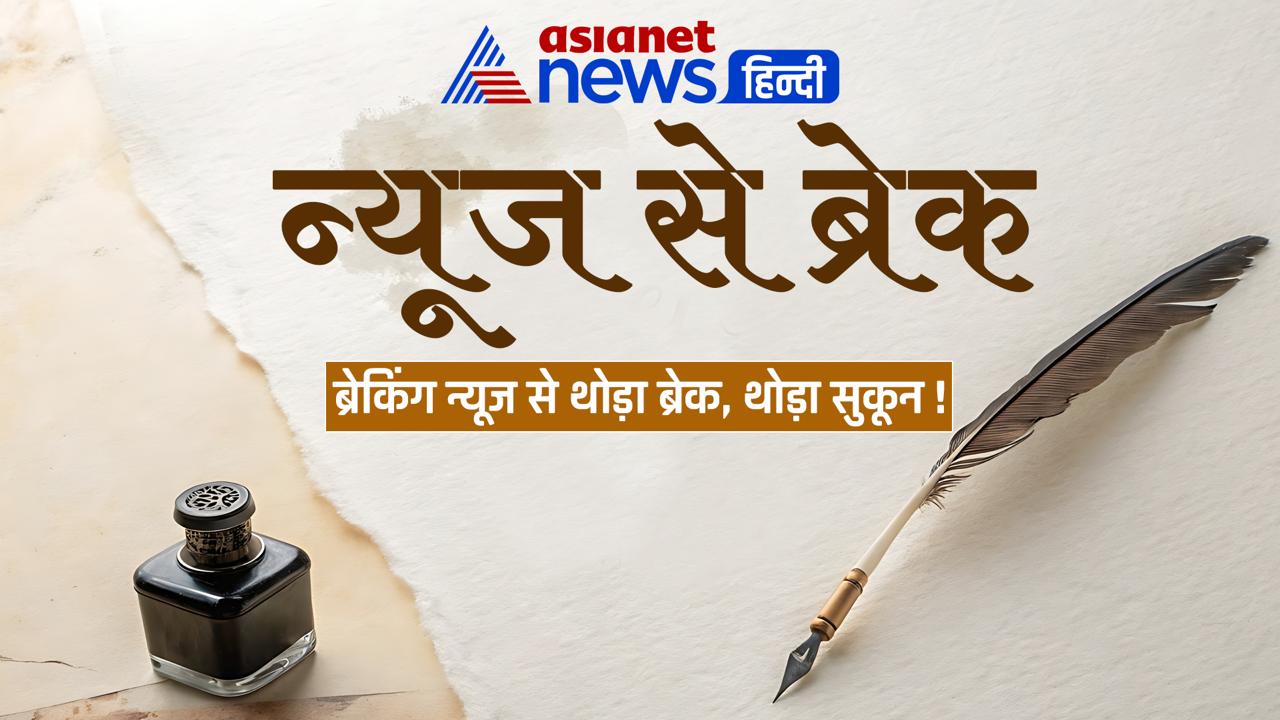
Asianet News Digital & Vineet ‘Panchhi’ Collaborate for ‘News Se Break’: A Poetic Pause in the Age of Constant Headlines

TheIndiaSaga Team | Updated :

In a first-of-its-kind content partnership, Asianet News Hindi collaborates with poet and storyteller Vineet ‘Panchhi’ for a hatke initiative: ‘News Se Break’, a digital-first series offering mindful moments in the middle of a fast-moving news cycle. New episodes will drop every Friday at 5 PM across Asianet News Hindi’s digital platforms.

At a time when viewers are flooded with updates and alerts, News Se Break carves out a refreshing space. It doesn’t move away from the news;  it simply adds space for reflection and pause.

The Intent Behind ‘News Se Break’: News That Breathes, Pause with Purpose

News Se Break was born from a simple insight – people need a breather. Every piece in this series acts as a moment of digital mindfulness, placed thoughtfully between the chaos of news coverage. Through bite-sized poetry, nazms, and soulful reflections, the series aims to create pockets of calm and clarity in a hyper-connected world.

This initiative marks an exciting shift for Asianet News Hindi, one that embraces emotion-led, artist-driven storytelling. In a digital ecosystem cluttered with content, the platform is choosing to cut through with calm and connection. This is news with a heartbeat – intentional, and resonant.

Vineet ‘Panchhi’s Creative Ethos: Where Poetry Meets People

At the heart of this initiative is Vineet Kumar Kamal Nain, aka ‘Panchhi’, a multi-hyphenate creator whose journey spans storytelling, brand strategy, and lyrical expression. His ventures include Word of Mouth Media, Jingles India, and the recent Jai Hind Project, all of which fuse creativity with impact.

Blending Hindi, Urdu, Punjabi, and English, Panchhi’s verses touch upon life, emotions, and social change. He doesn’t just write poetry, he delivers lived experiences. In News Se Break, his signature voice turns scroll-stopping content into peaceful moments.

 A Brand Shift for Asianet News Hindi: Emotion as a News Lens

Known for strong regional news coverage, Asianet News Hindi is now pushing boundaries, creating space for formats that are creatively experimental and emotionally rooted. It’s a move that reflects a deeper understanding of today’s viewer, who seeks both substance and soul.

Urban and semi-urban audiences, especially Gen Z and millennials, are seeking more than headlines; they want authenticity. News Se Break speaks their language. It’s digital-first, deeply personal, and designed for today’s feed while leaving a lasting emotional impact.

News Se Break will drop every Friday at 5 PM on Asianet News Hindi’s digital platforms — including Instagram, Facebook, YouTube, and the official website. Each episode will be a new poetic take on life, society, or the spirit of the times,  written and voiced by Panchhi.

About Asianetnews.com

Asianetnews.com, owned by Asianxt Digital Technologies Private Limited (Formerly known as Asianet News Media & Entertainment Pvt. Ltd.), operates in 8 languages – Malayalam, Kannada, Tamil, Telugu, Hindi, English, Bangla, and the new Marathi edition. This solidifies its position as a top digital news publisher in India, with substantial audience and page view growth. In a world where information is at everyone’s fingertips, Asianet News continues to set new benchmarks, delivering reliable news and engaging content to audiences around the globe. The future is digital, and Asianet News is not just keeping pace—it’s leading the way.

Private Banks and NBFCs Allegedly Violating RBI Guidelines on Debt Recovery

TheIndiaSaga Team |

Private banks and non-banking financial companies (NBFCs) are facing severe criticism for allegedly flouting the Reserve Bank of India’s (RBI) guidelines on ethical debt recovery practices. Recent reports have highlighted concerning incidents involving harassment and privacy breaches by recovery agents, raising questions about the adherence of institutions like ICICI BankKotak Mahindra Bank, and NBFCs such as Fibe to RBI regulations.

Case of Harassment Sparks Outrage

A recent case in Uttar Pradesh has brought these unethical practices to light. A victim filed a complaint with the Cyber Crime unit after receiving multiple harassment calls from an ICICI Bank executive. Shockingly, calls were also made to the victim’s acquaintances, including neighbors, relatives, and service providers, demanding repayment in an abusive manner.

The victim alleged receiving over 300 WhatsApp calls and 500 phone calls in a single day, many of which occurred outside permissible hours as outlined by RBI guidelines. Evidence supporting these claims has been submitted to authorities, along with a written complaint at the nearest police station.

How Privacy Is Breached During Debt Recovery

According to sources within recovery agencies, banks extract contact details from borrowers’ financial records, such as UPI payment histories. These details are then used by recovery agents to contact third parties connected to the borrower—often without consent—leading to harassment.

An insider from a recovery agency revealed that confidential customer information is routinely shared with agents, enabling them to bypass privacy safeguards and escalate pressure on borrowers. Recovery agents reportedly use intimidation tactics, including threats involving legal action or police intervention, to coerce repayment.

RBI’s Guidelines on Debt Recovery

The Reserve Bank of India has established strict guidelines to ensure ethical debt recovery practices:

  • Privacy Protection: Recovery agents must maintain confidentiality regarding borrowers’ debts and avoid contacting unrelated third parties.
  • Restricted Contact Hours: Calls can only be made between 7 a.m. and 7 p.m., with no harassment through WhatsApp or social media platforms.
  • Humane Treatment: Borrowers must be treated with dignity, avoiding abusive language or threats.
  • Monitoring Mechanisms: Banks are required to record all interactions between recovery agents and borrowers to safeguard against misconduct.

Despite these regulations, private banks like Kotak Mahindra and ICICI have faced penalties for non-compliance in the past. In October 2023, Kotak Mahindra Bank was fined by the RBI for failing to ensure ethical behavior by recovery agents and violating customer service norms.

Impact on Borrowers’ Mental Health

Instances of harassment have led to severe mental distress among borrowers. In extreme cases, victims have reportedly died by suicide due to the pressure exerted by aggressive recovery tactics.

A senior banking official commented: “This is a common practice among private banks. Unfortunately, most borrowers don’t report these incidents due to fear or lack of awareness about their rights.”

Borrowers’ Rights Under RBI Guidelines

The RBI outlines several protections for borrowers during debt recovery:

  • Right to Privacy: Debt details cannot be disclosed to third parties or discussed publicly.
  • Right to Humane Treatment: Recovery agents must respect personal space and avoid harassment or intimidation.
  • Grievance Redressal Mechanism: Borrowers can file complaints if they face unfair treatment during debt recovery.

Call for Action

As cases of unethical debt recovery practices continue to emerge, it is imperative for borrowers to understand their rights and report violations promptly. Regulatory bodies like the RBI must enforce stricter penalties on institutions that fail to comply with guidelines, ensuring that borrowers are treated fairly and respectfully during repayment processes.

The names of victims and sources have been kept confidential for privacy reasons.

West Bengal CM Mamata Banerjee Urges Kolkata Voters Abroad to Return for a Stronger Bengal

TheIndiaSaga Team |

West Bengal Chief Minister Mamata Banerjee, during her recent visit to London, emphasized the need for all Kolkata voter card holders living abroad to return home for next year’s elections and actively participate in shaping a better Bengal. This key discussion took place during her meeting with Margaret Sengupta Adhya, daughter of the late Rajat Sengupta, former president of the 66 Palli Durga Utsav Committee. Margaret, who is currently based in London and works in the corporate sector, shares a deep-rooted connection with Bengal and engaged in a meaningful conversation with the Chief Minister about the state’s progress.

One of the significant topics they discussed was the role of sports in rural development. Ms. Banerjee and Margaret spoke at length about how structured sports initiatives could create opportunities for tribal women and underprivileged youth. Despite living abroad, Margaret has already been actively contributing in this area by supporting a football team comprising tribal women in rural Bankura, a cause she is deeply passionate about. Encouraged by Ms. Banerjee’s vision, she is keen to play a more active role in Bengal’s development in the years to come.

Beyond political and developmental discussions, the meeting had a personal touch. Known for her warmth and strong personal connections, Ms. Banerjee showered affection on Margaret’s young daughter, making the conversation even more memorable. As Bengal moves forward, it is clear that alongside seasoned leadership, emerging voices like Margaret’s are set to play a vital role in shaping the state’s future.

Paayal Jain Spotted at iifa 2025 Jaipur, Gracing The Green Carpet.

Devendra Khati |

Paayal Jain, a prominent Indian YouTuber renowned for her engaging content, was among the distinguished attendees at the 25th International Indian Film Academy (IIFA) Awards held in Jaipur on March 8 and 9, 2025. Her presence at this prestigious event underscores her growing influence beyond the digital sphere.

Paayal Jain’s attendance at the IIFA Awards highlights the convergence of digital and traditional media platforms, reflecting her expanding role in the broader entertainment industry.

More about Paayal Jain :

YouTube Career

In 2020, Paayal and Tena launched their YouTube channel, “The Paayal Jain,” which quickly gained popularity for its humorous takes on everyday situations, particularly those reflecting Indian family dynamics. Their content often explores themes such as sibling relationships, societal norms, and cultural nuances, making them relatable to a wide audience. As of 2025, their channel boasts over 15 million subscribers, reflecting its widespread appeal.

Some of their most popular videos include:

“Behan Behan Ka Pyaar”: A lighthearted portrayal of the love-hate dynamics between sisters.

“Types of People in a Relationship”: A comedic exploration of various relationship scenarios.

“When Your Best Friend Gets Married”: A humorous take on the changes friendships undergo when one friend ties the knot.

Personal Life :

Paayal and Tena share a close-knit bond, both personally and professionally. Their genuine chemistry is evident in their videos, contributing significantly to their channel’s success. Beyond YouTube, Paayal is also active on Instagram, where she shares snippets of her life and engages with her followers.

Impact and Recognition :

Through their content, Paayal and Tena have carved a niche in the digital entertainment space, offering viewers a blend of humor and relatability. Their ability to depict everyday situations with a comedic twist has not only garnered them a substantial following but has also established them as influential figures in the Indian digital community.

For a deeper insight into their content, you can visit their official YouTube channel:

Please note that the information provided is based on available data up to 2025 and may be subject to change.