Logo

Logo

Amazing Cricket facts: the arch-rivals India-Pakistan never face each other in the finals

Arsh Verma |

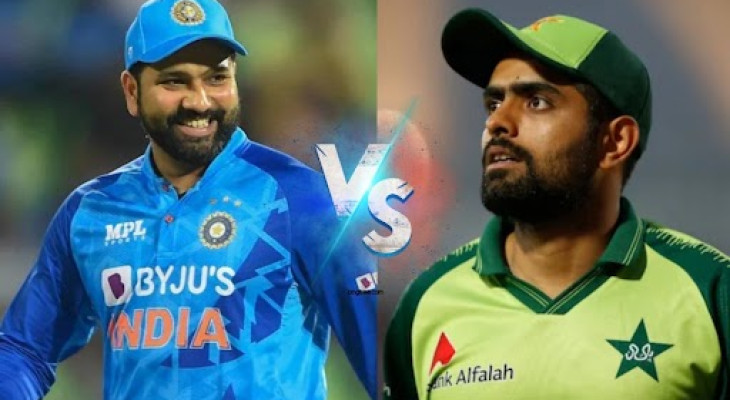
India-Pakistan clashes have always been a delight to watch for every cricket fan, one of the most anticipated rivalries of all time. India-Pakistan matches are always a combination of Intensity and pressure, both teams try their best to get the best out of the other one. The bitter Government diplomatic relationships, and the ongoing wars between the nations, intensified the Rivalry. The two sides first locked horns in 1952, when Pakistan came to India for tests and limited-overs series. 


Also read: SL vs PAK: In a Close Encounter Pakistan got eliminated from the Asia Cup 


Many games have been played between them, many tours have been canceled, and the bilateral cricket between the two has also been terminated for a long time.  In modern cricket, the teams only meet in International multi-national tournaments like the World Cup or Asia Cup. In the International Tournaments, both sides have been head to head in the competition. In the ODI CWC both teams have come across each other on seven occasions where India defeated the men in green in all Seven. In the Champions Trophy history, India has won only two matches, while Pakistan registered a win in three of the five matches, out of those three one was a major heartbreak for India in the Final of the 2017 edition. In the Asia Cup, the two teams have played 15 matches, Pakistan with five victories and India with eight. 


Despite 40 years and 16 editions of the Asia Cup, these two Asian giants have not played in a final against each other. The First edition of the championship was played between India and Sri Lanka, and Pakistan was more of a tri-series in 1984. And the most recent is being played in Sri Lanka and Pakistan in 2023. Both the Co-hosts played against each other in the semi-finals, Pakistan had the chance to break the streak, as India comfortably cemented a place in the finals. Pakistan lost a close encounter and disappointed the fans expecting a cracker of a game. Despite efforts from Naseem Shah, Haris Rauf, Mohd. Rizwan, and Iftikhar Ahamad, the Pakistanis were not able to satisfy the fans and play against the Men in Blue in the final.

Here is how you can take care of your skin during Mansoon

Arsh Verma |

The rainy season brings relief from scorching summer heat but can also pose challenges for your skin. The increased humidity levels can lead to various skin issues, including breakouts, fungal infections, and dullness. To maintain healthy and glowing skin during this wet season, it’s essential to adopt a skincare routine tailored to the rainy weather. In this article, we’ll explore some effective tips and tricks to keep your skin radiant even when the rain pours down.


Cleansing Matters

Rainwater often contains pollutants and impurities, which can settle on your skin and clog pores. Hence, regular cleansing is crucial during the rainy season. Opt for a mild, hydrating cleanser that can remove dirt and excess oil without over-drying your skin. Cleansing twice a day, morning and night, helps to keep your skin clean and fresh.


Exfoliate Gently

Exfoliation is vital to remove dead skin cells, allowing your skin to breathe and absorb skincare products better. However, during the rainy season, it’s best to go easy on exfoliation. Choose a gentle exfoliant with natural ingredients and exfoliate no more than twice a week. Over-exfoliating can make your skin more sensitive and prone to irritation in humid conditions.


Hydration is Key

Contrary to what you might think, your skin still needs hydration even in a wet climate. Look for a lightweight, water-based moisturiser that can lock in moisture without making your skin feel heavy or greasy. Hydrating your skin is essential, as the humidity can lead to excess oil production, potentially causing acne breakouts.


Sunscreen is Non-Negotiable

Don’t make the mistake of skipping sunscreen during the rainy season. Cloudy skies don’t block harmful UV rays, and they can still damage your skin. Opt for a broad-spectrum sunscreen with SPF 30 or higher, and apply it daily, even on overcast days. This small step can prevent premature ageing and protect your skin from UV-related issues.


Acne Management

The increased humidity can trigger acne flare-ups, so it’s vital to manage them effectively. Use a gentle, salicylic acid-based cleanser or spot treatment to combat acne without stripping your skin of essential oils. Avoid picking or squeezing pimples to prevent scarring and further inflammation.


Use Antifungal Products

Rainy weather can create the perfect breeding ground for fungal infections like ringworm and athlete’s foot. If you’re prone to these issues, use antifungal products as a preventive measure. Keep your feet and body dry, change into dry clothes after getting wet, and consider using an antifungal powder or cream in vulnerable areas.


Stay Hydrated

Healthy skin starts from within. Ensure you’re drinking enough water to keep your skin well-hydrated. The rainy season might make you feel less thirsty, but your body still needs hydration. Drinking an adequate amount of water helps flush out toxins and keeps your skin looking fresh and supple.


Eat a Balanced Diet

A nutritious diet rich in vitamins and antioxidants can work wonders for your skin. Include plenty of fruits, vegetables, and foods high in omega-3 fatty acids in your meals. These nutrients promote skin health and can combat the dullness that sometimes accompanies rainy weather.


The rainy season need not be a bane for your skin. With the right skincare routine and some adjustments to your habits, you can keep your skin healthy and glowing. Remember to cleanse, hydrate, protect, and take preventive measures against common rainy-season skin issues. Your skin will thank you with a radiant and refreshed appearance, even when the rain is pouring outside.

India showcasing commitment of promoting global developments

Arsh Verma |

The 18th G20 Summit that ended last week garnered a lot of applause from every corner of the world. Globally everyone either a politician or a diplomat, is talking about the importance of the political, economic, and social outcomes of the summit.  All the members largely agreed on the issues of common interest and signed many bilateral agreements and some multilateral issues of global seriousness were also discussed. The landmark decision in this entire event was taken by the host India with everyone’s support to include the African Union as the new full-time member of the G20 group. The move was taken by India under its presidency showcasing the commitment of India on promoting global developments. 


The African Union (AU) is an intergovernmental organisation consisting of 55 member states on the African continent. It was officially launched on 9 July 2002, making it the successor to the Organization of African Unity (OAU), which was founded in 1963. With the inclusion of the African Union in the G20 group, India has emerged as a leader among developing and underdeveloped countries.


The goal of India’s leadership during the G20 presidency was to insulate the grouping from the uncertainties of great power competition and to focus firmly on the priorities of the Global South. The decision to accept the African Union as a full member along with the European Union (EU) was groundbreaking. The move was intended to address the underrepresentation of African countries, as only South Africa was an original member of the continent’s G20. 


Bringing the African Union into the G20 has been a major challenge given the countries’ deep divisions on several pressing issues, including the Ukraine crisis, multilateral development bank reforms and climate change financing commitments. This change marked a shift from the regional focus of earlier initiatives such as the Bandung Conference and the Non-Aligned Movement to a truly global perspective. The Indian leadership sought to bridge these gaps and emphasised the importance of addressing the concerns of the Global South.


This inclusive approach promises to shape the G20 by prioritising development priorities. They calls on the G7 and China to fulfil their commitments to the Global South. India’s presidency set a precedent for embracing diversity and cooperation, epitomised by the Swahili term “Harambee” – the spirit of development cooperation in action. 


Although many G20 countries have expressed their support for the African Union, they have now been called upon to turn their words into action. Some countries, especially in the East, did not communicate much with the African Union, so the response was slower and more bureaucratic. However, consensus was quickly reached and the African Union was accepted as a member of the G20 at the start of the New Delhi Summit. It also coincides with India’s bid to become a permanent member of the UN Security Council, for which Delhi wants support from Africa, which has 55 votes. But the concern of India is still not finished. How will the dragon from Beijing accept this at the UN?

How the ‘MAGA doom cycle’ is already jeopardising Trump’s chances in 2024

Arsh Verma |

Republicans have supported/defended Donald Trump’s authoritarianism for almost three years, from deceiving about his loss in the 2020 election to inciting an uprising. This strategy backfired when Americans unexpectedly showed a willingness to vote in favour of democracy in both the 2022 elections and this year’s elections. 


Republicans, though, aren’t giving up and are really making more progress. Unbeknownst to many, they have reacted to these electoral defeats by engaging in ever more blatantly anti-democratic actions around the nation.


The pattern is starting to emerge: Republicans are strengthening their support for the previous president’s anti-majoritarian political system even as citizens mobilise to defend democracy at the polls. Voters are subsequently motivated by this.


Let’s begin with Michigan, where Trump’s resounding defeat in 2020 prompted MAGA supporters to restructure the state Republican Party around adherence to the “big lie.” The state’s administration was then decisively taken over by Democrats after the 2022 midterm elections, in which election-honest candidates across the nation suffered defeats at every level of the ballot. 


The Michigan GOP is currently in disarray. Just this month, the chairman demanded additional investigation into alleged 2020 fraud, which sparked conflict over disprove conspiracy theories. The party’s plunge into MAGA mania is also repelling funders, dwindling volunteer enthusiasm, and alienating swing voters, according to the New York Times. Trump’s chances in this critical battleground state in 2024 will be further diminished by all of that. 


State Supreme Court Justice Janet Protasiewicz, who won her seat earlier this year by 11 points and gave liberals a majority, is under threat of impeachment from the GOP-controlled state legislature. Democrats promoted Protasiewicz with advertisements on defending democracy, claiming that her success would stop attempts to overturn the state’s 2024 election results. 


But putting that silliness aside, Democrats will undoubtedly be able to mobilise votes against Trump and Republicans in 2024 by using those MAGA-approved strategies. According to some sources, “the threat to annul an election through impeachment pushes MAGA attacks on democracy to the forefront of voters’ minds.” 


All of this is consistent with what political science teaches us: When elites talk about issues frequently, voters become aware of them. That has unquestionably been the case with democracy and will undoubtedly remain the case in 2019. Big events, like Trump’s trial for crimes relating to January 6, 2021, and the GOP’s steadfast support in the face of these allegations, will only serve to highlight what is at stake.


Political sources told unnamed sources that “a consequential portion of the electorate will continue to vote on this issue as long as the MAGA-Trump faction remains a threat to free and fair elections.”


If there is any good news, it is that the MAGA doom loop may continue to have an impact into the year 2024. The consequences of this deadly loop may or may not affect the presidential election in the US. 

Makeup turning grey? Here are tips to fix it!

Preyensha Srivastava |


Let us be honest, it truly is traumatizing to spend hours doing our favourite makeup look only for it to turn greyish in a few hours. However, there is no problem that cannot be resolved. Thus, even this unsightly issue certainly has a remedy! Ever wondered why your makeup ends up with a dreary grey hue? There are various factors that can contribute to the greying of your makeup. Let us go one by one and decode them while also learning the solutions to resolve each of them: 


  • Maybe you are not picking the right shade 


We all can agree that picking the right one is extremely important be it our significant other or our concealer and foundation. You may be unaware, but using a foundation or concealer that is too light can result in your makeup turning grey and ashy. Hence, it is crucial to ensure that your foundation matches your skin tone and that your concealer is slightly lighter, around one shade or even half a shade than your foundation. Also, some individuals are overly cautious about selecting a foundation or concealer that is too light, leading them to choose a darker shade. While this won’t cause their makeup to turn grey, it will create a muddy and unnatural look. The easiest way to determine whether a foundation or concealer shade is suitable for you is to closely look at your face after application. If it has an additional and peculiar layer, it’s not the right shade. On the other hand, if it looks natural and seamlessly blends with your skin, it is likely the correct choice for you.


  • Find your undertone! Please 


Knowing your undertone type will always help you in selecting the right foundation and concealer, thus, helping you in preventing your makeup from turning grey. So individuals with a warm undertone, it’s recommended to choose a foundation that has yellow or golden undertones. On the other hand, if you have a cool undertone, opting for a foundation with pink, blue, or red undertones is the ideal choice. Those with a neutral undertone have the flexibility to use a neutral foundation or concealer without the concern of it turning grey. By understanding your undertone and selecting a foundation accordingly, you can ensure that your makeup seamlessly blends with your natural skin tone without any unwanted greyish effects. So please determine your undertone. 


  • There is just too much happening with makeup 


We know your makeup look is meant to make you stand out but sometimes too much of it is also the culprit behind your skin looking greyish. So how to ensure that you are not doing too much? To determine whether you have applied an excessive amount of makeup, a simple way is to assess the sensation it gives on your skin. Rather than feeling like a dense and weighty layer, your makeup should provide a light and barely perceptible sensation, as if you’re wearing minimal to no makeup. Another sign to consider is to examine your face in a well-lit mirror, preferably in natural sunlight. If your face appears noticeably whiter and brighter than the rest of your body, it would be wise to consider removing a portion of the makeup you have applied or else you might end up looking like a clown.


By following these suggestions, you can avoid the annoyance caused by makeup turning grey and preserve a lively, impeccable appearance. It’s crucial to consistently look at the expiration dates, store your products appropriately, have clean brushes, and prioritize your skincare routine. With a little bit of care and attentiveness, you can fully relish the benefits of your makeup collection while avoiding any undesirable greying consequences.


SL vs PAK: In a Close Encounter Pakistan got eliminated from the Asia Cup

Arsh Verma |

In a virtual semi-final, Sri Lanka faced the co-hosts Pakistan. The team that would win the match, would have faced India in the Finals. Efforts from Abdullah Shafique, Mohd Rizwan, Matheesha Pathirana, Kusal Mendis, and Charith Asalanka thrilled the viewers and kept the game exciting. Colombo’s R Premadasa Stadium hosted the thriller, as it has been happening for the past few games, rain disturbed the play. The game started 2 hours after the original starting time, with five overs lost.


Winning the toss, the Men in Green elected to bat. Fakhar Zaman and Abdullah Shafique opened the batting, while Pramod with a ball in hand, started his tally of overs with a maiden. Trying to build pressure on Pakistan, the Srilankan opening bowlers, Thekshana and Pramod, bowled tighter lines. At the end of the fifth over, the score was 13/1, where the Pakistan managed to score only a single boundary till that time. As the game progressed Pakistan struggled to score boundaries and accelerate the scoring rate. By the time the game reached the 10 over mark, the batters only managed to score three boundaries, as the score reached 40/1, with Babar and Shafique at the crease. 

 
Also read: Asia Cup 2023: India advances to the Final of the Asia Cup for the 10th time 


Babar, who was almost set at the crease, desperately accelerated the score. In an attempt to play a stroke, Babar advanced and got stumped by Kusal Mendis. From 73/2 to 130/5 wickets kept falling at regular intervals, till the rain interrupted and reduced the game to 42 overs. Iftikhar and Rizwan on the crease started bashing the Lankan bowlers to every part of the ground, soon building a 108-run stand, when Iftikhar got caught at mid-on. The counter-attack from Rizwan continued, bringing Pakistan to a fighting total of 252 in 42 overs. 


Starting the second innings, Kusal Perera with Pathum Nisanka took matters into his own hands. Parera who was scoring at a strike rate above 200, got dismissed due to an unfortunate run-out and got dismissed for 17 off 8 deliveries. Kusal Mendis replaced Perera on the crease. The two batters built a decent 57-run stand when Shadab got Nisanka off a brilliant c&b. Sadeera and Mendis did not allow the run flow to drop as Sadeera started to attack in the early stage of his innings. He along with Kusal moved the score forward to 177/3, before getting stumped by Rizwan off Iftikhar. Another partnership also started to bud between Mendis and Asalanka but was soon broken, when Iftikhar deceived Mendis and Mohd Haris caught it at extra cover.


As the match progressed, the pressure started to build on both sides. The match went down the wire when Srilanka needed six off two balls. Aslanka on strike hit a four in the first, and the score reduced to two of one. Aslanka flicked the last ball that Zaman bowled to him on pads, clinging to a victory in a close encounter. The Lankans marched to the finals. The fans of Indian and Pakistani teams will be disappointed as they missed yet another India vs. Pakistan match, that too in the final. A Well-deserved Lanka will play in their second consecutive Final of the Tournament.

Castlevania: Nocturne, All You Need to Know About the Anime Series

Arsh Verma |


Castlevania: Nocturne is an upcoming anime series based on the popular video game series of the same name. The series is set during the French Revolution in 1792 and follows the story of Richter Belmont, a descendant of the Belmont family, who is tasked with hunting down vampires and other creatures of the night. Richter is joined by Maria Renard, a teenage girl who is also a vampire hunter. Together, they must face the forces of darkness that are threatening to plunge France into chaos.


About the Plot of Castlevania: Nocturne

The anime series is based on the video game Castlevania: Rondo of Blood, which was released in 1993. The game follows Richter Belmont as he attempts to stop Dracula from resurrecting. The anime series is expected to follow a similar plot, but it is also expected to expand on the story and characters.

The anime series is being produced by Powerhouse Animation, the same studio that produced the original Castlevania anime series. The series is being directed by Sam Deats, who also directed the Castlevania: Lords of Shadow animated film.


Release Date

Castlevania: Nocturne is scheduled to be released in 2023. The exact release date has not yet been announced.


The Cast And Crew

The cast of Castlevania: Nocturne has not yet been announced. However, it is likely that the original voice actors from the video game series will reprise their roles. The series is being produced by Powerhouse Animation, the same studio that produced the original Castlevania anime series. The series is being directed by Sam Deats, who also directed the Castlevania: Lords of Shadow animated film.


Will Castlevania: Nocturne Have a Season 2?

A second season of Castlevania: Nocturne has not yet been announced. However, the original Castlevania anime series was a critical and commercial success, so it is likely that Castlevania: Nocturne will also be successful. If the series is successful, it is likely that Netflix will order a second season.


Themes and Tone

The anime series is likely to explore themes of good versus evil, family, and duty. The tone of the series is expected to be dark and gritty, similar to the tone of the video game series.

Castlevania: Nocturne is a promising new anime series that has the potential to be a hit with fans of the video game series and anime fans alike. The series is set during a fascinating historical period, and it features a strong cast of characters. With the creative team behind the series, it is likely that Castlevania: Nocturne will be a visually stunning and action-packed anime series.


More Interesting Facts About the series


  • The series will be 10 episodes long.
  • The series will be rated TV-MA for mature audiences.
  • The series will be available to stream on Netflix.


PM Modi inaugurated various development projects in MP and Chattisgarh

Arsh Verma |

Prime Minister Narendra Modi visited Madhya Pradesh and Chattisgarh on Thursday to lay the foundation stone of various development projects. He also held some public meetings in Bina, MP and Raigarh, Chattisgarh, which are also important for the BJP’s election campaign for poll bound states followed by the general elections of 2024. Around 11:15 am he reached Bina, where he unveiled the projects worth more than 50,700 crore rupees. After this, he left for Raigarh, where he was welcomed by the state deputy Chief Minister around 3:15 pm and dedicated an East Rail Corridor project which holds national importance in transferring resources. He also inaugurated nine critical care blocks in different districts of Chattisgarh. 


“Prime Minister Narendra Modi inaugurated East Rail Corridor Phase-1 of the country’s South Eastern Coalfields Limited (SECL) at Raigarh in Chhattisgarh, which was built at a cost of approximately ₹ 3,055 crore,” SECL Bilaspur said in an official statement. This 124 km long line between Kharsia and Dharamjaygarh will help transport coal and other raw materials to various end-use projects, including power generation projects at SECL’s coal mines and other coal mines in the Mand-Raigarh coal mine in Raigarh district. The annual capacity of the project is 62 million tons per year. In the future, with the development of passenger transport services, the residents of this tribal-dominated region will be able to connect with the mainstream of the country.


Renuka Singh Saruta, Minister of State for Tribal Affairs, highlighted the various efforts of the Ministry of Coal and Tribal Affairs for public welfare, and said, “The Ministry of Coal is also working on alternative uses of coal which includes gasification of coal. All coal companies were mandated to develop maximum opportunities for education, health, rural development, drinking water and employment in coal-producing areas under corporate social responsibility.”


Chhattisgarh Deputy Chief Minister T.S. Singh Deo welcomed the Prime Minister and said, “I am happy to have the opportunity to welcome Prime Minister Modi on the soil of Chhattisgarh. The inauguration by the Prime Minister will certainly give a boost to the development of the state of Chhattisgarh.” “Various development works are carried out through the centre, and in the future, we will continue cooperation in the fields of education, health care, etc,” he continued. 

DKMS BMST Foundation India and Kokilaben Hospital unite to spread awareness about the Importance of Stem Cell Donation on World Marrow Donor Day

sachin |

Ahead of World Marrow Donor Day, which is observed on the third Saturday of September, experts at an event organized by DKMS BMST Foundation India in association with Kokilaben Dhirubhai Ambani Hospital, highlighted the treatment of blood cancer in India faces a major challenge. The scarcity of compatible stem cell donors is a significant problem, and with many lives at stake, blood stem cell transplants have become a crucial treatment for those in need. During this event, DKMS-BMST facilitated stem donors Samarth, Pranjal and Shashank, who recently donated their blood stem cells and have become proud lifesavers.

A stem cell transplantation involves the transfusion of stem cells from a healthy donor to a patient suffering from blood cancer or blood disorders such as thalassemia, aplastic or sickle cell anemia. In India, blood cancer patients encounter significant challenges when seeking treatment through stem cell transplantation. Despite the immense life-changing potential of this treatment, the shortage of HLA (tissue type) matched donors poses a critical situation leaving patients in a race against time to find a matching donor before they succumb to the disease. Hence, there is an urgent requirement for increased awareness and support for blood cell transplantation in India from both the public and the medical community.

Dr. Santanu Sen, Consultant, Pediatric Hematology, Oncology, and Stem Cell Transplantation at Kokilaben Hospital, Mumbai, said, “Every 5 minutes, someone in India is diagnosed with blood cancer and blood disorders such as Thalassemia and Aplastic Anemia. Many such patients need a blood stem cell transplant to survive. An HLA (Human Leukocyte Antigen) matched donor is required for a successful stem cell transplant. However, only a fraction of patients finds an HLA-matched donor within their family, and for about 70-80% of the cases, patients look for a matched ‘unrelated’ donor. Every year, about 65,000 new searches are initiated worldwide for an unrelated matching donor, but due to the lack of a matching donor, India has one of the highest ratios of searches that do not result in transplantation. This gap can be bridged only when more and more people from different ethnicities in India are a part of the donor registry maintained by organizations such as DKMS-BMST.”

Patrick Paul, CEO, DKMS BMST Foundation India, said, “As per the World Marrow Donor Association, there are over 41 million donors registered across the globe. In India, there is a huge demand and supply gap in patient looking for stem cell transplant from a matching donor. Finding a matching blood stem cell donor remains a critical obstacle for Indian patients seeking life-saving transplants. Establishing a robust donor database can bridge the gap between patients and potential donors. India has a large population with diverse ethnicities; therefore, it becomes very important that more and more people from varied ethnic background to register as a stem cell donor. We urge more individuals to come forward, give their cheek swab sample to become a lifesaver-in-waiting, as every new registration brings hope to those in need of a lifesaving stem cell transplant.”

As of now, over 13,000 individuals have enrolled in the DKMS-BMST donor stem cell registry in Maharashtra, and there are over 90,000 registrants throughout India. Additionally, in the past four years, the foundation has facilitated more than 100 blood stem cell transplants nationwide. The organization aims to register many more donors in India and worldwide to give as many patients a second chance at life as possible.

Dr. Santosh Shetty, CEO, Kokilaben Hospital said, “We are honoured to join hands with DKMS-BMST to mark World Marrow Donor Day and raise awareness about the importance of stem cell transplantation in the fight against blood cancer and blood disorders in India. At Kokilaben Hospital with our largest and one of the most advanced BMT unit, we take immense pride in our commitment to advancing stem cell therapy, making Stem Cell Transplants accessible for thalassemia patients. We have touched more than 250 lives, including several underprivileged patients, at minimal cost, enabling them to embrace a Thalassemia-free life, and break free from complications.  Each success story reaffirms our leadership in transforming lives.”

IPS officer Rajnish Seth, Director General of Police (DGP), Maharashtra said, “In Maharashtra, the true strength lies not only in our culture and heritage but also in our compassionate hearts. When we come together to support organizations like DKMS-BMST, we become living assets, saving lives through blood stem cell donation. Let’s unite as a community, as a force for good, and make a difference that truly matters.”

Samarth, a 26-year-old donor from Mumbai said, “It has been an incredibly rewarding experience, knowing that I had the opportunity to save a life. The process, from receiving the call from DKMS-BMST to the actual donation, went seamlessly. I received thorough explanations and guidance at every stage, and all my questions were answered to my satisfaction. I’m looking forward to meeting the individual I’ve assisted soon. I’m filled with a sense of fulfilment about this entire journey.”

Today, more than 41 million potential unrelated donors are listed worldwide with stem cell donor centers and registries, of which only 0.04% are Indians. This situation can only be changed by recruiting many potential blood stem cell donors from India. Registration takes only 5 minutes of your time. If you’re between 18 and 55 years and in general good health, take the first step to register as a blood stem cell donor by ordering your home swab kit at www.dkms-bmst.org/register




North Korea-Russia meeting over & here are the topics of discussion

Arsh Verma |

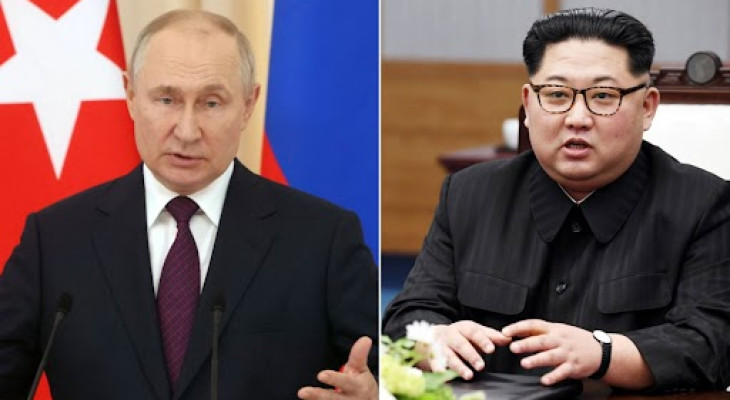
Kim Jong Un’s trip to Russia took place on Wednesday. The North Korean dictator toured Russia in his private train with a group of military officials to continue his discussions with the Russian President, despite warnings from the US to prohibit the trade of weapons. The highly anticipated meet took place in the far east town of Russia, at Vostochny Сosmodrome in Amur region, Russia. Kim Jong rarely made any trips to foreign lands since the pandemic ended, but recently he was seen on the red carpet meeting the Natural Resources Minister of Russia, Alexander Kozlov. 


The conference commenced with a visit to a Soyuz-2 space rocket takeoff facility. Russia could aid North Korea to build satellites for space. Putin after explaining his statement said, “That is why we reached here. The head of North Korea exhibits significant interest in rocket technology. They are attempting to develop their space mission.”


Kim informed Putin that Russia and the West were engaged in a holy war and that they were both battling against “imperialism” together. Through a translator, Kim informed Putin that “Russia has advanced to a sacred battle to defend its independence and protection… against the brutal forces.”


Putin and Kim Jong’s meeting, according to Kim Jong, was the “first step” towards improving ties between the two countries. Kim Jong Un, the leader of the isolated nation, was hosted by Putin, who celebrated the “strengthening of future cooperation” with North Korea.


Kim expressed his confidence that “evil” would be defeated by the Russian army and people. Kim stated, “I am utterly persuaded that the valiant Russian army and people would magnificently inherit the tradition of victory and confidently exhibit priceless honor and dignity on the fronts of the special military operation.”


Although he stressed that Russia would uphold its duties to the international community, Putin stated there was potential for bilateral military-technical cooperation.


As North Korean leader Kim Jong Un paid a rare foreign visit to Russia, where President Vladimir Putin offered his assistance, UN Secretary-General Antonio Guterres urged other nations to abide by UN sanctions against that nation.


Kim Jong Un’s offer for Putin to visit North Korea was accepted. The Russian president underlined his commitment to continuously uphold the history and tradition of the friendship between Russia and the DPRK.