Logo

Logo

The Role of Essential Oils in Modern Self-Care Routines

Staff |

Self-care is emerging to be the latest trend, especially among teenagers and young individuals who want to find a sweet spot between lifestyle and self-care. At the same time, individuals are also increasingly aware of the side-effects of chemical-based products on their skin and general health. Therefore, they are increasingly seeking natural wellness solutions that are backed by dermatologists. The ingredients such as essential oils are widely being included in self-care routines because they are effective, natural, and proven. Let’s understand more about the role of essential oils in the self-care routines through this blog. 

Understanding Essential Oils

Essential oils are natural oils extracted from leaves, stem, fruits, roots, and other natural origins. Most of them are plant-based and are extracted through processes such as cold-pressed method, steam distillation, etc. The natural compounds present in them contain anti-inflammatory, antiviral, anti-bacterial, and many other properties. 

They are not only suitable for skin but also de-stress the mind when used via massages or other aromatherapy techniques. They are popular in wellness and lifestyle practices because they can be easily blended with other ingredients and incorporated into bath routine, massage, yoga, meditation, and other practices seamlessly. 

The Evolution of Self-Care in Modern Life

The growing impact of pollution, stress, and other factors on our skin, mind, and overall health cannot be neglected. Therefore, self-care has become an important aspect of our lives these days. Due to our busy lifestyles we cannot devote much time to our grooming but through regular self-care routines we can ensure that we take proper care of ourselves. The shift from commercially available products to natural and holistic solutions is pretty evident because people don’t want to take any risk when it comes to their skin, health, and overall wellness. 

Why Essential Oils Are Popular in Self-Care Routines?

Essential oils not only possess natural properties but their natural aromas make them distinct from other products. They are versatile i.e. you can use them via skincare, haircare, personal care, aromatherapy, and many other ways. Also, integrating them into your daily habits and self-care routines is much easier. 

For instance, you can introduce them in bath water along with bath salts to experience a rejuvenating bath. Also, you can diffuse them oils to spread a positive vibe and refreshing aroma in the surroundings. Due to these reasons, the interest of customers to acquire different varieties of essential oils has grown considerably over the years. 

Common Ways Essential Oils Are Used in Self-Care

These are some common ways through which essential oils can be integrated into your self-care routines: 

  1. Aromatherapy Practices

Incorporating essential oils through diffusers, massages, bath routines, and other aromatherapy and wellness routines is quite easy. 

  1. Relaxation & Mindfulness Sessions

You can diffuse the essential oils while mediating, practising yoga postures, and reflecting on your present and past lives quietly during free time. 

  1. Home Wellness Experiences

Diffusing the essential oils creates a calming atmosphere in your home. At the same time, you can also use them for your home spa rituals or during evening wind-down rituals. 

  1. Personal Care Applications

Essential oils can be integrated into your personal care routines through skincare, hair care, bath and body care rituals. Through these ways, you can introduce essential oils in your life and daily routines like in  Candle making supplies without much hassle. 

Benefits of Incorporating Essential Oils into Self-Care

The deep and soothing aroma of essential oils support mind relaxation and improve your daily routines. At the same time, they help us indulge in mindful routines that promote our mental health too. Therefore, incorporating essential oils into self-care helps you live a lifestyle that is focussed on your overall wellness. 

Choosing Quality Essential Oils

The essential oils you choose must be pure, properly sourced, and stored in optimal conditions. A cool, dark, and moisture-free place away from direct sunlight would be ideal to store these oils. Always choose a trusted supplier of essential oils such as Vedaoils to choose pure, premium-quality, and effective essential oils for your wellness and self-care routines. 

The Future of Essential Oils in Wellness and Self-Care

The growing demand for natural products in the market will ensure that the demand for essential oils remains consistent in the future as well. The consumer wellness trends may involve different ways of blending essential oils with other ingredients to develop far more effective self-care methods. The role of essential oils in the modern lifestyle will pretty much evolve but it is less likely to decline in the future. 

Conclusion 

Aromatherapy, skincare, haircare, and self-care are a few ways of incorporating essential oils into your daily routine. Creating wellness routines that are intentional and holistic is the need of the hour. The role of essential oils is huge when it comes to adopting these trends in your lifestyle. Explore the different varieties of essential oils in the market and learn how they can bring a difference in your self-care practices. 
How Savin Is Rewriting the Rules of Public Relations in India 

Staff |

Founded in 2017 by Kumar Saurav, the Noida-based agency has quietly become one of the India’s Most Expansive Digital PR Network — placing brands in front of over 100 million readers and accumulating more than two billion content impressions. 

In an era where a single tweet can undo years of brand building and an unaddressed crisis can spiral into a reputational disaster overnight, the business of public relations has never been more consequential — or more complex. Against this backdrop, a Noida-based agency founded less than a decade ago has emerged as a quiet disruptor, methodically reshaping how Indian brands communicate their stories to the world. 

Savin, established in 2017 by Kumar Saurav, describes its mission with striking clarity on its website: “Stories that Shape Public Perception.” It is a line that reads less like a marketing tagline and more like a founding philosophy — and judging by the agency’s trajectory over the past seven years, the philosophy appears to be working. 

From a Startup to a National Powerhouse 

When Kumar Saurav launched Savin , the Indian PR landscape was dominated by legacy agencies with multinational affiliations and deep pockets. What Saurav envisioned was different — an agency that would combine the strategic thinking of a large firm with the agility and accountability that only a founder-led organisation can deliver. Today, the agency is ISO-certified, DPIIT-recognised, and operates across a client portfolio that spans startups, SMEs, and enterprise conglomerates across more than fifteen industries. 

The numbers are instructive. The agency has placed over 10,000 press releases across its years of operation, maintains associations with more than 250 national and international media outlets, and has accumulated over two billion cumulative content impressions across platforms. Its client retention rate stands at 96 percent — a figure that most agencies, regardless of size, would be proud to advertise. 

A Six-Pillar Strategy for Modern Brand Communication 

What distinguishes Savin from many of its peers is its deliberately integrated approach. Rather than offering public relations as a standalone service, the agency has built what it calls six pillars of creative power — a framework that covers the full spectrum of brand communication. These pillars are Public Relations, Video Production, Influencer Marketing, Web and App Development, Branding and Design, and Content Solutions. 

This breadth is not accidental. In an increasingly fragmented media environment, where a brand’s reputation is shaped simultaneously by a newspaper editorial, a YouTube documentary, an Instagram influencer, and a Google search result, the ability to manage all these channels under a single strategic roof is a genuine competitive advantage. Savin’s clients benefit from what the agency describes as one company, one relationship, one invoice — a promise that eliminates the coordination overhead that plagues brands working with multiple vendors. 

“In a world led by digital approaches, we provide powerful tools that speak to consumers and media alike — with networks spanning lifestyle, entertainment, and enterprise.” 

— Kumar Saurav, Founder 

The agency’s PR practice is anchored in strategic media placements, press release campaigns, online reputation management, and crisis communications. With access to over 250 media associations covering national news, regional media, finance, technology, automotive, lifestyle, and sports, Savin can place a client’s brand in front of the right audiences with precision.  

The Digital PR Programme: Premium Reach at Startup Prices 

One of the agency’s most discussed offerings in recent months has been its Digital PR Programme 2026 — a structured package that places client brands across 20 or more premium digital platforms for what Saurav positions as the cost of a single newspaper advertisement. With articles starting at ₹7,500, the programme is explicitly designed to democratise access to premium media coverage, giving startups and SMEs tools that were previously the preserve of well-funded corporates. 

The proposition is straightforward: for a fraction of traditional advertising spend, a brand can secure credible editorial placements in nationally recognised digital publications, generating trust signals that paid advertisements simply cannot replicate. In a country where consumers are increasingly media-literate and advertising-sceptical, earned media — coverage secured on merit rather than money — carries disproportionate persuasive weight. It is a dynamic that Kumar Saurav appears to have understood early and built his agency’s core value proposition around. 

Reputation Management in a Crisis-Prone World 

Beyond media placements, one of the most critical — and often underappreciated — services the agency provides is Online Reputation Management, or ORM. In India’s hyper-connected digital environment, brands are perpetually vulnerable to reputational threats: negative reviews, unfavourable news cycles, social media controversies, and competitive disinformation campaigns. Savin’s ORM practice involves proactive monitoring and management of a brand’s digital presence across Google’s search ecosystem, social media platforms, and consumer review portals. 

The agency reports an ORM improvement benchmark of 94 percent among its clients — a number that reflects not just reactive reputation repair, but the kind of sustained narrative management that prevents crises from taking root in the first place. This proactive orientation is increasingly what separates the best PR agencies from the rest. 

Serving Fifteen-Plus Industries Across India 

The agency’s client roster reads like a map of India’s most dynamic economic sectors: Technology and SaaS, Healthcare and Pharma, D2C and E-Commerce, Finance and Fintech, Education and EdTech, Hospitality and Travel, Gaming and Entertainment, Real Estate, Fashion and Lifestyle, Food and Beverage, Energy and Sustainability, AI and Deep Tech, Automotive, Media and Broadcasting, and B2B Professional Services. The breadth of this coverage gives Savin Communication an unusual vantage point — an institutional understanding of the communication challenges and media landscapes specific to each sector, which in turn makes its counsel more contextually informed than a generalist agency could offer. 

What makes Savin’s operational model particularly notable is its commitment to dedicated account management. Every client is assigned a personal PR strategist responsible for managing their narrative, optimisingcommunication budgets, and ensuring that the agency’s work is aligned with the client’s broader business objectives. Combined with a declared 100 percent deadline adherence rate and a data-driven reporting framework that tracks impressions, sentiment, traffic, and conversions, this is an agency that has built its reputation on transparency and accountability. 

The Road Ahead 

India’s public relations industry is undergoing its most significant transformation in decades. The explosion of digital media, the rise of creator-led content, the growing sophistication of Indian consumers, and the increasing scrutiny that brands face from regulators, journalists, and civil society are collectively creating demand for a new kind of PR agency — one that is strategically rigorous, digitally native, and deeply integrated across communication disciplines. 

Savin, under Kumar Saurav’s leadership, appears to be precisely that agency. From its base in Noida, it has built a practice that is national in reach, global in quality standards, and grounded in a client-first philosophy that has made it one of the most trusted names in Indian public relations. As brands across the country reckon with the challenge of building durable reputations in an era of relentless media scrutiny, the story of Savin is, in itself, acompelling case study in what strategic communication, executed with consistency and ambition, can achieve. 

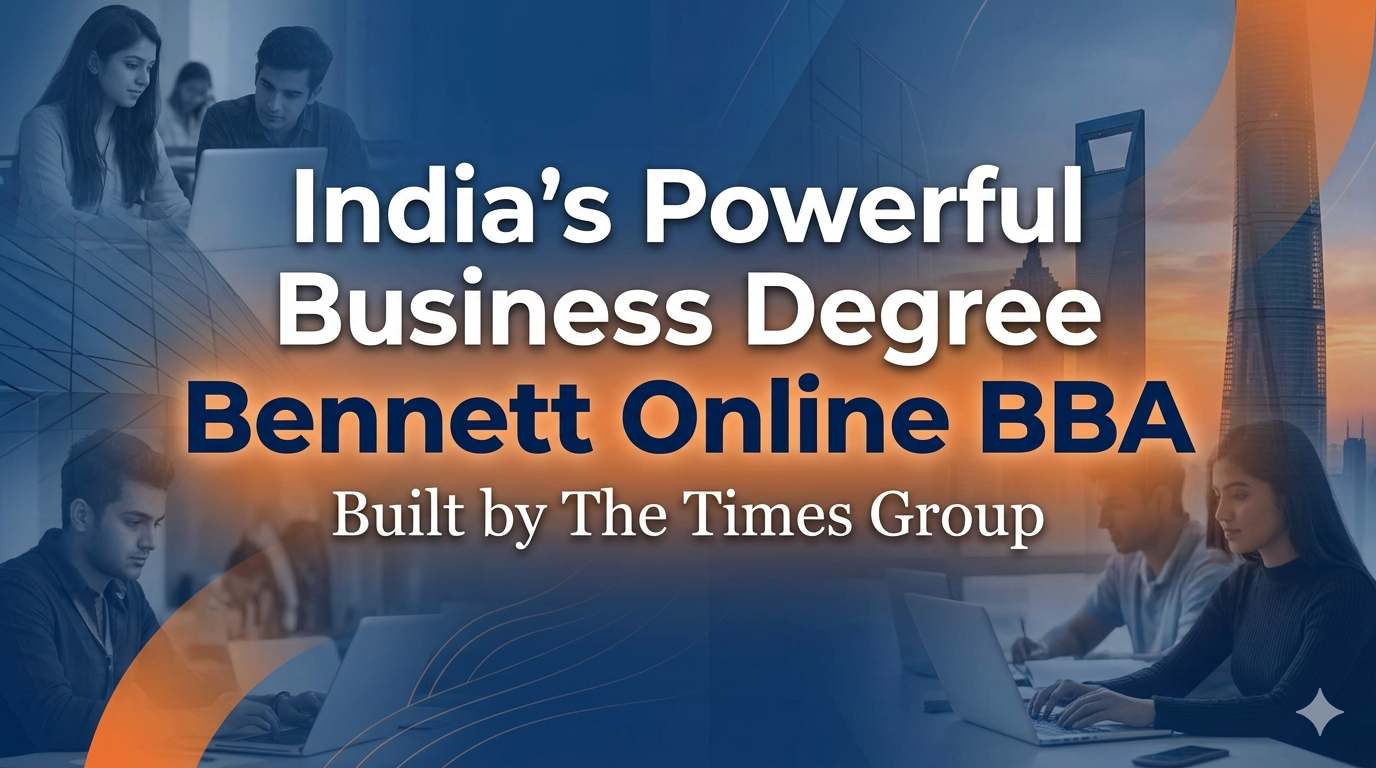
India’s Powerful Business Degree — Bennett Online BBA Built by The Times Group

sachin |

Most online BBA degrees give you a certificate. Bennett Online BBA gives you a corporate ecosystem. There is a reason thousands of ambitious students are choosing Bennett University Online over dozens of other options in 2026. It is not just the UGC-approved degree. It is not just the flexible learning model. It is something far more fundamental the institution behind the degree.

Bennett University was established by Bennett, Coleman & Co. Ltd. , the parent company of The Times Group, one of India’s most powerful and influential corporate empires for over 180 years. When you enroll in Bennett Online BBA, you are not just joining a university. You are stepping into an ecosystem shaped by decades of real business experience.

That difference is not just impressive on paper. It changes everything about how you learn.

The Numbers That Matter

WhatHow Much
Years of Times Group Legacy180+
NAAC AccreditationA+
Program Duration3 Years
Mode100% Online
UGC-DEB ApprovedYes
EMI AvailableYes
SpecialisationsMultiple

The Problem With Most Online BBA Programs

Walk into any online education portal today. You will find dozens of BBA programs, all promising flexibility, industry exposure, placement support, and career readiness. But here is the honest truth most institutions will not tell you: A degree alone does not get you hired.

Companies across India from startups to Fortune 500s, consistently report the same frustration. Graduates arrive with marksheets but lack the one thing employers actually need: professional readiness. They want candidates who can communicate clearly, think strategically, understand business environments, and contribute from Day 1. That gap between academics and industry expectation is real. And it costs students years of career growth.

Why Online BBA from Bennett Is Fundamentally Different

Most universities spend years trying to build corporate connections. They invite guest speakers. They sign MoUs. They announce industry partnerships. Bennett University started with something no other institution can replicate its DNA is corporate.

The Times Group has spent over a century working at the centre of Indian business. Brands like The Times of India, Economic Times, Zoom, Radio Mirchi, MagicBricks, and Times Internet are not just media properties they are business machines that have navigated markets, managed talent, built consumer brands, and driven growth at national scale.

That real-world business intelligence is baked into how Bennett University approaches education. Not as a marketing claim. As a founding principle.

What Makes Bennett Online BBA Stand Out in 2026

Here is what you get when you choose Bennett Online BBA:

UGC-DEB Approved Degree — 100% valid for government jobs, higher education, and professional applications across India

NAAC A+ Accredited University — among India’s top-rated private universities for academic quality

Times Group Legacy — the only online BBA backed by India’s most recognised corporate media conglomerate

NEP-Aligned Curriculum — multidisciplinary, skill-first, built for careers that are evolving in real time

100% Online, 0% Relocation — study from anywhere in India, without quitting your job or leaving home

EMI Available — flexible payment options so financial pressure never interrupts your education

Business-First Learning — exposure to media, digital, marketing, and corporate ecosystems that most BBA programs never touch

Who Is This For?

Bennett Online BBA is built for the student who refuses to settle. You are working, and you want a degree that does not put your career on pause. You are a fresher from a Tier 2 or Tier 3 city, and you want quality education without relocating to a metro. You are ambitious, and you want a degree name that stands out in a job interview not just a valid certificate.

If your goal is to understand how businesses actually work not just read about them in textbooks this program was designed for you.

Start Early. Win Big.

Here is something most students realise too late:

The students who get promoted faster, negotiate better salaries, and move into leadership roles are not the ones with the most degrees. They are the ones who started thinking like business professionals earlier.

Bennett Online BBA builds that mindset from Year 1. By the time your peers are starting their MBAs just to gain business exposure, you will already have three years of corporate-aligned business education behind you.

That head start is not a small advantage. It compounds.

Bennett Online BBA — where business education meets business reality.

Your Next Step

Seats for the current intake are open. Admission counselling is free, and our team will walk you through the entire process from eligibility to enrollment.

📞 Call or WhatsApp: 6394258442

Talk to a counsellor today. Not tomorrow. Because every batch fills up, and the students who act first are always the ones who get ahead.

From Campus to Byline: Politiks Unfiltered Launches ‘Unfiltered Field’ — India’s Most Open Newsroom for Aspiring Journalists

Staff |

With real pay, a Digital Press Card, and zero gatekeeping, the Savin Communication platform is inviting students and ground reporters from every corner of India — in every Indian language — to tell the stories that primetime ignores.

In a media landscape dominated by prime-time studios, panel debates, and familiar faces, the stories that matter most are often the ones no camera reaches. Villages, tier-3 towns, college campuses, local governance failures, ground-level protests — they exist, they matter, and they go unreported.

Politiks Unfiltered, one of India’s most boldly independent political media platforms and a product of Savin Communication, is changing that with a first-of-its-kind initiative called Unfiltered Field — an open platform for students and aspiring journalists to report for a real audience, earn real money, and build a real career.

“There’s no journalist in your area? You are the journalist.”

What Is Unfiltered Field?

Unfiltered Field is not an internship programme with a certificate at the end. It is not a content competition with a cash prize. It is a live, ongoing initiative that invites aspiring reporters to submit video reports from their areas — in any Indian language, in any style — and get published on a platform with an established, politically engaged audience.

The premise is straightforward: if you have a story, a smartphone, and the honesty to tell it straight, Politiks Unfiltered has a place for you.

There is no formal anchor voice required. No dress code. No broadcast-school polish needed. In fact, the platform explicitly states that a “desi tone is absolutely preferred.” Authenticity is the only editorial standard that counts.

What Reporters Get

Unlike most platforms that offer student contributors “exposure” and bylines with no financial recognition, Politiks Unfiltered has structured a tangible package of benefits for every accepted report.

BenefitDetails
₹300Paid per selected video. Real earnings from your very first report.
Revenue ShareA share of the revenue generated from views your video earns on the platform.
Real BylineYour name, credited on a platform with a genuine political audience.
Career PortfolioPublished clips — not mock assignments — that you can use to build your journalism career.
Digital Press CardIssued to every accepted reporter. Valid for your CV, LinkedIn, and professional identity.

The Press Card That Opens Doors

Perhaps the most significant offering in the Unfiltered Field initiative is the Digital Press Card — issued to every reporter whose content is accepted by the platform.

🪪 Digital Press Card — Issued to Every Accepted Reporter

Politiks Unfiltered · Savin Communication

UNFILTERED REPORTER — GROUND UP

Your Name Here

Ground Up Reporter · Politiks Unfiltered · 2026

Real credentials. Not honorary — earned. Put it on your CV and LinkedIn the day your first report goes live.

For journalism students and young reporters who lack the institutional backing of a large media house, a verifiable press credential from an established political platform is a genuine career asset — not a participation trophy.

Every Indian Language. Every Voice.

One of the most distinctive aspects of Unfiltered Field is its explicit commitment to linguistic diversity. Reports are accepted in all major Indian languages — not just Hindi and English. The editorial philosophy here is deliberate: the platform believes that stories do not lose power when told in a regional language. Often, they gain it.

हिंदीதமிழ்मराठीবাংলাਪੰਜਾਬੀతెలుగుಕನ್ನಡ+ More

This positions Politiks Unfiltered as something rare in Indian digital media: a platform that does not treat regional-language content as a secondary tier, but as the core of its ground-reporting model.

Why This Initiative Is Different

What Sets Unfiltered Field Apart

No gatekeeping. Your report is evaluated on honesty and newsworthiness — not on how polished your presentation is.

No dress code. Authenticity is the only requirement. Report in the clothes you wear, speak in the accent you have.

No judgment. Whether you are in your first year of college or a self-taught reporter from a small town, the platform evaluates your work — not your credentials.

Pay from day one. ₹300 per selected report plus revenue sharing — starting with your very first submission.

Real audience, real impact. Politiks Unfiltered has an established viewership of politically engaged Indians. Your report reaches people who are actively following the news — not just a practice channel.

Who Should Apply?

The initiative is open to students studying journalism, mass communication, political science, and related disciplines. But it is equally open to anyone with a story to tell and the commitment to tell it honestly — including self-taught reporters, local activists with cameras, and young people who have watched their areas go uncovered by mainstream media for years.

If you have ever witnessed something newsworthy in your town or village and asked yourself, “Why is nobody reporting this?” — the answer, according to Politiks Unfiltered, is that nobody is waiting for permission. You can report it yourself.

The biggest stories in India right now are not in Delhi. They are in the places where no camera has gone yet.

About Politiks Unfiltered & Savin Communication

Politiks Unfiltered is a digital political media platform known for bold, unfiltered coverage of Indian politics. As a product of Savin Communication, it has built a loyal audience by covering the stories and angles that more cautious, corporate newsrooms tend to avoid.

With the launch of Unfiltered Field, Savin Communication is making a deliberate editorial and institutional bet: that India’s most important political journalism in the coming years will not come from air-conditioned studios — it will come from the ground, reported by the people closest to the story.

Best Online MBA Programs Under ₹2 Lakh in India 2026

sachin |

Best Online MBA Programs Under ₹2 Lakh in India (2026 Guide)

If you want to grow your career but you’re struggling with high MBA fees, this guide walks you through the best online MBA programs under ₹2 lakh that actually deliver value.

The reality? An MBA today is less about the degree and more about ROI, flexibility, and career outcomes. Especially for working professionals, choosing the right online MBA college in India can define your next 5–10 years. This is not just a list. This is a decision framework.

Why Choose an Online MBA Under ₹2 Lakh

Choosing an online MBA under ₹2 Lakh is a strategic career move rather than just a backup plan. It allows professionals to pursue flexible learning and real-world application without leaving their current jobs, significantly minimizing financial risk.

These programs offer a faster return on investment through lower tuition fees, while providing industry-relevant curricula and global case studies. With the added benefit of placement assistance, students can effectively learn while they earn, gaining a competitive edge in the workforce without the burden of heavy debt.

Top Online MBA Programs Under ₹2 Lakh (India)

For professionals seeking an MBA under ₹2 Lakh, several reputable Indian universities offer flexible and cost-effective options. These programs, ranging from the highly affordable IGNOU to brand-conscious choices like Amity and Manipal, provide a mix of industry-relevant curriculum, specialized tracks, and varied levels of placement support.

By choosing one of these paths, students can balance their current jobs with academic growth, ensuring a strong return on investment through lower tuition fees and practical skill development.

IGNOU Online MBA

  • Fees: ₹62,000 approx
  • Duration: 2–4 years
  • Eligibility: Graduation + entrance (OPENMAT/CAT/CMAT)
  • Best For: Budget-focused learners

Amity University Online MBA

  • Fees: ~₹1.79 lakh.
  • Specialisations: Marketing, Finance, HR, Analytics.
  • Best For: Those seeking a strong brand name and structured learning.
  • Salary Outcome: ₹5–8 LPA on average (varies by experience).

Manipal University Jaipur Online MBA

  • Fees: ~₹1.75 lakh.
  • Learning Mode: Mix of live and recorded sessions.
  • Best For: Working professionals needing a strong LMS and industry exposure.

Chandigarh University Online MBA

  • Fees: ~₹1.6–1.8 lakh.
  • Specialisations: Over 20 options available.
  • Best For: Career-focused learners seeking active placement support.

Jain University Online MBA

  • Fees: ~₹1.6 lakh.
  • USP: Industry-oriented curriculum.
  • Best For: Learners focusing on practical, skill-based education

Fees Breakdown Comparison

UniversityTotal FeesEMI OptionHidden Costs
IGNOU₹62KNoMinimal
Amity Online₹1.79LYesNone
Manipal Jaipur₹1.75LYesMinimal
Chandigarh Univ₹1.6–1.8LYesNone
Jain University₹1.6LYesMinimal

Salary Outcomes After Online MBA

Your salary does not depend on fees. It depends on:

  • Specialisation
  • Work experience
  • Skill application

Typical Salary Range

  • Freshers: ₹3–5 LPA
  • 2–5 years exp: ₹5–10 LPA
  • Senior roles: ₹10–18 LPA

High-Growth Roles

  • Business Analyst
  • Marketing Manager
  • Product Executive
  • Operations Manager
  • Digital Strategy Consultant

Online MBA vs Distance MBA

FactorOnline MBADistance MBA
InteractionLive + recordedMostly self-study
FlexibilityHighVery high
Placement SupportAvailableLimited
Learning ExperienceStructuredDIY

If you want career growth → Online MBA wins

Eligibility Criteria

Most online MBA programs require:

  • Bachelor’s degree (45–50%)
  • No age limit
  • Work experience (optional)
  • Entrance exams (rare in online mode)

What Does the Fee Actually Cover?

When you pay ₹1–2 lakh, you are not just paying for classes.

You get:

  • Live lectures + recorded sessions
  • LMS access
  • Assignments + evaluations
  • Industry case studies
  • Academic + admin support

How to Choose the Best Online MBA Programs Under ₹2 Lakh

This is where most students go wrong.

Step 1: Define Your Goal

  • Promotion
  • Career switch
  • Salary growth

Step 2: Check Accreditation

  • UGC-DEB approval
  • NAAC rating

Step 3: Evaluate ROI

  • Fees vs salary outcome
  • Placement support

Step 4: Check Flexibility

  • Weekend classes
  • Self-paced modules

Real Insight

From what we see across students:

  • Many choose the cheapest option → regret later
  • Many choose expensive MBAs → struggle with ROI
  • The sweet spot? ₹1–2 lakh programs with placement + flexibility

If you’re confused between multiple MBA programs, you’re not alone.

At Educollege, students typically:

  • Compare 3–5 universities
  • Evaluate ROI before applying
  • Get clarity on specialisation vs career path

A quick consultation often saves months of confusion.

Common Mistakes to Avoid

  • Choosing based only on fees
  • Ignoring accreditation
  • Not checking placement support
  • Following “brand hype” blindly

Conclusion

The best online MBA programs under ₹2 lakh are not just affordable—they are strategic.

If chosen correctly, they can:

  • Accelerate your career
  • Improve salary
  • Help you transition roles

But only if you align it with your career goals.


1. Which is the best online MBA under ₹2 lakh?

IGNOU, Amity Online, and Manipal Jaipur are among the best options depending on your goals.

2. Is an online MBA under ₹2 lakh worth it?

Yes, if it is UGC-approved and aligned with your career goals, it offers strong ROI.

3. Can I get a job after an online MBA?

Yes. Many programs offer placement assistance, but outcomes depend on skills and experience.

4. What is the average salary after an online MBA?

Between ₹5–10 LPA for professionals with experience.

5. Do online MBA programs offer flexibility?

Yes, they are designed for working professionals with live and recorded classes. Fees: ₹62,000 approx. Duration: 2–4 years Eligibility: Graduation + entrance (OPENMAT/CAT/CMAT) Best For: Budget-focused learners

CBSE Class 10th Result 2026: Comprehensive Guide on How to Check Your Scores

Staff |

The Central Board of Secondary Education (CBSE) has officially announced the results for the Class 10 Board Examinations (Phase 1) on April 15, 2026 . This year marks a significant shift in the Indian education landscape with the implementation of the new two-exam system, where students have the opportunity to improve their performance in a subsequent optional phase .

As millions of students and parents eagerly await the outcome, this guide provides a step-by-step breakdown of how to check the results, key statistics from this year’s performance, and the next steps for students.

Key Highlights of CBSE 10th Result 2026

The 2026 results reflect a robust performance by students across the country and international centers. Here is a quick overview of the key statistics:

ParameterDetails
Result Declaration DateApril 15, 2026
Total Students AppearedApproximately 24.12 Lakh
Overall Pass Percentage93.66%
Girls’ Pass Percentage95.00%
Boys’ Pass Percentage92.63%
Exam SystemTwo-Phase (Phase 1 Mandatory, Phase 2 Optional)

“The introduction of the two-exam system has significantly reduced the pressure on students, allowing them to focus on learning rather than just the final score.” — CBSE Official Statement

Official Websites to Check Results

Due to high traffic, the CBSE results are hosted on multiple official portals to ensure a smooth experience for students. You can access your scores on any of the following websites:

1.results.cbse.nic.in

2.cbseresults.nic.in

3.cbse.gov.in

4.results.gov.in

Step-by-Step Process to Check CBSE 10th Result Online

To check your results on the official portal, follow these simple steps:

1.Visit the Website: Go to results.cbse.nic.in .

2.Select the Link: Click on the link titled “Secondary School Examination (Class X) 2026” .

3.Enter Credentials: You will be prompted to enter the following details from your admit card :

•Roll Number

•School Number

•Admit Card ID

•Date of Birth

4.Submit: Verify the details and click on the ‘Submit’ button.

5.View & Download: Your marksheet will appear on the screen. Download and take a printout for future reference.

Alternative Methods to Access Results

In case of internet connectivity issues or website downtime, students can use these alternative methods:

1. DigiLocker

CBSE provides digital marksheets and certificates through DigiLocker, which are legally valid under the IT Act .

•Log in to the DigiLocker website or app .

•Go to the ‘Education’ section and select ‘CBSE’ .

•Select ‘Class X Marksheet’ and enter your registered mobile number/Aadhaar details .

2. UMANG App

The Unified Mobile Application for New-age Governance (UMANG) app also hosts CBSE results .

•Download the UMANG app from the Play Store or App Store .

•Search for ‘CBSE’ and click on the ‘Result’ tab .

•Enter your credentials to view the scorecard .

3. SMS and IVRS

Students can also receive their results via SMS or the Interactive Voice Response System (IVRS) .

•SMS: Send a message in the format cbse10 <rollno> <sch_no> <admit_card_id> to 7738299899 .

•IVRS: Call the official CBSE result helpline numbers (to be provided on the result day) to hear your marks .

Understanding the Two-Exam System (2026)

For the academic year 2025-26, CBSE has introduced a major reform :

•Phase 1 (Mandatory): Conducted in February-March 2026. These results are what have been released on April 15 .

•Phase 2 (Optional): Scheduled for May 2026. Students who are unsatisfied with their Phase 1 marks or wish to improve their score in specific subjects can appear for this exam .

•Final Score: The board will consider the best of the two scores for the final marksheet .

What to Do After the Results?

•Collect Original Marksheets: The online result is provisional. Students must collect their original marksheets and passing certificates from their respective schools.

•Verification and Re-evaluation: If you believe there is an error in your marking, CBSE will open a window for marks verification and re-evaluation shortly after the result declaration.

•Phase 2 Registration: Students intending to appear for the Phase 2 improvement exam should stay updated with their school’s notification regarding registration deadlines.

Congratulations to all the students who have cleared their exams! For those who didn’t get the desired results, the Phase 2 exams offer a valuable second chance to excel.

Top 10 Indian Stocks to Watch for the Future (2026 and Beyond)

sachin |

India’s economy is poised for significant growth in the coming years, driven by technological advancements, government initiatives, and a burgeoning domestic market. For investors seeking long-term wealth creation, identifying companies aligned with these macro trends is crucial. This article curates a list of 10 Indian stocks that demonstrate strong fundamentals, innovative business models, and significant growth potential across key sectors like renewable energy, digital services, manufacturing, and finance.

Key Growth Sectors in India

Several sectors are expected to be at the forefront of India’s economic expansion, attracting substantial investment and fostering innovation :

•Artificial Intelligence (AI) and Automation: Projected to reach $130 billion by 2032, with AI contributing significantly to India’s GDP by 2035 .

•Pharmaceutical Sector: Expected to grow to $120-130 billion by 2030, driven by generic drug manufacturing and biotech expansion .

•Renewable and Clean Energy: India aims for 500 GW renewable capacity by 2030, with massive investments in solar, wind, and green hydrogen .

•Electric Vehicles (EV): Rapid adoption is expected, with 30% EV penetration targeted by 2030, supported by growing charging infrastructure and manufacturing .

•Fintech Sector: A market size of over $140 billion, with UPI transactions driving digital payments and a thriving startup ecosystem .

•Banking and Financial Services: A foundational sector with consistent growth, robust fundamentals, and increasing digital adoption .

•Infrastructure and Manufacturing: Government focus on infrastructure development and production-linked incentive (PLI) schemes are boosting domestic manufacturing .

Top 10 Indian Stocks for Long-Term Growth

Here are 10 stocks that are well-positioned to capitalize on these growth drivers:

1. Reliance Industries Ltd. (RIL)

Sector: Diversified (Energy, Retail, Digital, New Energy)

Reliance Industries is a conglomerate with diversified interests, making it a robust long-term play. Its new energy vertical, with ambitious plans for gigafactories in solar and green hydrogen, is a significant growth driver, aiming for net-zero carbon status by 2035 . The company’s strong cash flows and sector dominance in O2C, Jio, and Retail further solidify its position .

2. HDFC Bank

Sector: Banking and Financial Services

HDFC Bank is a leader in the Indian banking sector, known for its consistent growth, robust fundamentals, and low non-performing assets (NPAs). The recent merger with HDFC Ltd. is expected to unlock significant cross-selling synergies, particularly in expanding its customer base in rural areas . The bank’s focus on technological innovation and disciplined credit management will sustain its growth trajectory.

3. Tata Power

Sector: Renewable and Clean Energy

Tata Power is at the forefront of India’s renewable energy transition. The company has ambitious targets to increase its green energy capacity, aiming for 70% of its total capacity from renewable sources by 2030 . Its strong focus on solar, wind, and hydro projects, along with significant achievements in rooftop solar installations, positions it as a key player in the clean energy revolution .

4. Dixon Technologies (India) Ltd.

Sector: Electronics Manufacturing Services (EMS)

Dixon Technologies is a beneficiary of the government’s Production-Linked Incentive (PLI) scheme, which aims to boost domestic electronics manufacturing. The company has shown significant revenue growth, particularly in mobile phone manufacturing, and is expected to benefit from further localization of components and increasing electronics demand .

5. Zomato Ltd.

Sector: Food Delivery, Quick Commerce (Fintech)

Zomato, a prominent player in India’s food delivery and quick commerce segments, is demonstrating strong growth. Its quick commerce arm, Blinkit, has achieved profitability and holds a significant market share, surpassing competitors . The expanding user base and operational efficiency improvements are key drivers for its future growth in the burgeoning fintech and digital services space .

6. Larsen & Toubro (L&T)

Sector: Infrastructure and Engineering

L&T is a bellwether for India’s infrastructure development. The company boasts a massive order book, reflecting the government’s sustained focus on infrastructure and manufacturing-led growth . Its diversified execution capabilities across various projects position it to capitalize on the ongoing capital expenditure cycle in the country.

7. Bharti Airtel

Sector: Telecommunications

Bharti Airtel is a leading telecom operator in India, experiencing double-digit profit and revenue growth. The company is strategically focused on expanding its 5G network and monetizing its digital services, which are expected to drive significant growth in Average Revenue Per User (ARPU) . Its strong market share and digital push make it a compelling long-term investment.

8. Mahindra & Mahindra (M&M)

Sector: Automotive, Farm Equipment, Electric Vehicles

M&M is a diversified conglomerate with strong positions in the automotive and farm equipment sectors. The company is making significant strides in the Electric Vehicle (EV) segment, with a clear roadmap for new EV launches and a focus on maintaining its market leadership in SUVs . This dual focus on traditional strengths and future-oriented segments provides a balanced growth outlook.

9. Godrej Consumer Products Ltd.

Sector: Fast-Moving Consumer Goods (FMCG)

Godrej Consumer Products is a well-established FMCG company with a strong brand portfolio and a focus on emerging markets. The company’s consistent performance, driven by innovation and market penetration in both domestic and international markets, makes it a resilient long-term investment in the consumer staples sector .

10. Pidilite Industries Ltd.

Sector: Specialty Chemicals

Pidilite Industries is a market leader in adhesives, sealants, and construction chemicals in India. Its strong brand recognition (e.g., Fevicol) and continuous product innovation provide a durable competitive advantage. The company is expected to benefit from the growth in the construction, real estate, and industrial sectors, making it a solid long-term bet in the specialty chemicals space .

Conclusion

Investing in the Indian stock market for the long term requires a keen eye on sectors and companies that are aligned with the nation’s growth story. The stocks highlighted above represent a mix of established leaders and emerging innovators across critical sectors. While past performance is not indicative of future results, these companies possess the fundamental strengths and growth drivers to potentially deliver significant returns in the years to come. Investors are advised to conduct their own due diligence and consult with financial advisors before making any investment decisions.

Top Places to Visit in April and May: Your Ultimate Spring Travel Guide

Staff |

Introduction

April and May offer a unique window for travelers seeking the perfect blend of pleasant weather, fewer crowds, and vibrant cultural experiences. As winter fades and the summer rush has yet to begin, these months present an ideal opportunity to explore some of the world’s most captivating destinations. From blooming landscapes to ancient wonders, this guide will unveil the top places to visit in April and May, complete with carefully selected hotel recommendations based on authentic guest reviews, ensuring a memorable and comfortable stay.

Top Destinations for April

Kyoto, Japan: Cherry Blossom Magic

April in Kyoto is synonymous with the breathtaking Sakura (cherry blossom) season. The city transforms into a picturesque wonderland, offering a profound sense of renewal and beauty. Visitors can immerse themselves in traditional Japanese culture, explore ancient temples, and witness the fleeting spectacle of cherry blossoms along the Philosopher’s Path or in Ueno Park. The mild temperatures (10°C – 18°C) make it perfect for leisurely strolls and enjoying outdoor festivities like Hanami (flower-viewing parties) .

Recommended Hotel: Hotel Tou Nishinotoin Kyoto

•Why it’s recommended: This hotel boasts a high rating of 4.7 out of 5 on Tripadvisor, indicating excellent guest satisfaction. While specific review details on service and atmosphere were not explicitly extracted, its consistent high scores suggest a positive overall experience, making it a reliable choice for travelers seeking comfort and quality during their Kyoto visit .

Costa Rica: Wildlife and Adventure

April marks a

crucial ‘bridge month’ in Costa Rica, offering a delightful balance between the dry season and the onset of spring showers. This period revitalizes the jungles, making it an ideal time for wildlife enthusiasts. Temperatures range from 27°C to 32°C, perfect for exploring lush landscapes and engaging in activities like wildlife trekking and surfing. A unique highlight is the beginning of the Leatherback sea turtle nesting cycle on the Caribbean coast, particularly in Tortuguero .

Recommended Hotel: Arenal Oasis Eco Lodge & Wildlife Refuge

•Why it’s recommended: With a 4.6 rating on Tripadvisor, this eco-lodge is highly praised for its immersive wildlife experiences and knowledgeable guides. Reviews frequently highlight the excellent opportunities for spotting diverse animals, including numerous frog and snake species during night walks. Guests appreciate the patient and insightful guides who enhance the educational aspect of the stay, making it a top choice for nature lovers .

Top Destinations for May

Lisbon, Portugal: Sun-Kissed Charm

May transforms Lisbon into a sun-seeker’s paradise, with pleasant breezes and clear skies. The city’s iconic hills are comfortable to explore in temperatures around 22°C. This month is vibrant with festivals, and the parks are at their greenest, offering a perfect setting for cultural immersion and leisurely exploration. Events like the Queima das Fitas in Coimbra (a short trip away) and the beginning of Sea and Sardine festivals in the Algarve add to the regional charm .

Recommended Hotel: Hotel Da Baixa

•Why it’s recommended: Hotel Da Baixa consistently receives high praise for its exceptional central location, elegant design, and immaculately clean facilities. Guest reviews frequently commend the truly outstanding staff for their helpfulness and welcoming demeanor. The hotel’s excellent location and comfortable rooms contribute to a wonderful overall experience, making it a highly recommended choice for visitors to Lisbon .

Amalfi Coast, Italy: Coastal Beauty

May is an enchanting time to visit Italy’s Amalfi Coast. The rugged cliffs, vibrant towns, and fragrant orange blossoms create a picturesque setting. The weather is ideal for exploring, with comfortable temperatures before the intense summer heat. The Giro d’Italia cycling race often passes through the region, adding a festive atmosphere, and local traditions like Florence’s Fiorita offer unique cultural insights .

Recommended Hotel: Hotel Eden Roc, Positano

•Why it’s recommended: While specific review details were not extracted in the previous search, Hotel Eden Roc in Positano is consistently listed among the top hotels on the Amalfi Coast by reputable travel publications . Its prime location, stunning views, and reputation for luxury and excellent service make it a highly sought-after option for travelers seeking a premium experience in the region.

Cappadocia, Turkey: Fairy Chimneys and Hot Air Balloons

Cappadocia in May offers a magical experience, with mild and clear weather (13°C – 23°C) perfect for exploring its unique lunar landscapes and ancient cave dwellings. This is an ideal time for hot air balloon rides, offering unparalleled panoramic views of the

fairy chimneys and rock formations. The absence of harsh winter winds or stifling summer humidity makes it an optimal time for outdoor activities and sightseeing .

Recommended Hotel: Aren Cave Hotel and Art Gallery

•Why it’s recommended: Aren Cave Hotel and Art Gallery in Goreme is well-regarded for its authentic cave experience and artistic ambiance. While specific detailed reviews were not available in the initial search, its consistent appearance in top hotel lists for Cappadocia and positive mentions on platforms like Tripadvisor suggest a high level of guest satisfaction and a unique, memorable stay for those looking to experience the region’s distinctive accommodation.

Conclusion

April and May present an exceptional opportunity for travelers to discover diverse and captivating destinations around the globe. Whether you seek the serene beauty of cherry blossoms in Japan, the adventurous wildlife of Costa Rica, the historic charm of Lisbon, the breathtaking coastal vistas of the Amalfi Coast, or the unique landscapes of Cappadocia, these months offer ideal conditions for an unforgettable journey. By choosing accommodations with strong reputations and positive guest feedback, travelers can ensure a comfortable and enriching experience, making the most of their spring adventures.

The Refund Paradox: Why Millions of Taxpayers are Still Waiting for Their Own Money

Staff |

In the digital age of “instant” everything, from groceries to global bank transfers, one significant financial transaction remains stubbornly sluggish: the Income Tax Refund. For millions of taxpayers who diligently filed their returns for the Financial Year 2024-25 (Assessment Year 2025-26), the wait for their refund has turned into a test of patience. While the Income Tax Department touts its technological advancements and faster processing times, a growing number of citizens find their legitimate claims stuck in a bureaucratic “black hole.”

This article explores the data behind these delays, the systemic hurdles that trap taxpayer funds, and the fundamental questions we must ask about a system that seems to prioritize collection over reimbursement.

The Data: A Growing Gap in Processing

Recent data from the Central Board of Direct Taxes (CBDT) reveals a concerning trend. As of late 2025, the volume of processed refunds showed a significant dip compared to previous years. While the department aims for a standard 4-5 week processing window, many taxpayers report delays extending into several months.

MetricFY 2024-25 (as of Jan 2025)FY 2025-26 (as of Jan 2026)Change (%)
Total Refund Amount₹3.75 Lakh Crore₹3.12 Lakh Crore-16.8%
Processing Rate (Nov)Baseline-17.72% (YoY)Significant Drop

The decrease in total refund amounts disbursed, despite a steady or increasing number of filers, suggests that more returns are being flagged, scrutinized, or simply held back. This “bottleneck” effect is particularly pronounced for high-value claims exceeding ₹50,000, which are often subjected to manual intervention or enhanced automated checks.

The “Nudge” and the “Trap”: Systemic Hurdles

The primary culprit behind recent delays is the CBDT’s ‘Nudge’ Campaign, launched in December 2025. While framed as a proactive measure to help taxpayers correct discrepancies, it has effectively become a massive speed bump. Under this initiative, any variation between the income reported in the Income Tax Return (ITR) and the data in the Annual Information Statement (AIS) or Taxpayer Information Summary (TIS) triggers an automated alert.

“The ‘Nudge’ campaign is a double-edged sword. It reduces future litigation by catching errors early, but it also holds legitimate refunds hostage until the taxpayer navigates a complex response system.” — Tax Policy Analyst

Furthermore, Section 245(2) of the Income Tax Act allows the department to adjust current refunds against pending past tax demands. While legally sound, the lack of transparency in how these “demands” are communicated often leaves taxpayers confused when their expected refund arrives significantly reduced or not at all.

Questioning the Asymmetry: A System of Unequal Stakes

The most pressing question for the modern taxpayer is the inherent unfairness in the interest regime. When a citizen is late in paying their taxes, the government charges a steep 1% interest per month (under Sections 234A, B, and C). However, when the government is late in returning the taxpayer’s own money, it pays a mere 0.5% interest per month (under Section 244A), and even that only kicks in after a specific period.

This asymmetry creates a “moral hazard” for the tax authorities. There is a strong financial incentive to collect quickly but a much weaker one to refund promptly. Why should the state benefit from an interest-free loan at the expense of its citizens?

Why Your Refund Might Be Stuck: A Checklist

Beyond systemic issues, several common “traps” can stall a refund. Taxpayers should ensure they have addressed the following:

1.Bank Account Pre-Validation: Even a processed refund cannot be credited if the bank account is not pre-validated on the e-filing portal. Mismatched names or incorrect IFSC codes are frequent causes of failure.

2.The ₹50,000 Threshold: Refunds above this amount often trigger additional scrutiny to prevent fraudulent claims, leading to longer wait times.

3.New Reporting Requirements: Recent changes in ITR forms—such as mandatory landlord PAN for HRA claims and detailed bank info for home loan interest—have increased the complexity of processing.

4.Data Mismatches: Discrepancies between the ITR and Form 26AS/AIS remain the leading cause of “Defective Return” notices.

Conclusion: The Need for a Taxpayer Charter with Teeth

The delay in income tax refunds is not just a technical glitch; it is a symptom of a system that still views the taxpayer with suspicion rather than as a partner in nation-building. While automation has brought speed to some, it has brought “automated scrutiny” to many others, creating new forms of delay.

For a truly “reader-friendly” and “taxpayer-centric” system, we need more than just faster servers. We need a Taxpayer Charter that mandates strict timelines for refunds, equalizes interest rates for both parties, and provides a transparent, real-time tracking system that explains why a refund is delayed, not just that it is “under process.” Until then, the refund remains a paradox: your money, in their hands, on their time.

Revolutionizing Brand Visibility: Savin Communication Unveils Strategic ‘PR Roadmap 2026’ for Indian Startups and SMEs

Staff |

Noida, India — In an era where digital presence is no longer a luxury but a prerequisite for survival, Savin Communication, India’s leading integrated PR and creative agency, has officially unveiled its ambitious “PR Roadmap 2026.” This strategic growth program is specifically engineered to bridge the massive visibility gap faced by Indian startups and Small to Medium Enterprises (SMEs) in an increasingly crowded digital marketplace.

Breaking the “Visibility Barrier” for Growing Brands

The core challenge for most emerging Indian brands isn’t a lack of quality products, but a lack of authoritative voice. While established conglomerates dominate national headlines, smaller players often find themselves sidelined by the high costs of traditional media. Savin Communication’s Roadmap 2026 aims to dismantle this barrier.

“Your competitors are already on 20+ platforms. The question is, are you?” says the team at Savin Communication. The agency’s new program is designed to provide premium reach at a fraction of the cost of traditional advertising. For the price of a single newspaper ad, the agency is now offering coordinated campaigns that place brands across over 20 premium digital platforms, reaching a cumulative monthly audience of over 100 million readers.

The Omnichannel Advantage: Beyond Simple Press Releases

The Roadmap 2026 isn’t just about volume; it’s about strategic ecosystem building. The program leverages an “Omnichannel PR Ecosystem” that integrates TV broadcast, print, and digital web presence. This holistic approach ensures that a brand’s narrative is consistent, credible, and commanding across multiple touchpoints.

Key highlights of the 2026 Growth Programme include:

•Massive Reach: Access to 100M+ monthly readers and 2B+ cumulative content impressions.

•Diverse Portfolio: Placements across national news, finance, technology, automotive, entertainment, and lifestyle platforms.

•Bilingual Impact: Simultaneous reach across both Hindi and English-speaking audiences, a critical factor for brands targeting India’s diverse demographic.

•Affordability for Growth: With entry points starting as low as ₹7,500 per article, the program democratizes high-tier PR for bootstrapped startups and scaling SMEs.

A Legacy of Performance and Trust

Savin Communication isn’t a new player in the field. With over seven years of excellence and a track record of serving 500+ brands, the agency brings a wealth of data-driven expertise to the table. Their performance benchmarks are a testament to their methodology: a 96% client retention rate and a 92% improvement in media coverage for their partners.

The agency’s “Brief to Breakthrough” process—comprising Discovery, Strategy, Creation, Distribution, and Measurement—ensures that every campaign is not just a one-off placement but a step toward long-term brand authority.

Why This Matters for the Indian Economy

As India continues its journey toward becoming a global startup hub, the role of strategic communication becomes paramount. By providing a scalable and affordable PR roadmap, Savin Communication is effectively providing the “digital fuel” necessary for Indian entrepreneurs to compete on a global stage.

For brands ready to transition from being “hidden gems” to household names, the PR Roadmap 2026 offers a clear, data-backed path to public perception and market leadership.