Logo

Logo

Shibarium Crosses 1 Million Wallets Amid Meteoric Growth

Devendra Khati |

The number of wallets available on Shiba Inu’s new layer 2 blockchain, the Shibarium network, passed 1 million, rapidly increasing since the revamp. The achievement, announced in a Sept. 3 blog post by the Shibarium team’s official Shibarium team, indicates at least the number of wallets that were added since Shibarium’s launch in August. 28. This is just two weeks following it was announced that the Shibarium network went into operation — even with some technical glitches.


According to Shibarium, the Shibarium blockchain Explorer, around 100,000 transactions had occurred at 5:04 am UTC on September. 3. The highest volume of 132,000 transactions was recorded in August. 25.  Although network activity has increased, it is still unclear if the value-locked (TVL) of the Shibarium network is yet to increase in response. As of the time of this publication, the Shibarium’s TVL is only $1.06 million, which suggests that users are deploying tiny amounts of capital to the network.

In their blog article, Shibarium developers noted that they are currently working with various third-party bridges that can assist investors in transitioning other tokens to the blockchain. The team also announced plans to cancel the governance contract governing its token Bone (BONE). It stated that they’re looking to add additional validators to the network over the following months.


As of September. 1st, Shibarium users are in a position to utilize Shiba Inu (SHIB), Bone (BONE), Leash (LEASH), as well as several other tokens through Shibarium. Shibarium network to lend, borrow or stake tokens for reward points. While Many Shiba Inu holders had been hoping for a dramatic increase in the value of the different Shiba Inu ecosystem tokens following the announcement of Shibarium, the general price movement for SHIB, BONE and LEASH tokens hasn’t shown the expected increase.


Although it saw some modest increases in the days leading up to the announcement of Shibarium’s price, SHIB has since sunk just a bit more than 20 per cent since its failed launch on August—16, as per the data provided by CoinGecko. The values for the other Shiba Inu ecosystem tokens have not performed as well. BONE’s price BONE has dropped 15 per cent over the last 14 days, while LEASH has slid 14.2 per cent within the same period of time.


Udhayanidhi Stalin says he is ready to face legal action against his “Santan Dharma” remark

Preyensha Srivastava |

Udhayanidhi Stalin, son of Tamil Nadu CM Mk Stalin said he was ready to face “whatever lawsuits they file” against him on his “eliminate Santan Dharma” comment, which the BJP also criticized. Udhayanidhi, Minister of Youth Welfare and Sports in Tamil Nadu, stated to the media on Sunday and said, “I am repeating that I only criticized Sanatan Dharma and said that Sanatan Dharma should be eradicated and I will hang tough on my statement” 


Udhayanidhi also slammed the BJP for spreading ‘fake news’ after the spokesperson of the BJP called his statement ‘inciting for a riot’. “The BJP is afraid of the INDIA bloc and they are trying to ‘distract’ attention ” he added. On September 2nd, while addressing the Tamil Nadu Progressive Writers and Artists Association in Chennai.

Udhayanidhi Stalin made a statement, “Sanatan Dharma should be ‘eradicated’ asserting that it is against equality and social justice. Some things cannot be fought against, they should be eliminated. Mosquitoes, dengue fever, malaria, and corona cannot be opposed. They should be eliminated. So should Sanatan.” which sparked a political debate. Union Minister, Amit Shah smashed the INDIA bloc for disrespecting the country’s culture, history, heritage, and Sanatan Dharma. 


Union Minister Dharmendra Pradhan also condemned Stalin’s remarks on Sanatana Dharma and said, “We organized Kashi Tamil Sangamam just a few days ago, and Lord Vishwanath is celebrated in every village in Tamil Nadu. ‘Sanatana’ is endless, and it is not affected by these political statements.”


“Few people are acting childish saying I was calling for genocide while others are saying that Dravidam should be voided. Does that mean DMKians should be massacred? When Mr. Modi states the idea of ‘Congress Mukt Bharat’, does that mean Congress politicians should be killed? What is Sanatan? Sanatan means nothing should be modified and all are permanent. However, the Dravida model calls for transformation and all should be equal.” Udhayanidhi said justifying his statement. Supporting Udhayanidhi, the Congress MP Karti Chidambaram on Sunday tweeted,


iPhone 15 release date: Every news we have got so far

Preyensha Srivastava |

Apple is all set to add a new product to its iPhone lineup, the much-awaited iPhone 15 is expected to launch on 12 September 2023. The American tech giant is known for producing premium products that give best-in-class performance, and ultimate camera quality. Apple is preparing to present a total of four new models in identical sizes to the iPhone 14 models, including two 6.1-inch iPhones and two 6.7-inch iPhones. 


What to expect from the new iPhone 15?


One of the 6.1-inch iPhones will be the usual iPhone 15, while one of the 6.7-inch models will be an iPhone 15 ‘Plus’, succeeding the iPhone 14 Plus, which Apple brought back after the iPhone 8 series. The other 6.1 and 6.7-inch iPhones will be higher-end, better performance, and more pricey ‘Pro’ models. As with the iPhone 14/14 Pro range, the best attributes will be saved for the iPhone 15 Pro models to make the extra price worth it. 


Rumors so far indicate that we can hope for a USB-C port instead of a Lightning port on all of the new models as suggested by the EU, and Dynamic Island is going to be available for all of them. IPhone’s notch which has been its design statement since the iPhone X  might now be removed from the new iPhones as they adopt the Dynamic Island.


New colors


Recent rumors indicate the iPhone 15 models will be available for sale in blue, a coral shade that is a cross between pink and orange, white, black, and green/yellow. Blue and coral will be the latest colors for this year, with yellow/green, black, and white returning as basic shades in the lineup. 


Apple’s Launch Event


Talking about the launch event, sources have confirmed the date of launch to 12th September 2023. The launch event would occur at the  Pacific at Steve Jobs Theater, Apple Park at 7:30 pm (IST). The iPhone pretty much always goes on sale on a Friday, in the week following the event. The following iPhones and watches will be open for pre-orders on Friday, September 15, and the products will appear in Apple stores on Friday, September 22. Apple will certainly reveal its products on Friday of the week after the keynote. A piece of probable bad news for Apple fans here is that the iPhone 15 Pro Max could be shelved, because of rumored production issues. However, unless this hold is three weeks or more, Apple will inform its unveiling at the same time, but with a different pre-order and shipping date. 


The Apple fans are surely excited to have a look at the new iPhone and experience the premium quality that the brand offers. The launch of the new flagship from Apple will surely excite the fans, also sparking the old rivalry between Samsung and Apple. The smartphone market will surely see some more flagships and competitors for Apple’s iPhone in the upcoming months ahead of the launch. 

INDIA Alliance is working together to defeat NDA

Preyensha Srivastava |

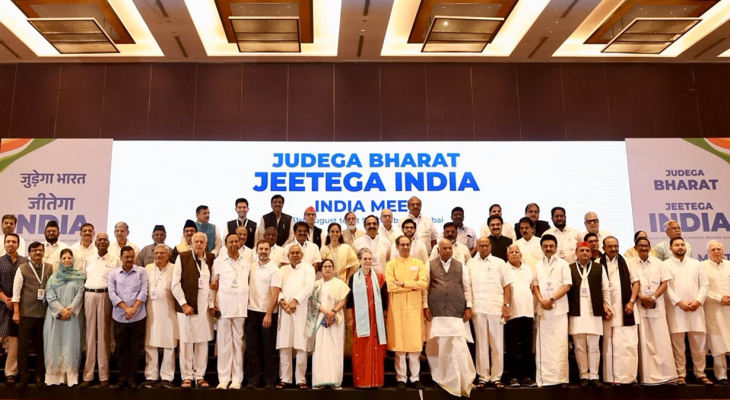
After the success of the first two meetings in Patna and Bengaluru, the opposition parties organised a third meeting in Mumbai ahead of Lok Sabha Elections 2024. In the first meeting, only 15 parties were involved, now their number has increased to 28. On Monday,  September 1 the meeting started with the presence of several prominent parties such as Congress, Trinamool Congress, Janta Dal United, Rashtriya Janata Dal, Aam Aadmi Party, Samajwadi Party, Rashtriya Lok Dal, National Congress Party, Dravida Munnetra Kazhagam, Communist Party of India, and others. The meeting’s mission was to draw a roadmap to the 2024 Union Elections. The alliance came up with a new slogan “Judega BHARAT, Jeetega INDIA!” whereas the motto in the last meeting was “United we Stand.” 


The INDIA bloc announced a central coordination committee consisting of 14 members from its political parties. The alliance also passed a resolution to jointly contest the upcoming Lok Sabha elections and said seat negotiations between member parties would begin immediately. The 14-member coordination panel of the bloc includes Congress general secretary KC Venugopal, NCP leader Sharad Pawar, Shiv Sena (UBT) leader Sanjay Raut, RJD leader and Bihar deputy chief minister Tejashwi Yadav, Trinamool Congress general secretary Abhishek Banerjee, the AAP. MP Raghav Chadha, DMK leader TR Baalu, Samajwadi Party Javed Khan, Janata Dal-United National President Lalan Singh, Jharkhand Chief Minister Hemant Soren, CPI leader D Raja, National Conference leader Omar Abdullah and Peoples Democratic Party senior leader Mehbooba Mufti. A member of the CPI(M) will be announced soon.


Shiv Sena (UBT) leader Aaditya Thackeray announced major decisions in Mumbai. The opposition group contests the 2024 elections with the following decisions: 


  • Contest the upcoming Lok Sabha elections together as much as possible.
  • Arrangements for the distribution of seats in various states will start immediately and will be completed at the earliest. 
  • Organise public events as early as possible in various parts of the country on topics of interest to the general public. 
  • Coordinate communication and media strategies and campaigns on ‘Judega BHARAT, Jeetega INDIA’ in various languages. 


On the one hand, when the opposition is trying to strengthen its alliance, the Government of India called a special Parliament session of 5 days, starting on 18 September. Some members of the alliance predicted that the government might be in a hurry for upcoming general elections. Other political experts claimed that the government will bring the much-awaited UCC or One Nation One Election bills.  

India strives towards the Sun: Aditya L1 mission

Preyensha Srivastava |

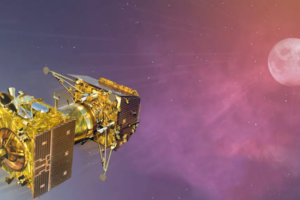
After the huge success of the Chandryaan-3, India’s historical mission to the moon, ISRO has announced its space mission to the Sun. On September 2 at 11:50 am the Indian Space Research Organisation (ISRO) is all set to launch its first space-based solar mission Aditya L1 from Andhra Pradesh’s Sriharikota spaceport. While speaking to the media on Friday, ISRO Chairman, S Somnath stated, “We are just getting ready for the launch. The rocket and satellite are ready, we have completed the rehearsal for the launch. Tomorrow we have to start the countdown for the launch, the day after tomorrow.”


After the statement from the ISRO chief,  ISRO tweeted specifying the mission, “The 23-hour 40-minute countdown leading to the launch at 11:50 Hrs. IST on September 2, 2023, has commended today at 12:10 Hrs.”

After the huge success of the Chandryaan-3, India’s historical mission to the moon, ISRO has announced its space mission to the Sun. On September 2 at 11:50 am the Indian Space Research Organisation (ISRO) is all set to launch its first space-based solar mission Aditya L1 from Andhra Pradesh’s Sriharikota spaceport. While speaking to the media on Friday, ISRO Chairman, S Somnath stated, “We are just getting ready for the launch. The rocket and satellite are ready, we have completed the rehearsal for the launch. Tomorrow we have to start the countdown for the launch, the day after tomorrow.” After the statement from the ISRO chief, ISRO tweeted specifying the mission, “The 23-hour 40-minute countdown leading to the launch at 11:50 Hrs. IST on September 2, 2023, has commended today at 12:10 Hrs.” Aditya L1 shall be positioned around the Lagrange point 1 (L1) in a halo orbit of the Sun-Earth system, which is approximately 1,50,000 km from the Earth. A satellite positioned in the halo trajectory around the L1 point has the edge of constantly viewing the Sun without any occultation/eclipses.


Aditya L1 shall be positioned around the Lagrange point 1 (L1) in a halo orbit of the Sun-Earth system, which is approximately 1,50,000 km from the Earth. A satellite positioned in the halo trajectory around the L1 point has the edge of constantly viewing the Sun without any occultation/eclipses. 


Major Objectives of Aditya-L1 

  • The major science objectives of Aditya-L1’s mission will be 
    • The study of solar upper atmospheric (chromosphere and corona) dynamics
    • Chromospheric and coronal heating
    • Physics of the partially ionized plasma
    • Initiation of the coronal mass ejections
    • Flares
  • The Mission will also observe the in-situ particle and plasma environment providing data for the study of particle dynamics from the Sun. 
  • The mission will also help in understanding the physics of solar nimbus and its heating mechanism. 
  • Studying the diagnostics of the coronal and coronal loops plasma: Temperature, velocity, and density. 
  • Development, dynamics, and origin of CMEs. 
  • Identifying the sequence of processes that occur at multiple layers (chromosphere, base, and extended corona) which eventually lead to solar eruptive events will also be a major purpose of the mission.
  • Magnetic field topology and magnetic field sizes in the solar corona. Factors affecting space weather (source, components, and dynamics of solar wind).

All this will give a greater advantage in monitoring solar actions and their impact on space temperature in real-time. The suits of Aditya L1 loads are anticipated to deliver the most important information to comprehend the issue of coronal heating, coronal mass ejection, pre-flare, and flare activities and their properties, dynamics of space weather, propagation of particles and fields, etc. 

On August 23, India became the first nation to safely land a spacecraft in the moon’s south pole area. The mission is proceeding, with ISRO stating its rover had verified the presence of sulfur, iron, oxygen, and other elements on the moon.

The Evolution of L3 Improvements upon L2 Cache

Devendra Khati |

Protocol and architecture evolution is a continuous process in computer science and technology to improve performance, efficiency, and scalability. This article delves into the transition from L2 Cache to L3 Cache  enhancements, highlighting the key differences, advancements, and real-world examples demonstrating these changes’ significance. 


Understanding L1, L2, and L3


L1 Cache: The L1 cache is the primary cache directly integrated into the CPU core. It has the quickest access time but is the smallest in size. Its primary function is saving frequently used instructions and data, reducing latency when accessing critical information.

L2 Cache: Between the L1 cache and main memory, the L2 cache is larger. It has a larger capacity than the L1 cache and can store more data. The L2 cache aims to bridge the speed gap between the L1 cache and slower main memory, improving overall system performance.

L3 Cache is a shared cache that serves multiple CPU cores. It has a higher capacity than the L2 cache and is shared by all cores on a multi-core processor. L3 cache aids in memory access latency reduction and data sharing between cores.


Stages of Evolution


Introduction of L1 and L2 caches: The evolution of CPU caches began with the introduction of L1 and L2 caches. These caches improved CPU performance significantly by reducing the time spent waiting for data to be fetched from main memory.


L3 Introduction: With the introduction of multi-core processors, there was a need for efficient data sharing between cores. This resulted in creating the L3 cache, which could be shared by multiple cores, thereby improving inter-core communication and overall system efficiency.


Advancements of L3 over L2


Capacity: Compared to the L2 cache, the L3 cache has a larger capacity, allowing it to store more data that can be accessed quickly by multiple CPU cores. This is especially useful in multi-threaded applications where different cores require access to different data sets. Sharing: The L3 cache is shared by multiple CPU cores, allowing for improved communication and data sharing between them. When cores need to access data that isn’t in their private L1 and L2 caches, this reduces latency.


Reduced bottlenecks: L3 cache acts as a buffer between the CPU cores and main memory, reducing memory access bottlenecks. This reduces the number of memory access requests the memory controller must handle. Real-world Intel Core Processors are a prime example of how L3 protocol improvements over L2 protocols have significantly impacted performance. The L3 cache in these processors is shared by all cores, allowing for faster data exchange and improved parallel processing.


Consider the following scenario: multiple CPU cores are working on a video editing task. The L3 cache stores frequently used video frames, effects, and other data, allowing each core to access them quickly without repeatedly fetching the same data from the main memory. This effective data sharing results in more fluid video rendering and faster task completion.


Conclusion:


The transition from L2 cache to L3 enhancements has improved processor performance and multi-core efficiency. The L3 cache has become a critical component in modern CPUs, with larger capacities, data-sharing capabilities, and reduced memory bottlenecks. Further optimizations and innovations in cache hierarchies will likely emerge as technology advances, continuing the trend of improving computational capabilities. 


More On Tech: Top 10 AI Tools for Marketers to Obtain a competitive edge


Centre to take over Jama Masjid with 122 other Waqf Board properties

Preyensha Srivastava |

The Union Ministery of Urban Development notified the Wakf Board to vacate 123 properties including the Jama Masjid, on 22nd August. The Jama Masjid was assigned to the Wakf Board at the time of the Manmohan Singh government. The action was taken after the ministry, in February this year decided to take control over the 123 Wakf board possessions including mosques, dargahs, and cemeteries, based on the report of a two-member panel.


According to the two-member commission under the leadership of retired Justice S P Garg, the report claimed that no representation or objection was received from the Delhi Wakf Board as stated by the Land and Development Office (L&DO) of the union ministry. Adding to this the L&DO letter said, “From the above facts, it is obvious that the Delhi Wakf Board does not have any stake in the properties that are listed, neither they have any interest in the properties nor they have filed any objections or affirmations. It is, therefore, decided to vindicate Delhi Wakf Board from all affairs related to ‘123 Wakf Properties’.” 


The Delhi High Court instructed the Union government to carry out a physical inspection of 123 properties, possession of which is being asserted by the Delhi Wakf Board in May. The decision aroused a sharp response from Amanatullah Khan, an Aam Aadmi Party MLA and board Chairman who said that the decision induced widespread stress, fear, and grievance among the Muslim society. 


Wakf in India is as old as the early days of the Delhi Sultanate when Sultan Muizuddin Sam Ghaor reserved two villages in favour of the Multan’s Jama Masjid and its management was given to Shaikhul Islam. As the Delhi Sultanate and later Islamic regimes prospered in India, the count of Wakf properties kept on increasing in India.


There was a case made for the dissolution of Wakfs in India in the latter half of the 19th Century when a dispute over a Wakf property landed at the Privy Council of London during the reign of the British Raj in India. The four British judges preceding the case characterized the Wakf as “a perpetuity of the worst and the most destructive kind” and declared Wakf to be invalid. 


However, the judgment by the four magistrates was not welcomed by the Indians and the Mussalman Wakf Validating Act of 1913 held the institution of Wakf in India. Since then, no attempt has been made to restrain Wakfs, moreover, after the Armed Forces and Indian Railways, the Wakf Board is now the 3rd largest land owner in India. Political vote banks have dictated that the organization of Wakf has only been stronger after independence. 


The Wakf Act of 1954 enforced by the Nehru government gave a pathway toward the centralisation of Wakfs. Central Wakf Council of India, a regulatory body was established in 1964 by the Government of India under the Wakf Act of 1954. This prominent body controls the work under different state Wakf boards which were formed under provisions of Section 9(1) of the Wakf Act, 1954. The Wakf Act was made even more advantageous to Muslims in 1995 which as Advocate Dave highlighted, is an overriding law and there are no legislative powers over it.


Government to Call Special Parliament Session Commencing on 18th September

Preyensha Srivastava |

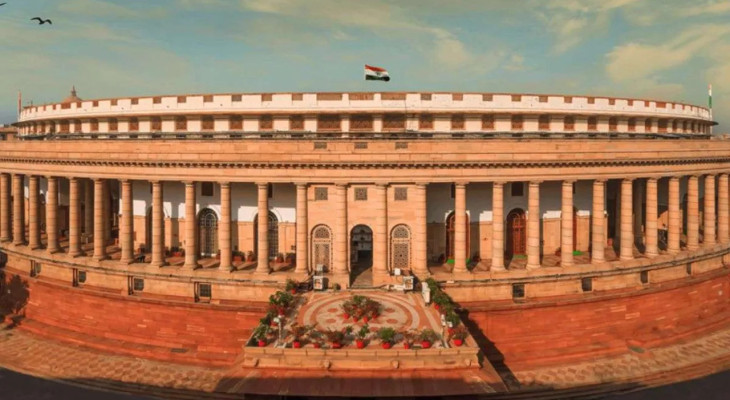
On 31st August, the Minister of Parliamentary Affairs, Prahalad Joshi announced through his Twitter that, “The Special Session of Parliament is likely to be summoned between September 18-22 and it will be having five meetings.” The Lok Sabha Secretariates have been silent about the agendas to be discussed in the special sessions, they have only revealed that the session might commence in the old parliament building while ending in the new one. According to the sources, one of the anticipated agenda for discussion could be the Union Civil Code. 


The Uniform Civil Code is a proposal in India to develop and execute individual laws of citizens that apply to all nationals equally irrespective of their religion, gender, and sexual orientation. At present, the personal laws of different communities are governed by their holy scriptures. The five-day-long special session may include a discussion on the BJP’s contentious commitment to the introduction of the bill.  Another anticipation on the agendas that are to be discussed in the special session includes One-Nation One-Election. 


PM Modi has always encouraged the argument of side-by-side elections across the state assemblies and the Lok Sabha. A conversation could be held on One-Nation One-Election, which means that polls for the Lok Sabha and all state assemblies all over India will be held simultaneously, with voting presumably taking place around the same time. This may also result in the preponement of the General Elections 2024 which were to be held in May 2024 and can now take place in December or January. 


On Monday TMC leader and West Bengal Chief Minister Mamta Banerjee said that she is worried that the BJP might conduct the Lok Sabha polls early in December 2023 or in January 2024. Later the next day, Bihar CM Nitish Kumar supported Mamta Banerjee’s assertion that the Bharatiya Janata Party might hold the Lok Sabha elections in December this year and stressed the need for the opposition parties to stay united.  On the day after the announcement of the special session, the centre has reportedly formed a committee guided by ex-president Ram Nath Kovind to examine the chances of much-talked-about One-Nation One-Election.


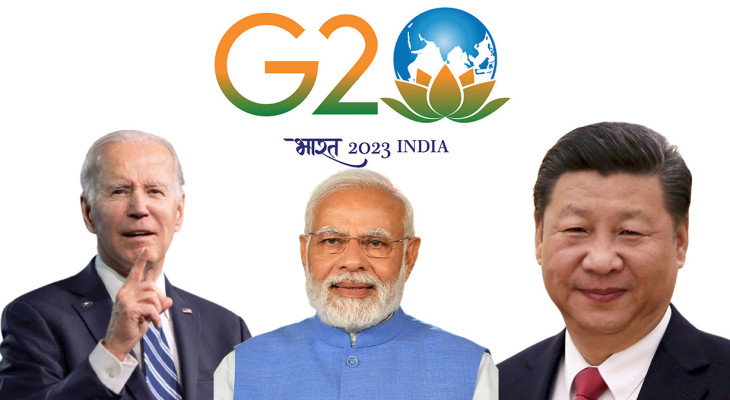
The particular session will also take place at the time of several major achievements, including India becoming the host of the G20 Summit that will be held in Delhi and the landing of the Chandryaan-3. In addition, the session will also take place after the Supreme Court’s decision on the conduction of the election in the union territory of Jammu Kashmir. Solicitor General Tushar Mehta said the judgment on when to conduct elections in the former state lay in the hands of central and state election bodies, despite multiple requisitions questioning the government’s scrapping of Article 370 in J&K.

Exclusive Interview with Ramya M – Co-Founder and CFO of Techurate

Staff |

  1. Could you provide a glimpse into Techurate’s founding year and its journey in the digital banking technology sector since then?

Founded in 2015, Techurate Systems Private Limited has embarked on an impressive journey within the digital banking technology sector with its product-driven solution modules. The company was established with a vision to empower the financial services industry by providing affordable and innovative software solutions. Since its inception, Techurate has been committed to bringing financial inclusivity with its digital banking solutions, making them accessible to a wide range of financial institutions, from RRBs and credit societies to multi-state cooperative banks and major financial organizations.

Over the years, Techurate has rapidly evolved, becoming a key player in the fintech field. The company’s founder and CEO, Harshavardhan Pusala, drew inspiration from his experience implementing core banking solutions in Africa, where he saw the transformative potential of technology in banking services. This insight led to the creation of Tigiverse, a digital service platform that encompasses various product modules designed to drive complete digital inclusion across the financial services industry.

The company’s journey has been marked by accolades and awards, recognizing its innovative contributions to the fintech landscape. Recently, it received recognition as one of the top 10 Fintech solution providers for 2023-24 by CIOtech and Banking Frontier. Additionally, one of its product modules, Smart Branch, was awarded “The Most Innovative Product” at Technoviti 2023-24.


  1. How does Techurate ensure seamless and secure third-party app integration through its products?

Techurate ensures seamless and secure third-party app integration through its products by implementing rigorous testing and deploying robust APIs (Application Programming Interfaces). These APIs serve as bridges between different software systems, enabling smooth communication and data exchange while maintaining stringent data security and compliance. By incorporating stringent security measures such as vulnerability and performance testing, Techurate ensures the protection of sensitive customer data throughout the integration process, aligning with the highest industry standards.

Techurate’s flagship product, the Tigiverse platform, adopts a holistic approach to integration, catering to the requirements of both financial institutions and their customers. The company’s steadfast commitment to data secrecy and privacy underscores the paramount importance of safeguarding customers’ sensitive information. This commitment extends to the integration of third-party apps, where data security remains a central focus.

By placing a strong emphasis on secure integration, Techurate not only facilitates a seamless user experience but also fosters a foundation of trust between financial institutions and their valued customers.


  1. Can you briefly explain the industries you cater to beyond digital banking, considering Techurate’s specialization in software development?

Techurate’s specialization in software development extends beyond digital banking, encompassing a diverse range of industries and sectors. While digital banking remains a core focus, Techurate leverages its expertise to address the unique challenges of various sectors and contribute to global financial inclusion. An integral focus area for Techurate is underbanked and unbanked economies globally. By partnering with financial institutions in these regions, Techurate engages at the grassroots to promote financial literacy through digital outreach. Their commitment to worldwide financial inclusion is evident in initiatives like onboarding 10 million users to the TIGIVERSE platform within the next two years, aiming to integrate rural and unbanked populations.

The adaptable product modules under Techurate’s flagship product TIGIVERSE finds its utility beyond digital banking, spanning microfinance, community commerce, farming and the emerging metaverse. This flexibility empowers Techurate to tailor solutions for specific industry challenges, showcasing their commitment to impactful, industry-tailored solutions.

One notable achievement is the creation of the Virtual Farmer’s Market (VFM), an innovative digital platform leveraging cutting-edge technology to digitalize agriculture. By fostering collaboration among stakeholders across the agricultural value chain—governments, financial institutions, buyers, suppliers, advisors, and farmers—VFM enhances productivity, food security, and livelihoods of the farmers. Techurate has a success story in implementing VFM in Zambia in association with PayGo, in partnership with the World Food Programme, illustrating Techurate’s dedication to progress and financial inclusion through software prowess.

An additional innovative module within Tigiverse is the Smart Branch Module, an intelligent automation system for banks to digitize customer interactions, including onboarding, deposits, withdrawals, and more. Recognized as “The Most Innovative Product” at Technoviti 2023-24 by Banking Frontier, this solution streamlines banking operations, reduces wait times, and serves as a versatile medium for local retailers. It features paperless workflow management promoting Green Banking, smart operations, and assistants, complemented by Business Analytics and Reporting. With an intuitive user interface, customers find it user-friendly. The module integrates image-capture functionality, eliminating manual proofing and encoding. It extends banking access to remote areas through agent-operated extended branches, fostering financial inclusion in regions lacking physical bank branches.

Techurate’s software mastery transcends digital banking, impacting industries like agriculture, microfinance, and community commerce. Our inventive solutions and commitment to financial inclusion are exemplified by endeavours like the Virtual Farmer’s Market, Smart Branch Module, demonstrating technology’s potential to drive positive change and economic growth across diverse sectors.

  1. What is the best way for individuals or organizations to learn more about Techurate’s offerings and get in touch?

For individuals or organizations seeking to explore Techurate’s comprehensive offerings and engage with the company, the best way is to visit Techurate’s official website. The website provides an insightful overview of Techurate’s products, services, and the industries it caters to. Additionally, the website offers contact information, allowing interested parties to connect directly with the Techurate team.


Through the website, visitors can access detailed information about Tigiverse’s capabilities, the range of Smart Banking Modules, and Techurate’s commitment to sustainable and inclusive digital transformation. By reaching out via the provided contact details, individuals and organizations can initiate conversations, seek personalized solutions, and embark on a journey towards innovation-driven digital transformation with Techurate.

India VS Pakistan: Asia Cup is all set to starts from today

Arsh Verma |

Asia Cup 2023 starts today, The opening match is going to be played between the host Pakistan and Nepal in Multan, and the most awaited India-Pakistan match is set for 2 September at Pallekele International Stadium in Sri Lanka. All five full-time members of the Asian Cricket Council  (India, Pakistan, Sri Lanka, Bangladesh, and Afghanistan) along with Nepal are part of this tournament. This is the first time in the history of the Asia Cup that the tournament is played in a hybrid format, due to this its games are organised in two different countries Pakistan and Sri Lanka. All the teams are playing their few games in Pakistan except India because India refused to travel to Pakistan due to the disapproval from the Government of India thus India is playing all its games in Sri Lanka.


Legendary cricketer Wasim Akram, a seasoned combatant in these monumental clashes, shared his insights at a recent event. Asked about his outlook on the upcoming India-Pakistan match, Akram gave a warning that reminded everyone of the unpredictability of the game. He was referring to the 2022 Asia Cup, where Sri Lanka’s victory overturned expectations of an India-Pakistan final. Highlighting the uncertainty, Akram stressed that all three teams – India, Pakistan and Sri Lanka – have the potential to win on any given day.”


The significance of the India-Pakistan match goes beyond sports. These cricketing giants meet only in ACC or ICC tournaments, making every clash a spectacle of immense importance. Pallekele International Cricket Stadium is the battlefield of choice, creating an atmosphere of anticipation. The memories of the pulsating match are reminiscent of their last encounter in the T20 World Cup 2022 competitions. Virat Kohli’s remarkable innings, punctuated by a game-changing six, is a testament to the thrilling intrigue that marks the clashes between these rivals. 


As the cricketing world prepares for this epic clash, the question that remains is, will the weather threaten on September 2? Cricket fans are holding their breath hoping that the rain gods will stay away and let this clash of titans unfold in all its glory. Come rain or shine, the India-Pakistan Asia Cup 2023 match promises to be a historic moment in the history of cricket.